
Future of Global Generic Markets: Key Trends and Predictions for 2025-2030
The global generic drug market isn’t just surviving-it’s evolving. Once seen as a low-cost alternative to brand-name medicines, generics are now a cornerstone of healthcare systems struggling to keep up with rising demand and shrinking budgets. By 2028, the market is expected to hit $655 billion, according to BCC Research. But this growth isn’t evenly spread. Some regions are booming. Others are tightening their belts. And the rules of the game are changing faster than ever.
Why Generics Matter More Than Ever
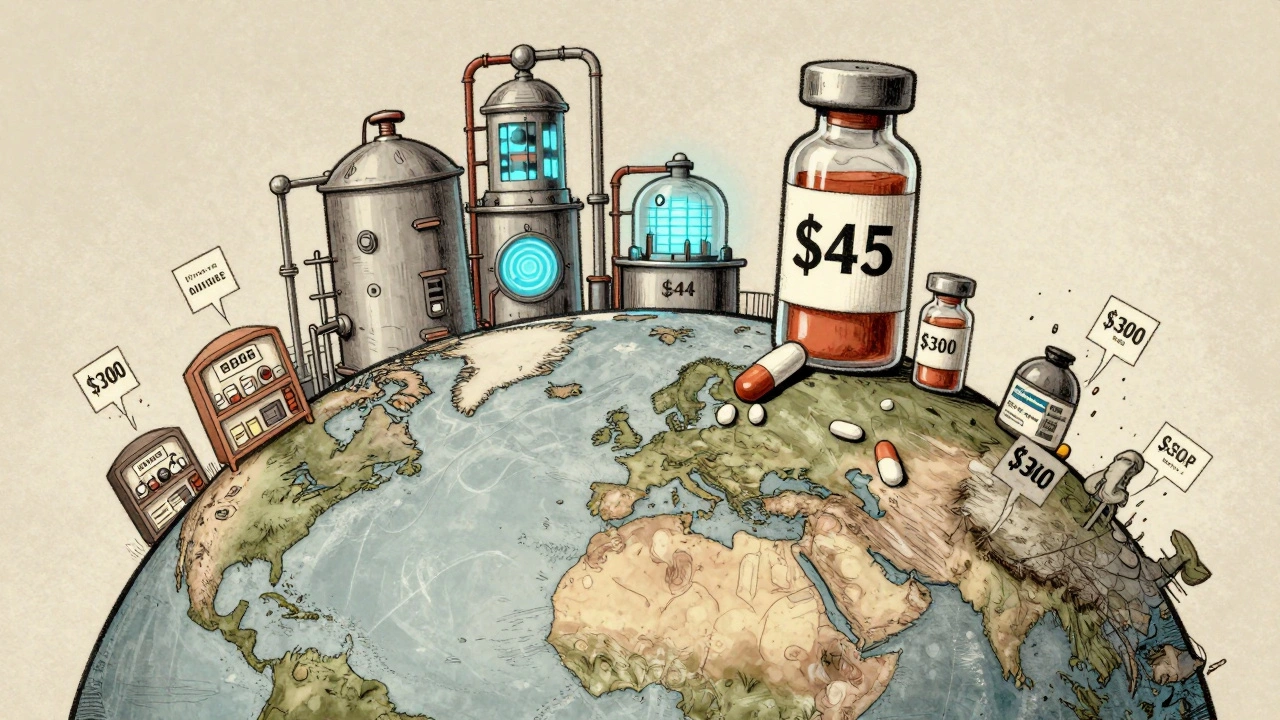
Imagine this: a patient needs insulin. The branded version costs $300 a month. The generic? $45. That’s not a hypothetical. That’s reality in many parts of the world. Generic drugs deliver the same active ingredients as brand-name drugs but at 80-85% lower prices. In the U.S., generics make up 90% of prescriptions but only 23% of total drug spending. In Europe, penetration varies wildly-from 72% in Germany to just 28% in Italy-showing how policy, not just need, drives adoption.
Why does this matter? Because chronic diseases are rising. The CDC estimates 41% of the global population lives with at least one chronic condition-diabetes, heart disease, hypertension. These aren’t one-time treatments. They’re lifelong. Governments can’t afford to pay brand prices forever. Generics are the only scalable solution.
The Rise of Biosimilars: The New Frontier
Not all generics are created equal. The biggest shift happening right now isn’t in pills-it’s in biologics. These are complex, large-molecule drugs used to treat cancer, autoimmune diseases, and rare conditions. Once their patents expire, the next wave of generics-called biosimilars-steps in.
But biosimilars aren’t simple copies. They require 10 to 20 times more manufacturing steps than traditional small-molecule generics. Development costs? $100-250 million. Compare that to $1-5 million for a standard generic. That’s why only a handful of companies can make them. But the payoff is real: biosimilars can be priced 15-30% below the original biologic, still saving patients and systems billions.
Mordor Intelligence projects a 12.3% annual growth rate for biosimilars from 2025 to 2030. Companies that once made cheap antibiotics are now investing in bioreactors and sterile facilities. The barrier to entry is high-but so is the reward.
Who’s Driving Growth? The Pharmerging Markets
North America and Western Europe aren’t growing fast anymore. Price controls, stiff competition, and saturated markets have slowed them to 2-5% annual growth. The real action is in the pharmerging markets: India, China, Brazil, Turkey, Saudi Arabia, and Egypt.
India alone produces over 60,000 generic medicines and supplies 20% of the world’s generic volume by volume. China manufactures nearly 40% of global active pharmaceutical ingredients (APIs)-the raw building blocks of every pill. Together, they control about 35% of global manufacturing capacity.
But it’s not just about production. These countries are also growing their own demand. India’s National Pharmaceutical Pricing Authority keeps prices low. China’s “Healthy China 2030” initiative pushes for universal access. Saudi Arabia’s Vision 2030 is building local pharmaceutical hubs. Egypt now requires 50% of essential medicines to be made domestically by 2025.
By 2025, these emerging markets will add $140 billion in spending on medicines, according to IQVIA. That’s more than half of all global growth in the last five years.
The Supply Chain Problem: Who Controls the Ingredients?
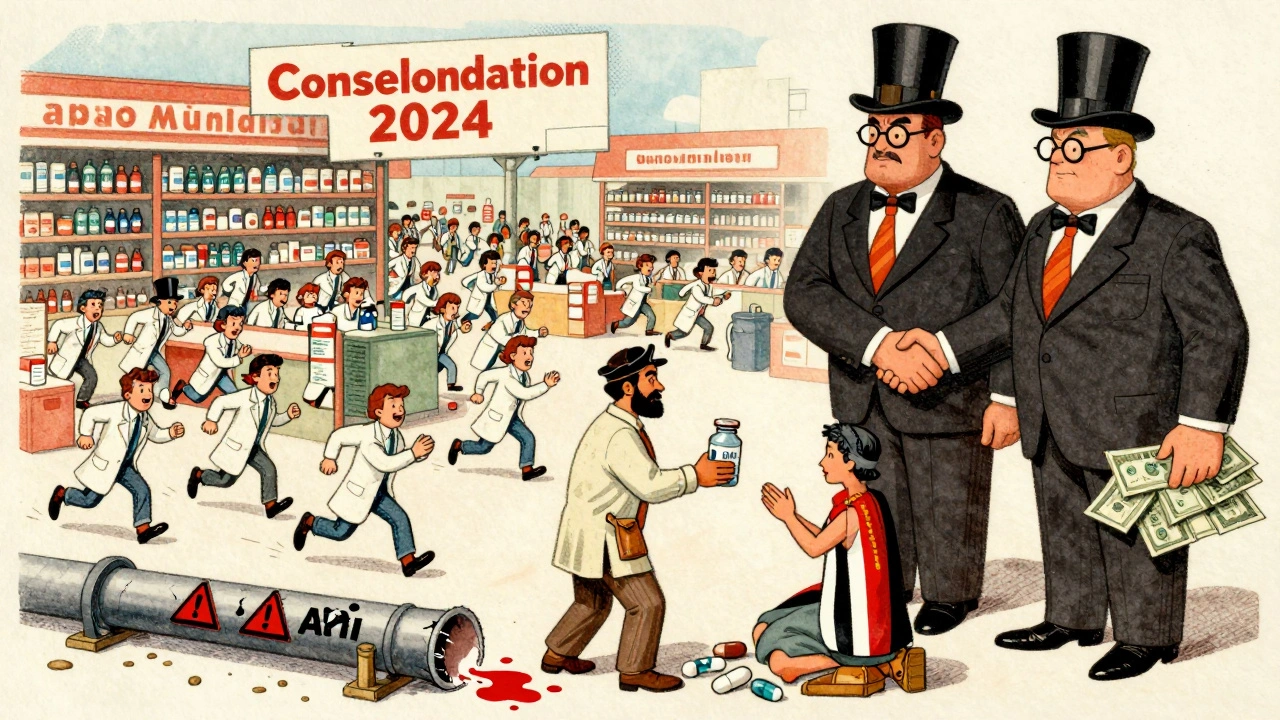
Here’s the uncomfortable truth: the world’s generic drug supply chain is dangerously concentrated. China supplies 65% of all APIs used in generic drugs. India relies on China for 70% of its API needs. One factory shutdown, one trade dispute, one natural disaster-and entire countries could face drug shortages.
The FDA issued 187 warning letters to foreign generic manufacturers in 2023-40% of all warning letters were tied to quality control issues at overseas plants. That’s not just a regulatory headache. It’s a public health risk.
That’s why countries are pushing back. The U.S. and EU are offering subsidies to bring API production home. India’s $1.34 billion Production Linked Incentive (PLI) scheme in 2024 is aimed at cutting dependence on China. But building domestic API capacity takes years. In the short term, the world is still playing Russian roulette with its medicine supply.
Regulation: A Patchwork of Rules
There are 78 different regulatory systems for drugs around the world. That means a generic drug approved in India might need three more rounds of testing to be sold in Brazil or Germany. It slows everything down. It raises costs. It blocks smaller companies from entering global markets.
But there’s progress. The International Council for Harmonisation of Technical Requirements for Pharmaceuticals for Human Use (ICH) has added 15 new member countries since 2024. More countries are aligning their standards with the U.S. FDA and EMA. That’s a good sign. But harmonization moves slowly. Until it’s universal, the market will stay fragmented.
The Profit Crunch: Margins Are Shrinking
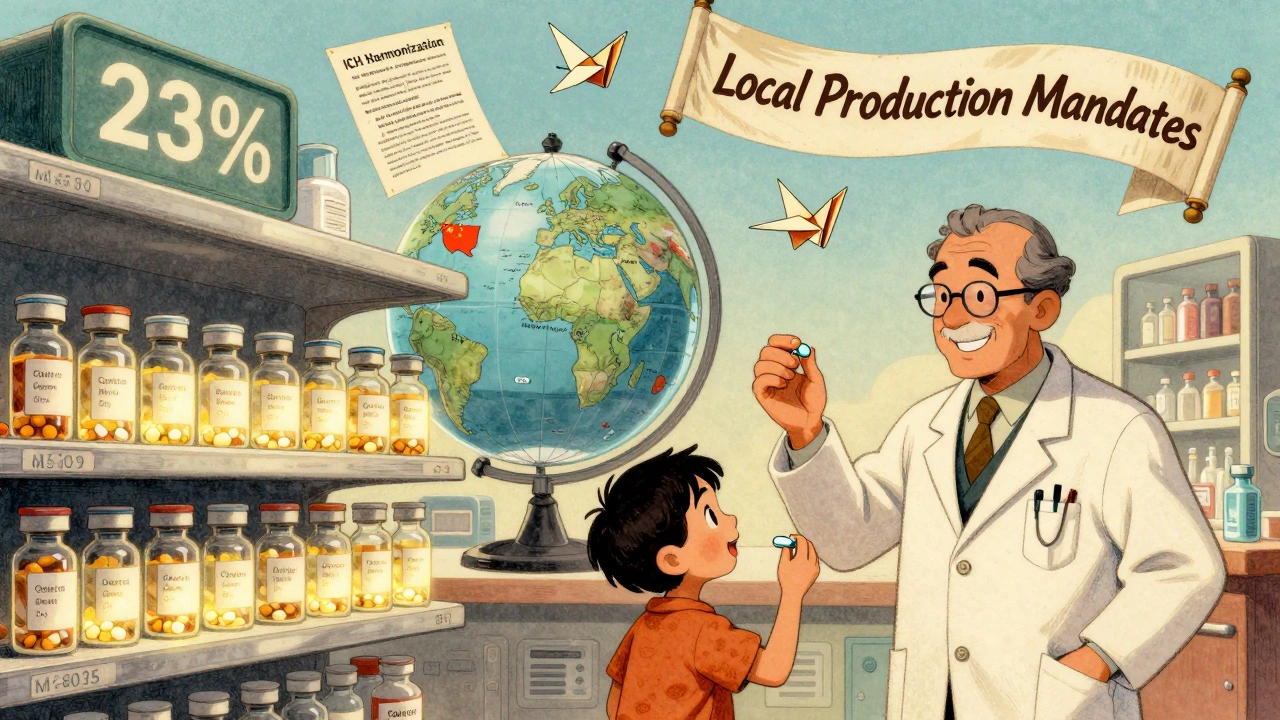
It used to be easy to make money on generics. In 2020, average profit margins were around 18%. By 2024, they’d dropped to 12%. Why? Too many players. Too many products. Too much competition.
When a patent expires, dozens of companies rush in. Prices crash. Companies fight for market share by undercutting each other. The result? A race to the bottom. Only the biggest players-those with scale, global reach, and vertical integration-can survive.
Smaller manufacturers are being squeezed out. Many are turning to biosimilars or niche markets where competition is lighter. Others are merging. In 2024 alone, there were 37 major partnerships announced between global pharma giants and local generic producers. Consolidation is no longer optional-it’s survival.
What’s Next? The Big Shifts by 2030
By 2030, the generic market will look very different. Here’s what’s likely to happen:
- Biosimilars will make up 15-20% of the generic market-up from less than 5% today.
- China’s dominance in APIs will weaken as India, the U.S., and EU invest in local production.
- Regulatory alignment will improve, but full harmonization won’t be complete until after 2030.
- Generic market share of total drug spending will drop from 57.56% in 2024 to around 53% by 2030-not because generics are less important, but because specialty drugs (like GLP-1 weight loss drugs) are growing faster.
- Local production mandates will spread-more countries will require a percentage of essential medicines to be made domestically.
One thing is certain: generics aren’t going away. They’re becoming more strategic. The companies that win won’t just be the cheapest. They’ll be the most agile-the ones that can move from small molecules to biosimilars, navigate complex regulations, and build resilient supply chains.
Can Generics Keep Up With Demand?
Global healthcare spending hit $9.8 trillion in 2024. Prescription drug sales are on track to reach $1.7 trillion by 2030. Chronic diseases aren’t going away. Populations are aging. More people need medicine.
Generics are the only affordable way to meet that demand. But they need help. Better regulation. Stronger supply chains. Investment in biosimilars. Support for local manufacturers.
The future of global health doesn’t depend on new miracle drugs. It depends on whether we can keep making the old ones-reliably, safely, and affordably.
Are generic drugs as safe as brand-name drugs?
Yes. Generic drugs must meet the same FDA and international standards for safety, strength, purity, and performance as brand-name drugs. The only differences are in inactive ingredients (like fillers or dyes) and packaging. The active ingredient is identical. However, quality issues can arise from manufacturing facilities, especially in countries with weaker oversight. That’s why regulators like the FDA inspect foreign plants and issue warning letters when standards aren’t met.
Why are biosimilars more expensive to develop than regular generics?
Biosimilars are made from living cells, not chemicals. That means the manufacturing process is far more complex-think of it like cloning a protein instead of mixing powder. A single batch can require hundreds of steps, precise temperature controls, and advanced purification. Any small change in the process can alter the final product. That’s why development costs are $100-250 million, compared to $1-5 million for traditional generics.
Which countries are the biggest producers of generic drugs?
India and China are the top two. India produces over 60,000 generic medicines and supplies 20% of the world’s generic volume by volume. China manufactures about 40% of global active pharmaceutical ingredients (APIs), the raw materials used in all drugs. Together, they control roughly 35% of global manufacturing capacity. Other growing players include Brazil, Turkey, and Egypt, where local production is being pushed by government policy.
Why is China so dominant in API production?
China built its dominance over decades by investing heavily in chemical manufacturing infrastructure, offering low labor and regulatory costs, and scaling up production to meet global demand. It became the go-to source for cost-effective APIs. But this concentration creates risk-supply chain disruptions in China can ripple across the world. That’s why the U.S., EU, and India are now spending billions to reduce reliance on Chinese APIs.
Will generic drug prices keep falling?
For simple, old generics-yes, prices will keep falling. There are too many manufacturers competing for the same products. But for newer, complex generics-especially biosimilars-prices are stabilizing. These drugs require high investment and specialized knowledge, so competition is limited. That means prices won’t drop as sharply, and margins will stay healthier for those who can make them.
How are governments encouraging generic drug use?
Governments use several tools: price controls (like India’s National Pharmaceutical Pricing Authority), mandatory substitution policies (pharmacists can swap brand for generic unless the doctor says no), and public procurement programs that favor low-cost generics. Some countries, like Egypt and Saudi Arabia, are also requiring local production. In the U.S., Medicare and Medicaid push generics through formularies and reimbursement rules.


12 Comments
Levi Cooper
December 13, 2025 at 01:53
Let’s be real-China’s got the whole world by the throat with APIs, and we’re just sitting here pretending it’s fine. The FDA issues warning letters like they’re Christmas cards, but nothing changes. We’re one war or pandemic away from hospitals running out of blood pressure meds. And no one’s talking about it because it’s cheaper to just keep buying from them. Pathetic.
Reshma Sinha
December 14, 2025 at 22:53
India’s API capacity is scaling fast-PLI schemes, GMP-compliant plants, and over 200 new facilities under construction. We’re not just a supplier anymore; we’re becoming a strategic hub for global generics. The US and EU are scrambling to de-risk, but they don’t realize how deep our ecosystem runs-from R&D to bulk manufacturing to formulation. This isn’t just growth-it’s structural realignment.
Rob Purvis
December 15, 2025 at 23:19
Wait, so we’re saying biosimilars are the future… but only if you have $200M to burn? That’s not innovation-that’s a cartel. If only one company can afford to make them, then it’s not a market, it’s a monopoly in disguise. And don’t get me started on how the FDA approves them with ‘similar but not identical’ logic. Where’s the transparency? Where’s the data? We’re treating life-saving drugs like lab experiments.
Laura Weemering
December 17, 2025 at 00:39
They’re lying about safety. You think the FDA inspects every plant? Ha. They inspect 1% of them. The rest? Paper audits. And the ones that get flagged? They just resubmit with new paperwork. I’ve seen the reports. The same factories. The same violations. The same ‘corrective actions’ that never happen. This isn’t healthcare-it’s a Ponzi scheme wrapped in white coats.
nikki yamashita
December 17, 2025 at 19:21
Generics are the unsung heroes of healthcare. No hype. No ads. Just results. And now they’re being pushed out by fancy new weight-loss drugs that cost $1k/month? Come on. We need to protect the basics before chasing moonshots.
Audrey Crothers
December 18, 2025 at 20:31
OMG YES!! 💙 Generics save lives!! I had a cousin who couldn’t afford insulin until generics came out-she’s alive today because of $45/month pills!! 🙌 We need MORE generics, not less!! Stop letting big pharma control everything!!
Stacy Foster
December 20, 2025 at 16:36
Did you know the WHO is secretly funded by Big Pharma? They push ‘harmonization’ so they can control global drug standards and crush local manufacturers. India’s PLI scheme? A trap. China’s API dominance? A setup. Everything’s connected. The ‘supply chain crisis’ is a distraction. They want you to think it’s about safety… but it’s about control.
Lawrence Armstrong
December 20, 2025 at 17:17
India and China aren’t just making drugs-they’re making global dependency. The U.S. has 12 API plants left. China has over 2,000. This isn’t trade. It’s economic warfare. And we’re asleep at the wheel. The PLI funding? Too little, too late. We need nationalization. Now.
sandeep sanigarapu
December 21, 2025 at 05:34
India produces over 60,000 generic formulations. This is not a coincidence. It is the result of decades of policy, education, and disciplined execution. The world relies on us not because we are cheap, but because we are reliable. We do not cut corners. We build systems.
Ashley Skipp
December 22, 2025 at 18:21
Biosimilars are just brand drugs with new labels. Same company. Same factory. Same price gouging. Just call it something fancy and charge more. Everyone knows it. Everyone pretends not to.
Nathan Fatal
December 24, 2025 at 09:19
Generics aren’t just about cost-they’re about equity. A system that makes medicine accessible is a system that respects human dignity. When we reduce drugs to market share and margins, we forget that someone’s life depends on that pill. The real crisis isn’t supply chains or patents-it’s our collective moral exhaustion. We’ve normalized scarcity.
Robert Webb
December 25, 2025 at 21:52
It’s fascinating how the entire global pharmaceutical ecosystem is built on a foundation of asymmetry-developed nations demand affordability while refusing to invest in domestic manufacturing, emerging economies build capacity under pressure but face regulatory exclusion, and regulatory bodies struggle to keep pace with technological complexity. The fragmentation isn’t accidental; it’s systemic. And yet, we still operate under the illusion that a patchwork of national standards can sustain global health security. The real question isn’t whether we can fix the supply chain-it’s whether we have the political will to abandon the illusion of sovereignty in favor of true cooperation. Because without that, every warning letter, every PLI scheme, every biosimilar launch is just a bandage on a hemorrhage.