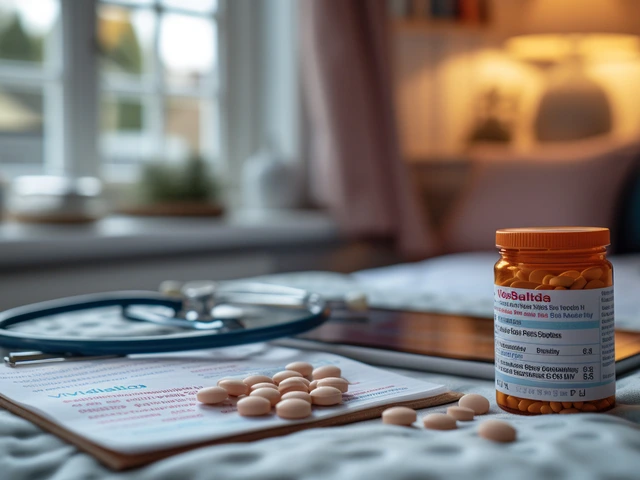
FDA Medication Guide: What You Need to Know About Drug Safety and Warnings
When you pick up a prescription, the small paper tucked inside isn’t just paperwork—it’s a FDA medication guide, a required handout that explains serious risks and safe use of certain medications approved by the U.S. Food and Drug Administration. Also known as a patient package insert, it’s not optional reading—it’s your legal right to know what could go wrong, not just what the drug is supposed to do. These guides exist because some medications carry risks so serious that the FDA demands they be spelled out clearly, in plain language, before you take them.
The FDA medication guide isn’t about side effects you might ignore, like a headache or dry mouth. It’s about the life-changing or life-threatening ones: liver failure from a diabetes drug, sudden joint pain from a common arthritis treatment, or a hidden risk of liver damage if you’ve had hepatitis B. You’ll find these details in posts about DPP-4 inhibitors, HBV reactivation, and immunosuppressants after transplants. These aren’t rare cases—they’re documented dangers the FDA requires manufacturers to disclose. The guide also tells you what to avoid, like licorice interfering with blood pressure meds, or why you should never take expired epinephrine. It’s not marketing. It’s a safety net.
These guides are tied to real-world decisions. If you’re switching pharmacies, the guide might affect how your new pharmacist handles your refill. If you’re comparing drugs like Combivir or Abilify, the FDA guide tells you what the agency flagged as critical. Even when you’re looking at natural remedies for side effects, the guide helps you spot dangerous interactions—like herbal supplements that could make your heart medication fail. The FDA doesn’t just approve drugs; it watches them after they’re on the market. And if new risks show up, they update the guide. That’s why older posts about zidovudine or everolimus still matter—they show how patient advocacy and ongoing monitoring changed what’s in those guides today.
You won’t find these guides in every pill bottle. They’re only required for drugs with serious risks, where the benefits are tight, or where misuse can be deadly. That’s why you’ll see them with immunosuppressants, antivirals, mood stabilizers, and drugs for rare diseases. If your doctor gives you one, don’t toss it. Read it. Ask questions. If something sounds off—like a warning about joint pain you didn’t know about—talk to your pharmacist. These guides exist because people got hurt before they were created. The posts below cover exactly those moments: when numbers lied, when labels were unclear, when interactions slipped through. What you’re about to read isn’t just information—it’s protection you didn’t know you needed until now.
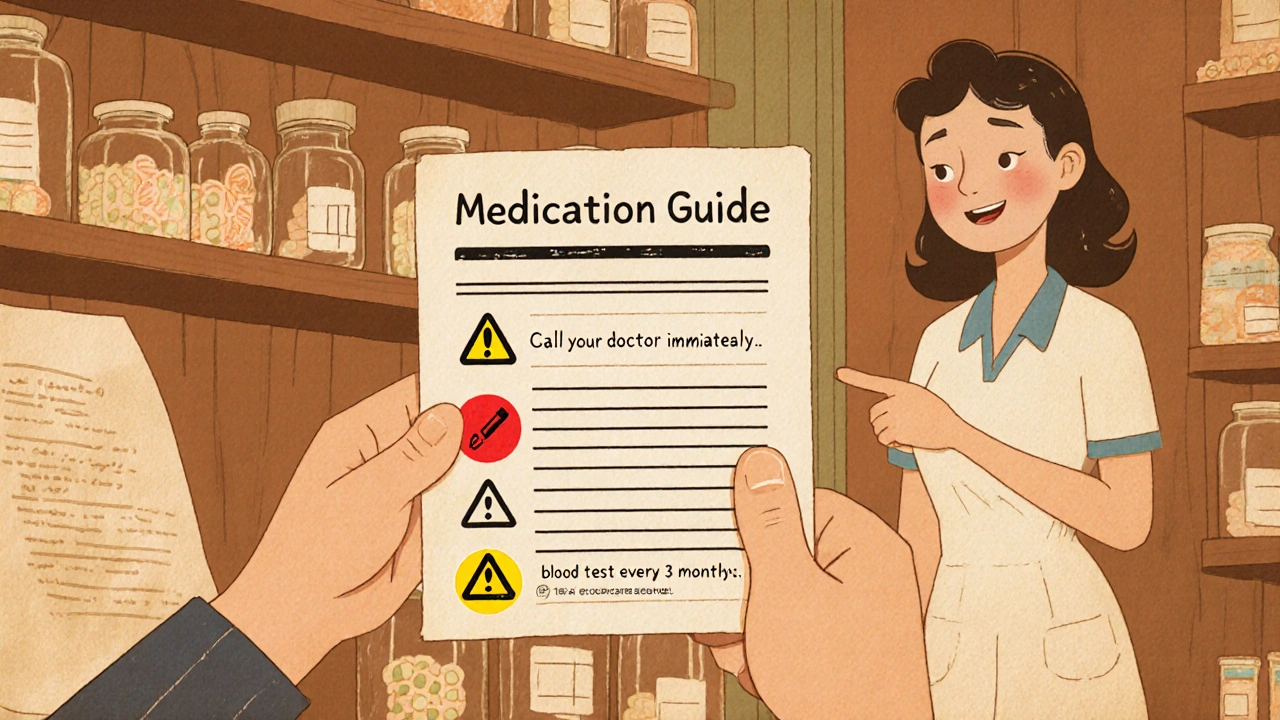
How to Read Medication Guides for Risk and Monitoring Advice
Learn how to read FDA-required Medication Guides to spot serious drug risks and follow critical monitoring steps. Know what to look for, when to call your doctor, and how to avoid preventable side effects.
Read MoreLatest Post
-

-
Buy Cheap Generic Lisinopril Online - 2025 Guide 14 October 2025
-

When Doctors Adjust Doses After Switching to Generic Medications 28 November 2025
-

How Juvenile Arthritis Shapes a Child's Quality of Life 25 September 2025
-