
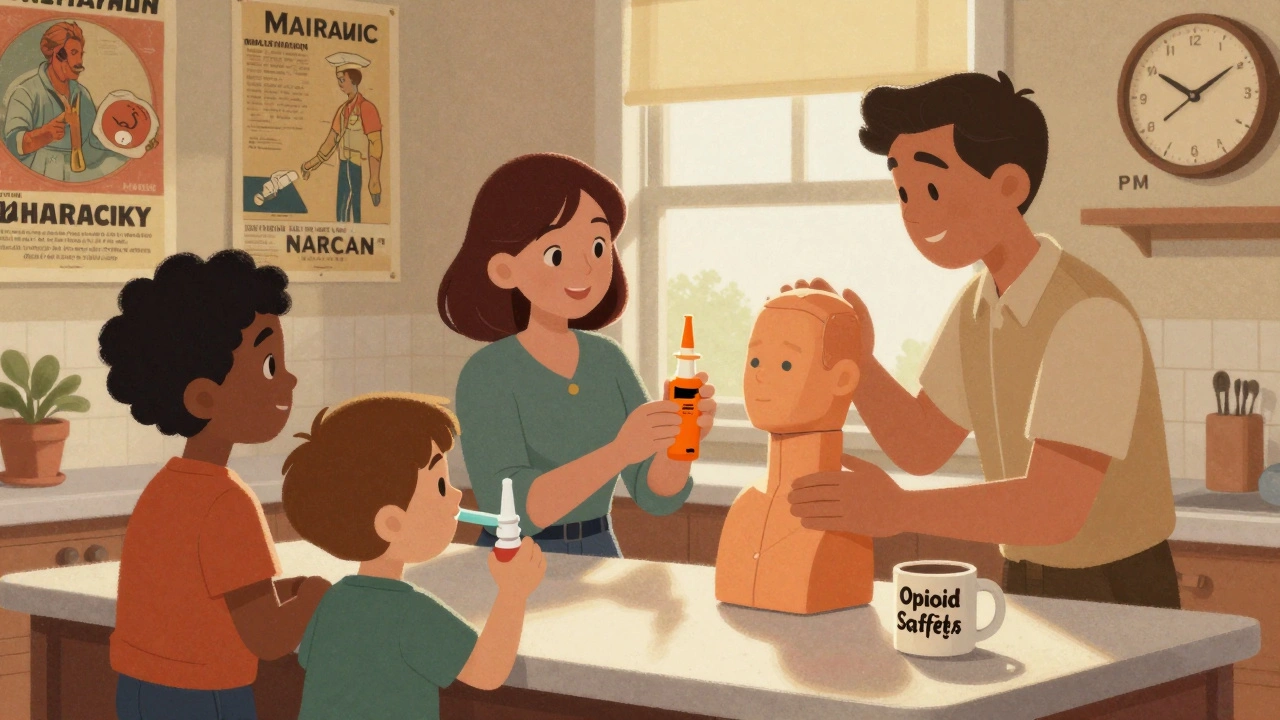
Naloxone Readiness Plan: How to Keep Patients Safe on Opioids
Naloxone Readiness Risk Calculator
Opioid Overdose Risk Assessment
This tool helps you determine your risk level based on daily opioid dosage in morphine milligram equivalents (MME).
Risk Assessment Results
When someone is prescribed opioids for chronic pain, the goal isn’t just to manage discomfort-it’s to keep them alive. But the risk of overdose is real, and it doesn’t always come from misuse. Sometimes, it’s just a small change in tolerance, a mix with another medication, or even a single pill taken after a period of abstinence. That’s where a naloxone readiness plan isn’t optional-it’s essential.
What Naloxone Actually Does
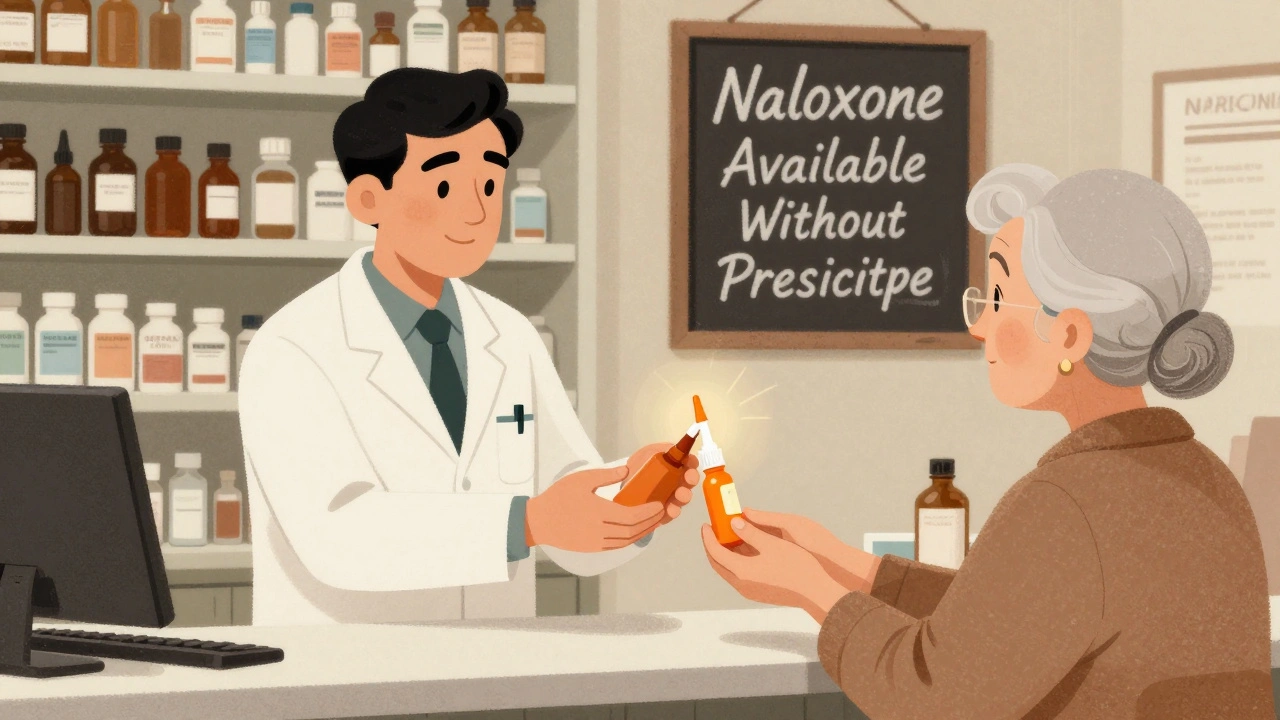
Naloxone isn’t a cure for addiction. It doesn’t make someone feel good or take away cravings. What it does is simple: it kicks opioids off the brain’s receptors and brings breathing back. In under three minutes, it can reverse an overdose that would otherwise be fatal. The FDA approved the first over-the-counter naloxone nasal spray in March 2023, and since then, it’s been available at pharmacies like CVS, Walgreens, and Walmart without a prescription.
It works by binding more tightly to opioid receptors than drugs like oxycodone, hydrocodone, or fentanyl-up to 100 times more tightly. That means if someone overdoses, naloxone pushes the opioid out and lets oxygen flow again. And here’s the key: if there’s no opioid in the system, naloxone does nothing. It won’t harm someone who didn’t take opioids. That’s why giving it isn’t risky-it’s a safety net.
Who Needs a Naloxone Readiness Plan?
It’s not just people with opioid use disorder. The CDC found that 86.7% of opioid overdose deaths happen in people who weren’t even prescribed opioids at the time. But that doesn’t mean prescriptions are safe. If someone is taking more than 50 morphine milligram equivalents (MME) per day, the risk jumps. That’s about 10 pills of 5mg oxycodone daily.
But even lower doses matter. A 2023 update from the American Medical Association now says naloxone should be offered with any new opioid prescription longer than three days. Why? Because people don’t always know how their body will react. A 72-year-old with arthritis might take one pill too many after a bad night’s sleep. A college student might mix painkillers with sleep aids. These aren’t drug users-they’re patients.
What Goes Into a Real Naloxone Kit
A readiness plan isn’t just having a box on the shelf. It’s about having the right tools, in the right place, and knowing how to use them.
There are two main forms: nasal spray and injection. The nasal spray (like NARCAN®) is the most common now. One spray delivers 4mg of naloxone. That’s enough for most overdoses. But with fentanyl and its analogs-now in nearly 9 out of 10 overdose deaths-you might need two or even three doses. That’s why the Wisconsin Department of Health Services recommends keeping at least two nasal sprays on hand for any patient on opioids.
For clinics or homes, the standard is:
- Two 4mg nasal spray kits
- Or four 0.4mg vials with syringes for injection
Keep them where you can reach them in under 30 seconds. Not in the back of a medicine cabinet. Not in a locked drawer. On the kitchen counter. In the car. In the patient’s purse. If it’s hard to find, it won’t get used.
How to Use Naloxone-Step by Step
When you suspect an overdose, act fast. Time is oxygen.
- Check for signs: Is the person unresponsive? Are their lips blue? Is their breathing slow, shallow, or gone? Pinpoint pupils are a classic sign.
- Call 911 immediately. Even if naloxone works, they still need emergency care. Overdose can come back.
- Give naloxone: For nasal spray, insert the nozzle into one nostril and press the plunger all the way down. No need to tilt the head. One spray per nostril if needed.
- Start rescue breathing: Tilt the head back, lift the chin, pinch the nose, and give one breath every five seconds. Don’t stop until help arrives or they start breathing on their own.
- Wait and watch: Naloxone lasts 30 to 90 minutes. Fentanyl can last hours. If they wake up but then slip back into unresponsiveness, give a second dose. Keep giving doses every 2-3 minutes if needed.
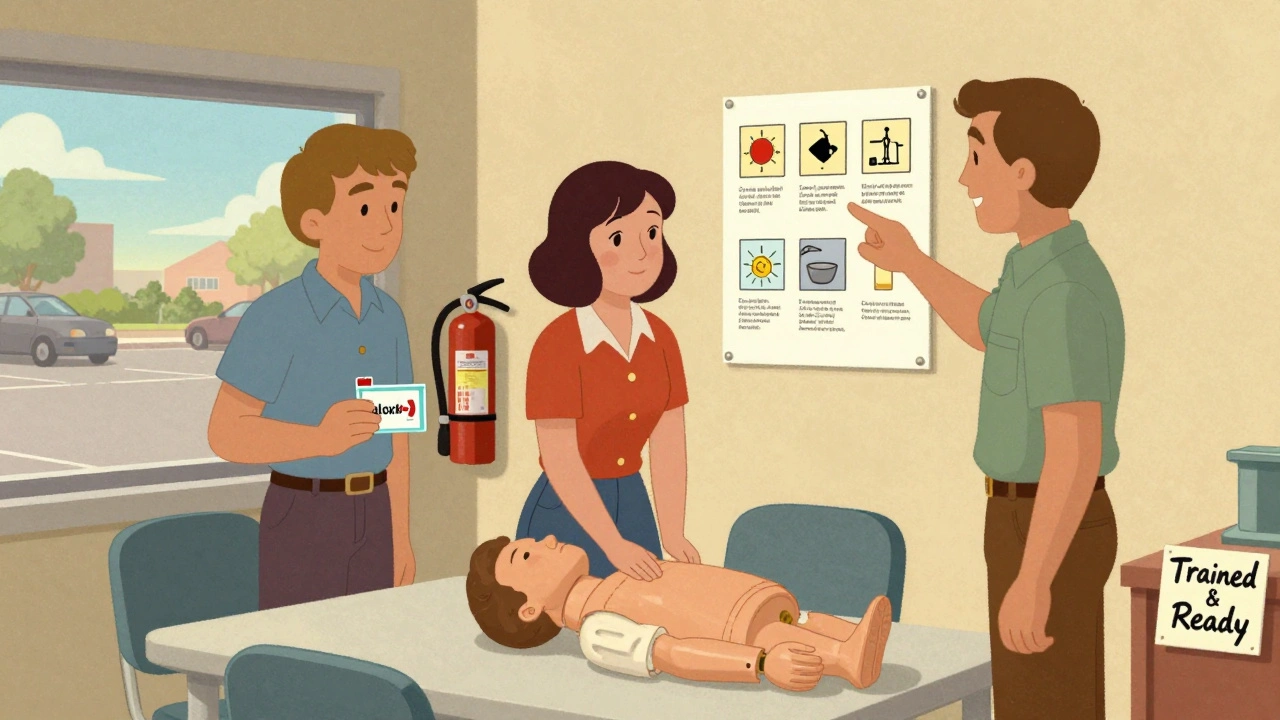
Training takes 20 minutes. The National Safety Council found that after a simple hands-on session, 92% of people could administer naloxone correctly. That’s more than most CPR courses. And if you practice once a year, you keep 85% of that skill.
Why People Don’t Use It-And How to Fix It
The biggest barrier isn’t cost or access. It’s stigma.
A 2022 survey showed only 32% of primary care doctors routinely talk to patients about naloxone. Why? Because they assume it’s only for “addicts.” But the data doesn’t lie. Nearly 40% of opioid overdose deaths in 2021 came from prescription opioids alone. That’s someone who took their medicine as directed.
Cost is another issue. Without insurance, a nasal spray costs $130-$150. That’s a lot for someone on a fixed income. But 47 states have laws allowing pharmacies to hand out naloxone without a prescription. And many community health centers, harm reduction programs, and even churches now give it away for free.
In South Carolina, over 12,000 kits were distributed in early 2023. In Oklahoma, more than 37,000 were given out in 2022. These aren’t just numbers-they’re lives saved.
Workplaces, Schools, and Public Spaces
Overdoses don’t just happen at home. The National Safety Council reports that workplace overdose deaths have increased 619% since 2011. That’s now 1 in 10 job-related deaths.
OSHA now recommends that any workplace with more than 15 employees keep naloxone on-site. It should be within 100 feet of common areas-break rooms, restrooms, parking lots. And someone should be trained to use it.
Same goes for schools, libraries, and community centers. You don’t need a medical degree to save a life. You just need to know where the kit is and how to use it.
The Limits of Naloxone
Naloxone saves lives-but it’s not a magic bullet. It doesn’t fix the underlying problem. It doesn’t treat pain. It doesn’t replace counseling or medication-assisted treatment like buprenorphine.
And it has limits. Fentanyl and carfentanil are so strong that one spray might not be enough. In some cases, people need five, six, or even ten doses. That’s why having multiple kits matters.
Also, naloxone only reverses respiratory depression. It doesn’t stop other complications-like vomiting and choking, or muscle breakdown from lying still too long. That’s why calling 911 is non-negotiable. Even if they wake up, they need to be monitored for hours.
A 2021 review in Massachusetts found that 17% of people who got naloxone still died because they weren’t taken to the hospital. That’s preventable.
What Comes Next
The Biden administration now requires naloxone in all federal buildings by December 2024. The FDA is reviewing new nasal sprays that last longer-up to two hours. More states are passing laws to expand access.
But real change doesn’t come from laws alone. It comes from people. From doctors who say, “Here, take this.” From family members who keep a kit in the glove compartment. From coworkers who know where the box is.
Overdose doesn’t care if you’re rich or poor, young or old, using legally or illegally. It just happens. And the only thing that stops it is someone who’s ready.
So ask yourself: Do you have a plan? Is it where you can reach it? Can you use it? If not, start today. One kit. One minute of training. One life that might be saved tomorrow.
Can anyone buy naloxone without a prescription?
Yes. Since September 2023, NARCAN® nasal spray has been available over the counter at pharmacies across the U.S. No ID, no prescription, no questions asked. Most major chains like CVS, Walgreens, and Walmart stock it. Some states also allow online delivery through approved pharmacies.
How long does naloxone last, and do I need more than one dose?
Naloxone works for 30 to 90 minutes, but many opioids-especially fentanyl-last much longer. That means the person can stop breathing again after naloxone wears off. That’s why you should always give a second dose if they don’t respond within 2-3 minutes, and keep a second kit handy. In cases involving fentanyl, three or more doses may be needed.
Will naloxone hurt someone who didn’t take opioids?
No. Naloxone only works if opioids are in the system. If someone is unconscious from alcohol, a seizure, or a heart attack, naloxone will have no effect. It won’t make them sick or cause harm. That’s why it’s safe to give even if you’re unsure.
Where should I keep my naloxone kit?
Wherever you can grab it in under 30 seconds. That means not tucked away in a drawer. Keep it in your car, on your nightstand, in your purse or backpack, or near the bathroom. For homes with multiple people, hang it on the fridge or place it next to the phone. The key is visibility and speed.
Do I need training to use naloxone?
You don’t need formal certification, but training helps. Most pharmacies offer a free 5-10 minute demo when you pick up the kit. Online videos from the CDC or local health departments also show exactly how to use it. The most important thing is knowing to call 911, give the spray, and start rescue breathing. You can learn it in 20 minutes.
Is naloxone covered by insurance?
Most insurance plans cover naloxone with little or no copay. Medicaid and Medicare Part D typically include it. If you’re uninsured, many community health centers, needle exchange programs, and nonprofit organizations give out free kits. Some states even mail them out by request.
What if I’m afraid to call 911?
Many states have Good Samaritan laws that protect people who call for help during an overdose. You won’t get arrested for possessing drugs if you’re trying to save a life. Emergency responders are trained to help, not punish. Calling 911 is the only way to ensure the person gets the full medical care they need after naloxone is given.



8 Comments
Evelyn Pastrana
December 9, 2025 at 23:56
So basically, if I’m on pain meds, I’m supposed to carry a life-saving spray like it’s my phone charger? Cool. I’ll just keep mine next to my coffee maker-right next to the cat. She’s already judged me for taking pills. Let her judge me for being alive too. 😌
Nikhil Pattni
December 11, 2025 at 13:01
Guys, I’ve read the entire CDC report and the FDA guidelines and even cross-referenced with WHO’s 2022 opioid response framework-let me tell you, most of you are missing the point. Naloxone isn’t just about reversing respiratory depression-it’s about neurochemical displacement kinetics. The binding affinity of naloxone to mu-opioid receptors is 100x higher than morphine, but in cases of fentanyl analogs like carfentanil, the dissociation half-life is shorter than the opioid’s, meaning you need to re-administer before the opioid rebinds. Also, in India, we have a program where community health workers carry naloxone in their medical bags-no pharmacy needed. You guys in the US are so reliant on corporations. It’s pathetic. 🙄
Arun Kumar Raut
December 12, 2025 at 16:35
Hey, I just want to say this is one of those rare posts that actually makes me feel hopeful. My cousin was on oxycodone after back surgery and we kept the spray in the kitchen-right by the toaster. One night, he passed out after mixing it with a sleep aid. We gave the spray, did breaths until EMS came, and he’s fine now. No drama. No shame. Just a spray and a heartbeat. If you’re reading this and haven’t gotten one yet-do it. Not for them. For you. So you don’t have to wonder ‘what if?’
precious amzy
December 13, 2025 at 00:42
One must question the epistemological underpinnings of this ‘readiness plan’-is it not a form of biopolitical control disguised as benevolence? The normalization of naloxone as a prophylactic implies a pathological society that has surrendered autonomy to pharmacological contingency. The state mandates its distribution not out of compassion, but to absolve itself of systemic failures in mental health infrastructure. One cannot save a life by merely reversing its collapse-this is not medicine, it is triage as spectacle.
Carina M
December 14, 2025 at 03:48
It is morally indefensible to distribute naloxone without mandating concurrent enrollment in addiction counseling. This is not harm reduction-it is enabling. We are not saving lives; we are perpetuating a cycle of dependency by removing the natural consequence of misuse. A person who overdoses on prescribed opioids should be held accountable-not handed a spray like a pacifier. The true solution lies in abstinence-based recovery, not pharmacological band-aids.
Richard Eite
December 14, 2025 at 12:31
USA has the best healthcare system in the world so why are we giving out free narcan like candy
Get a job. Stop taking pills. End of story
Katherine Chan
December 15, 2025 at 14:44
I just got my first naloxone kit today and I’m so proud of myself for finally doing it
I kept putting it off because I thought it meant I was admitting someone might OD
But it’s not about that-it’s about being ready to love someone through a crisis
My brother’s on methadone now and I keep the spray in my purse
He doesn’t even know I have it
And that’s okay
He doesn’t need to know
Because I do
And that’s enough
Philippa Barraclough
December 15, 2025 at 17:37
While the logistical recommendations for naloxone deployment are pragmatic, one must consider the sociological implications of its normalization. The absence of a prescription requirement signals a shift in public health policy from curative to reactive paradigms. In the UK, we maintain a more cautious approach: naloxone is distributed through specialist harm reduction services, with mandatory brief interventions and follow-up referrals. This ensures that access is coupled with structured support, rather than becoming a mere safety net for societal neglect. The American model, while commendable in its accessibility, risks reducing a complex medical emergency to a transactional exchange at the pharmacy counter.