
Antibiotics in Children: When to Use Them and What Side Effects to Watch For
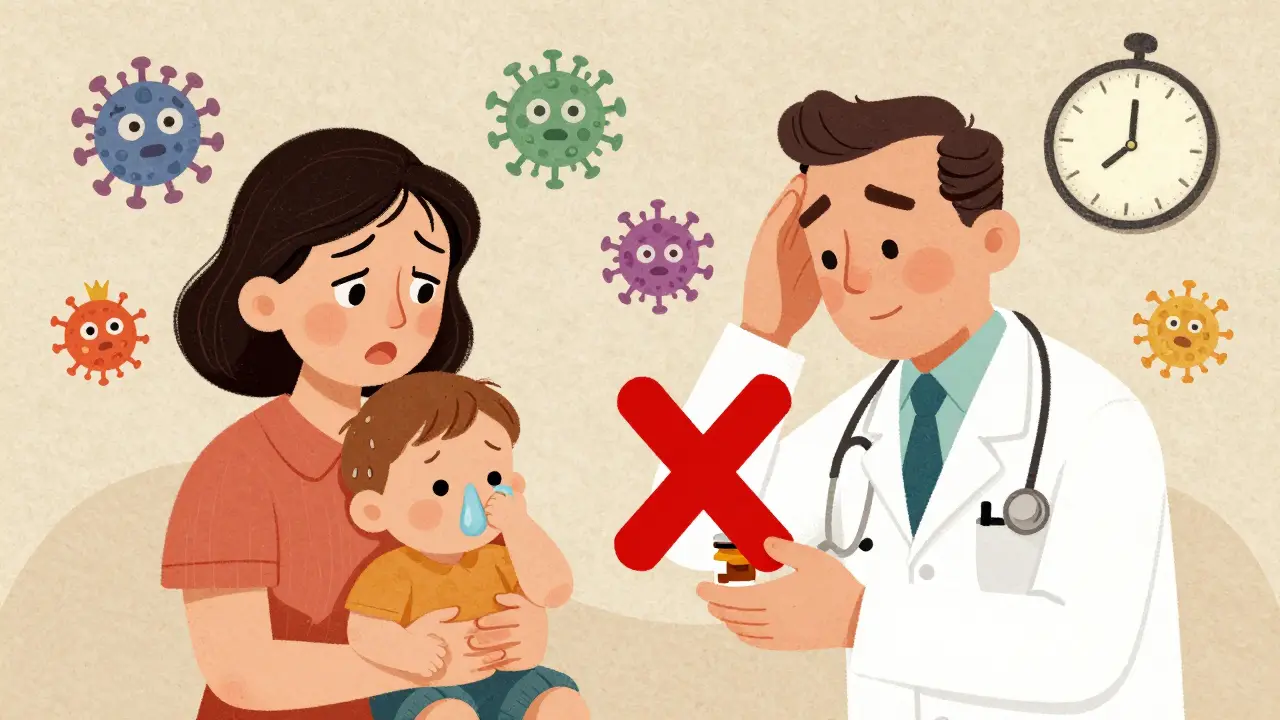
Every parent has been there: your child has a fever, a runny nose, maybe a sore throat, and you just want them to feel better. So when the doctor says, "I think this needs antibiotics," it’s easy to say yes. But here’s the truth: antibiotics are not magic pills for every sick kid. In fact, most childhood illnesses don’t need them at all.
Antibiotics Only Work on Bacteria - Not Viruses
Antibiotics are designed to kill or stop the growth of bacteria. They do nothing to viruses. That’s why they won’t help with the common cold, flu, most sore throats, or stomach bugs. Around 99% of diarrhea and vomiting cases in kids are caused by viruses. Same with coughs, runny noses, and even most ear infections. The CDC says 30% of antibiotic prescriptions for children are completely unnecessary - and that’s a big problem.
Think of it this way: if your child has a cold that lasts 7-10 days, antibiotics won’t make it go faster. But giving them anyway? That can cause real harm.
When Do Kids Actually Need Antibiotics?
Not every infection needs antibiotics - but some definitely do. Here’s when doctors are likely to prescribe them:
- Strep throat: Only about 20% of sore throats in kids are bacterial. A rapid test or throat culture must confirm it. No test? No antibiotics.
- Acute otitis media (ear infections): Antibiotics are recommended only if the child has moderate to severe ear pain, a bulging eardrum, or fluid draining from the ear. For milder cases in kids over 6 months, doctors often suggest waiting 48-72 hours to see if it gets better on its own.
- Bacterial pneumonia: Only about 10% of pneumonia cases in children are bacterial. Most are viral. A doctor will look for high fever, fast breathing, and abnormal lung sounds before deciding.
- Sinus infections: Most sinus issues are viral. Antibiotics are only considered if symptoms last more than 10 days without improvement, or if they get worse after initially improving.
- Whooping cough (pertussis): This is bacterial and dangerous for babies. Antibiotics are essential to prevent spreading it to others.
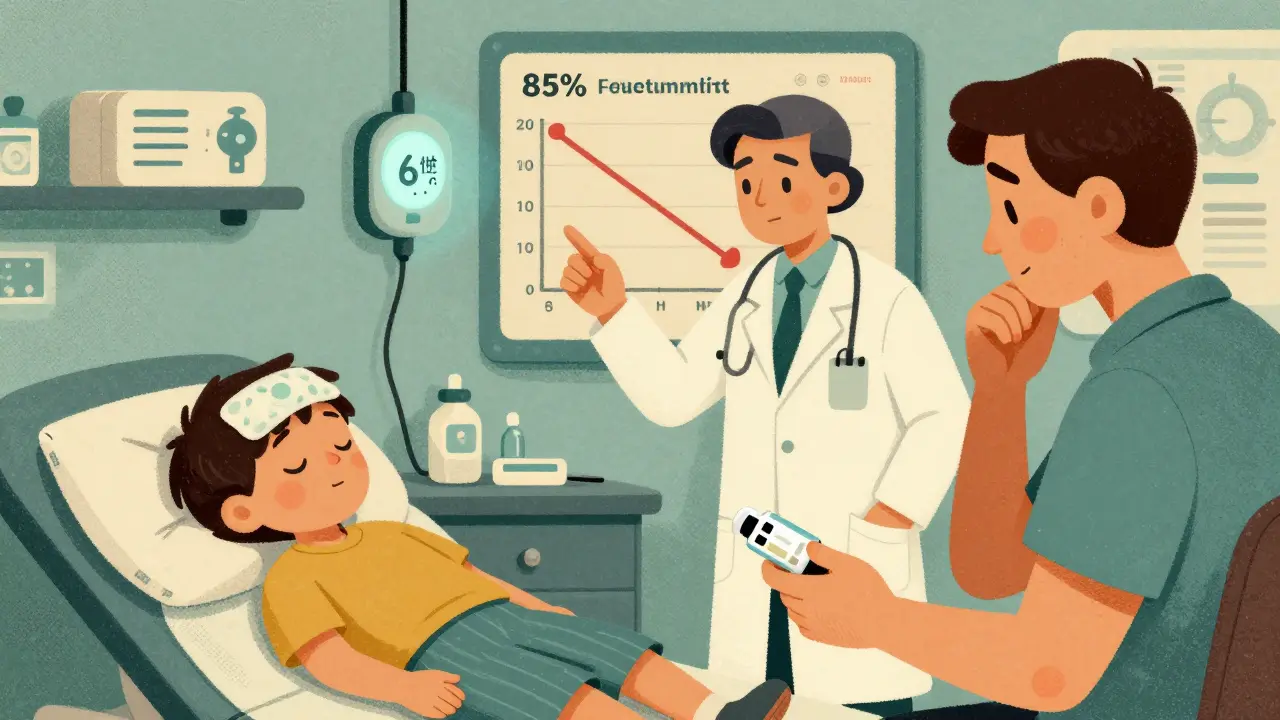
Doctors now use better tools to tell the difference. In 2023, a new rapid test became available that gives results in 6 hours instead of days. Some clinics even use CRP blood tests to check for inflammation - this helps cut unnecessary antibiotic use by 85%.
Common Side Effects in Kids
About 1 in 10 children will have a side effect from antibiotics. Most are mild, but they’re annoying - and they can make parents think the medicine is making things worse.
- Diarrhea: Happens in 5-25% of kids, depending on the antibiotic. It’s usually not serious but can be messy and uncomfortable.
- Nausea and vomiting: Common with amoxicillin and other penicillins. Giving the medicine with a small amount of food can help.
- Rash: About 2-10% of kids get a rash. But here’s the key: 80-90% of these rashes are not allergies. They’re just side effects - often pink spots that don’t itch. True allergic reactions look different.
- Yeast infections: Especially in girls, antibiotics can upset the natural balance of germs and lead to diaper rash or vaginal itching.
If your child gets diarrhea, nausea, or a non-itchy rash, it doesn’t mean they’re allergic. It just means their gut is reacting. Talk to your doctor before stopping the medicine.
True Allergies: What to Watch For
A true antibiotic allergy is rare - but serious. It’s not a rash alone. It’s a full-body reaction.
Signs of a real allergic reaction:
- Hives (raised, red, itchy welts)
- Swelling of the lips, tongue, or face
- Wheezing or trouble breathing
- Vomiting, dizziness, or passing out
If any of these happen, stop the medicine and get emergency help right away. Anaphylaxis - the most dangerous allergic reaction - happens in about 1 in 2,000 antibiotic courses. It’s rare, but it’s life-threatening.
Here’s something most parents don’t know: if you’re allergic to penicillin, your child isn’t automatically allergic. Studies show 95% of kids labeled "penicillin allergic" because of family history can take it safely. Many are misdiagnosed. If your child was told they’re allergic, ask about getting tested - it could open up safer, more effective treatment options later.
Why Stopping Early Is Dangerous
Parents often stop antibiotics when their child starts to feel better. That’s understandable - you want to end the suffering. But stopping early is one of the biggest mistakes you can make.
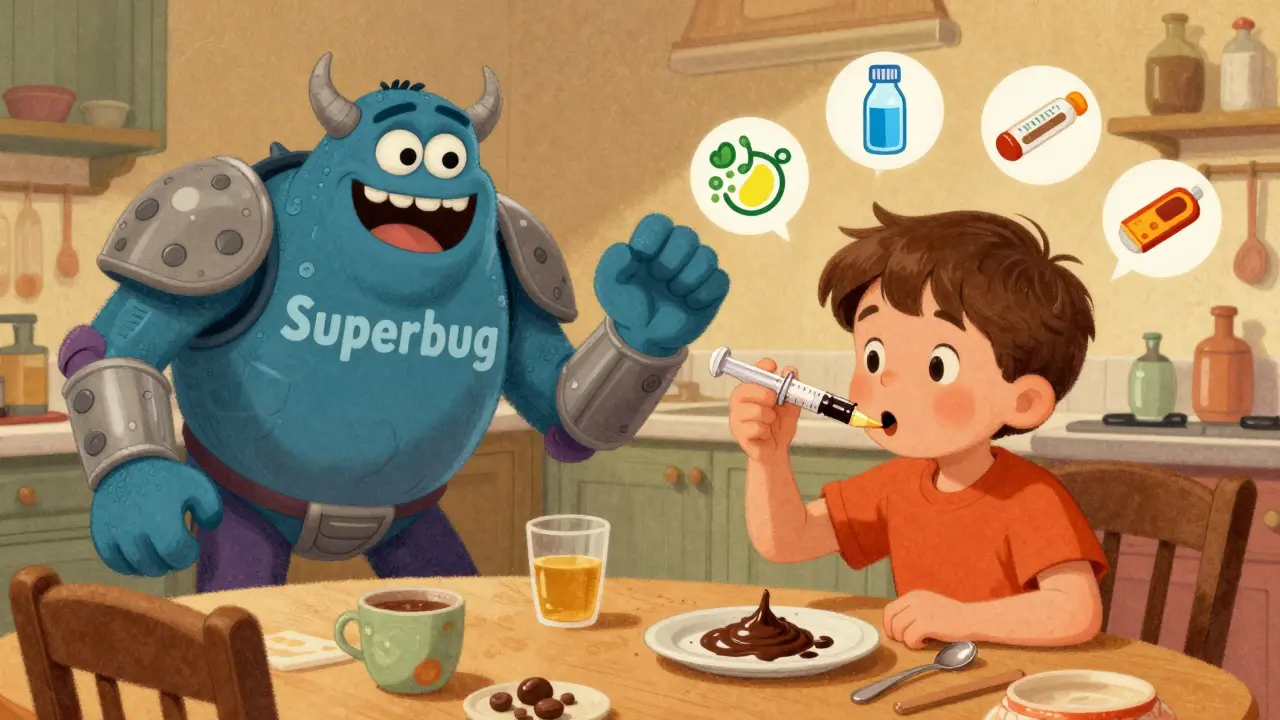
When you don’t finish the full course, the toughest bacteria survive. They multiply. And now they’re resistant. That means the next time your child gets sick, the same antibiotic might not work. And worse - those resistant bugs can spread to other kids.
Studies show 30% of parents stop antibiotics early. That’s why we’re seeing more superbugs like MRSA in children. In 2023, community-acquired MRSA made up 60% of all pediatric MRSA cases - up 150% since 2010.
Always finish the full course, even if your child feels fine after two days. That’s the only way to make sure every last harmful bacterium is gone.
How to Get Kids to Take Their Medicine
Most liquid antibiotics taste awful. A survey found 43% of kids refuse to take them because of the bitter flavor. That’s why so many doses get missed.
Here’s what actually works:
- Hide it in a small spoonful of chocolate syrup, applesauce, or yogurt - not a full meal. Too much food can interfere with absorption.
- Use a dosing syringe, not a teaspoon. It’s more accurate and easier to get the medicine past the taste buds.
- Ask your pharmacist about flavoring. Many compounding pharmacies can turn bitter antibiotics into grape, bubblegum, or cherry.
- Chill the medicine. Cold can dull the taste.
Never mix antibiotics into a whole bottle of juice or milk. If your child doesn’t drink it all, they won’t get the full dose.
What to Do If Your Child Vomits After Taking the Medicine
If your child throws up right after taking the antibiotic:
- Within 30 minutes: Give the full dose again.
- Between 30 and 60 minutes: Give half the dose.
- More than 60 minutes later: No need to repeat. The medicine was likely absorbed.
Don’t guess. If you’re unsure, call your doctor. It’s better to be safe than risk underdosing.
Antibiotic Resistance Is a Real Crisis
Every time we use antibiotics unnecessarily, we make the problem worse. In the U.S., antibiotic-resistant infections cause over 2.8 million illnesses and 35,000 deaths every year. Children are part of that problem - and part of the solution.
Here’s the data:
- 47% of Streptococcus pneumoniae - the bug behind many ear and lung infections - now resist penicillin. That’s up from 35% in 2013.
- Unnecessary antibiotic prescriptions cost the U.S. healthcare system $4.6 billion a year - $1.1 billion in wasted meds, $3.5 billion in treating resistant infections.
- One new study showed using a simple blood test (procalcitonin) to guide treatment cut unnecessary antibiotic use by 62% in kids with pneumonia - without increasing complications.
Doctors are now trained to wait. For mild ear infections in kids over 6 months, they’ll often say: "Let’s wait 48 hours. If the fever’s gone and the pain’s better, we won’t need antibiotics." That’s not laziness - it’s science.
What Parents Can Do Right Now
You don’t need to be a doctor to help fight antibiotic resistance. Here’s what you can do:
- Ask: "Is this definitely a bacterial infection?" Don’t accept "It might be" as an answer.
- Ask for a test before antibiotics for sore throats or ear infections.
- Never share antibiotics between kids. What worked for one child might be wrong - or dangerous - for another.
- Don’t pressure your doctor. If you’ve read online that "antibiotics fix everything," remember: 99% of vomiting and diarrhea cases are viral. Antibiotics won’t help - and they can hurt.
- Use time and comfort care for viral illnesses. Rest, fluids, fever reducers, and nasal saline are often all your child needs.
As one pediatric infectious disease specialist says: "The most powerful antibiotic we have for most childhood illnesses is time and supportive care. We must preserve these life-saving drugs for when they’re truly needed."
Can antibiotics cause long-term damage in children?
Antibiotics themselves don’t usually cause permanent damage, but they can disrupt the gut microbiome - the community of good bacteria that helps with digestion, immunity, and even mood. In rare cases, this can lead to Clostridium difficile (C. diff) infections, which cause severe diarrhea and require special treatment. Repeated or unnecessary antibiotic use in early childhood has also been linked in some studies to higher risks of asthma, obesity, and allergies later in life - though more research is needed. The best defense is using antibiotics only when truly necessary.
My child had a rash after amoxicillin. Does that mean they’re allergic?
Not necessarily. About 80-90% of rashes that appear after taking amoxicillin are not allergic reactions - they’re side effects, often caused by a viral infection the child already had. A true allergic rash is raised, itchy, and looks like hives. If the rash is flat, pink, and not itchy, it’s likely harmless. But if your child has swelling, trouble breathing, or hives, seek emergency care. Never assume a rash is an allergy without checking with your doctor.
Is it safe to give leftover antibiotics to my other child?
No. Antibiotics are prescribed for specific infections, at specific doses, for specific durations. What worked for one child might be the wrong type, wrong dose, or wrong length of treatment for another. Giving the wrong antibiotic can delay real treatment, worsen the infection, or cause side effects. Always get a new prescription for each child and each illness.
Can probiotics help with antibiotic side effects?
Some studies suggest certain probiotics - like Lactobacillus rhamnosus GG - can reduce the risk of antibiotic-associated diarrhea in children by about 50%. But not all probiotics are equal. Talk to your doctor before giving one. Don’t rely on yogurt alone - it doesn’t contain enough active cultures to make a difference. Probiotics should be taken at least 2 hours after the antibiotic dose to avoid killing the good bacteria.
What should I do if my child’s symptoms don’t improve after 48 hours?
Call your doctor. Antibiotics should start working within 48-72 hours. If your child’s fever is still high, they’re still in pain, or they’re getting worse, the infection might not be bacterial - or the antibiotic might not be the right one. Don’t wait. Don’t assume it’s just taking longer. A reassessment could mean switching to a different medicine or discovering a complication.
Final Thought: Be the Smart Parent
Antibiotics are powerful tools - but they’re not for every fever, cough, or runny nose. The best thing you can do for your child isn’t always giving them medicine. Sometimes, it’s waiting. Watching. Letting their body heal. And only reaching for antibiotics when the evidence says they’re truly needed.
By doing that, you’re not just helping your child. You’re helping protect antibiotics for future generations - including your child’s own kids someday.

14 Comments
Stacy Thomes
January 22, 2026 at 22:03
OMG I CRIED READING THIS. My son got amoxicillin for a cold last year and ended up with a rash that looked like he’d been attacked by bees. Turns out it was just a virus-he didn’t even need it. I felt like such a bad mom for asking for antibiotics. This post saved me from doing it again.
dana torgersen
January 23, 2026 at 01:03
So… antibiotics… they’re… not… magic…? I mean… I always thought… if the kid’s fever… then… medicine… right? But… wait… what if… the body… is… smart…? Like… evolution… and… immune systems… and… uh… *sigh*… I’m just… confused now…
Janet King
January 23, 2026 at 08:37
Proper antibiotic stewardship in pediatric care is a critical public health priority. The data presented here aligns with CDC and AAP guidelines from 2023. Clinicians must prioritize diagnostic clarity before prescribing. Empirical treatment without confirmation contributes to resistance and adverse events. Parental education remains the most scalable intervention.
Vanessa Barber
January 25, 2026 at 01:11
Yeah sure, antibiotics are bad. But my kid got ear infections every winter and antibiotics worked. So… maybe it’s not that simple?
charley lopez
January 25, 2026 at 15:31
The epidemiological burden of non-essential antibiotic prescriptions in pediatric populations demonstrates a clear correlation with rising rates of multidrug-resistant organisms. The procalcitonin-guided algorithm referenced demonstrates a statistically significant reduction in antibiotic utilization (p < 0.01) without compromising clinical outcomes. This represents a paradigm shift in primary care.
Susannah Green
January 27, 2026 at 09:39
Probiotics? YES. L. rhamnosus GG is the only strain with solid evidence. Don’t waste money on random yogurts or Amazon supplements. And yes, give them 2 hours after the antibiotic. I’m a pharmacist-this is my job. Also, chill on the grape flavoring. It’s not a candy, it’s medicine.
Oladeji Omobolaji
January 27, 2026 at 18:49
Back home in Nigeria, we just give antibiotics for everything. Fever? Antibiotic. Cough? Antibiotic. Even if it’s just a cold. We don’t have tests. But I read this and I think… maybe we’re hurting our kids more than helping.
Sallie Jane Barnes
January 28, 2026 at 11:26
Thank you for writing this with such care. I’ve been a pediatric nurse for 18 years and I’ve watched families struggle with this exact dilemma. You’ve given them the language to ask the right questions. That’s powerful.
Andrew Smirnykh
January 29, 2026 at 04:45
Interesting how cultural attitudes toward medicine vary so widely. In my family, we never questioned a doctor’s prescription. But reading this, I realize we were lucky-never had side effects. Still, I’ll be more cautious now. Thanks for the clarity.
Laura Rice
January 30, 2026 at 18:02
I used to think my kid was allergic to penicillin because of a rash… turns out she had roseola. I felt so guilty for refusing meds later. This post is like a hug for anxious parents. You’re not alone. And no, you didn’t mess up.
Kerry Evans
February 1, 2026 at 07:10
Everyone’s so quick to blame parents for overusing antibiotics. But what about the doctors who prescribe them just to avoid a 15-minute argument? Or the urgent care centers that make $50 per script? Don’t act like this is all on moms. The system is broken.
Kerry Moore
February 2, 2026 at 11:35
Thank you for including the guidance on vomiting after dosing. I’ve been terrified to repeat doses, fearing overdose. This is the exact information I needed. I’ll keep this page bookmarked.
Sue Stone
February 2, 2026 at 20:56
My daughter’s ear infection cleared up in 48 hours without antibiotics. I didn’t even tell my doctor I didn’t fill the script. She’s fine. I’m proud.
Anna Pryde-Smith
February 3, 2026 at 18:19
THIS IS THE MOST IMPORTANT THING I’VE READ ALL YEAR. I’m telling every mom in my group chat. We’re not just saving our kids-we’re saving the future of medicine. Antibiotics are sacred. Don’t waste them.