
Antiviral Medications: Treatment Options for Viral Infections
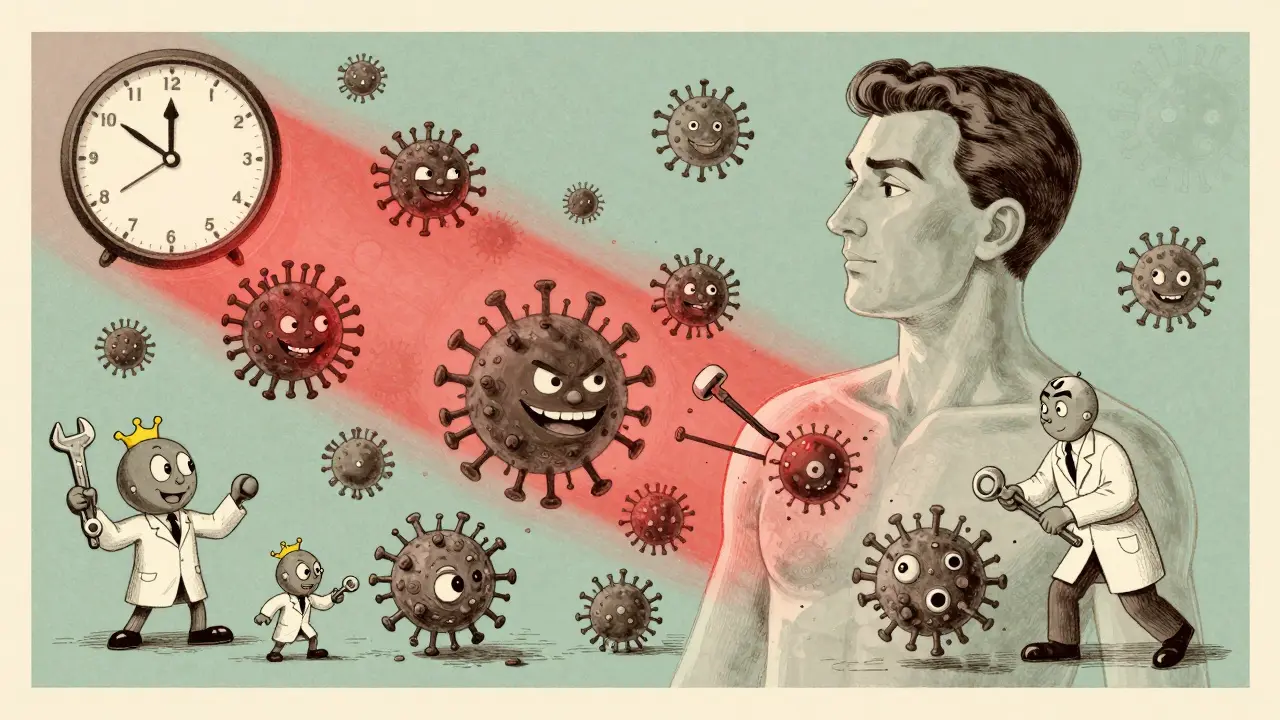
When you catch a virus-whether it’s the flu, COVID-19, or hepatitis C-your body fights back. But sometimes, it needs help. That’s where antiviral medications come in. Unlike antibiotics that kill bacteria, antivirals don’t destroy viruses. Instead, they slow them down. They block the virus from copying itself, giving your immune system the edge it needs to clear the infection. And for some diseases, like HIV and hepatitis C, these drugs can turn a life-threatening illness into something you manage for life.
How Antivirals Actually Work
Antivirals are like targeted saboteurs. They don’t attack the whole body-they zero in on specific parts of the virus’s life cycle. Some stop the virus from entering your cells. Others block the enzymes it needs to copy its genetic material. For example, tenofovir and lamivudine, used in HIV treatment, mimic the building blocks of viral DNA. When the virus tries to use them, it gets stuck and can’t replicate. Others, like oseltamivir (Tamiflu), stop flu viruses from escaping infected cells so they can’t spread to others.
The key is timing. Most antivirals work best when taken within the first 48 to 72 hours after symptoms start. After that, the virus has already taken over too many cells. That’s why getting tested early matters. If you’re at risk for severe illness-say, you’re over 50, have diabetes, or a weakened immune system-waiting too long can mean the difference between recovering at home and ending up in the hospital.
Top Antiviral Treatments for Common Viral Infections
Not all antivirals work for every virus. Each drug is built for a specific target. Here’s what’s actually used today:
Influenza (Flu)
The CDC recommends four antivirals for flu: oseltamivir (Tamiflu), zanamivir (Relenza), peramivir (Rapivab), and baloxavir marboxil (Xofluza). Tamiflu, taken as a pill, can shorten symptoms by one to two days if started early. Xofluza is a single-dose pill that works differently-it stops the virus from making the proteins it needs to multiply. But zanamivir, an inhaler, isn’t safe for people with asthma or COPD. It can trigger breathing problems.
COVID-19
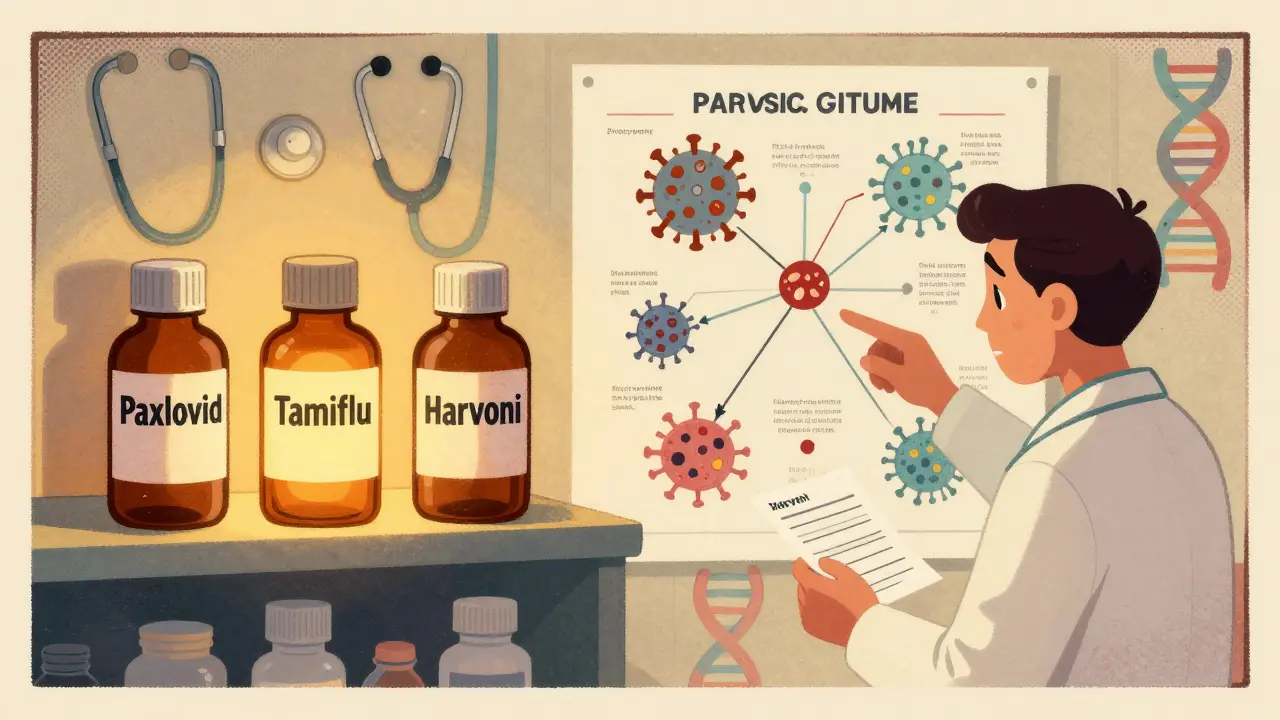
Two oral antivirals changed the game for high-risk patients: Paxlovid and molnupiravir (Lagevrio). Paxlovid, a combo of nirmatrelvir and ritonavir, cuts hospitalization risk by 89% when taken within five days of symptoms. But it comes with a catch: ritonavir interferes with dozens of common medications. If you’re on statins, blood thinners, or certain heart or anxiety meds, Paxlovid could be dangerous. That’s why doctors check your full list of prescriptions before prescribing it.
Molnupiravir is less effective-only about 30% reduction in hospitalization-but it doesn’t have as many drug interactions. It’s usually a backup option. Both drugs have one weird side effect: a metallic taste. About 60% of people on Paxlovid report it. Some call it “Paxlovid mouth.” It’s not harmful, but it’s annoying enough that people stop taking it.
Hepatitis C
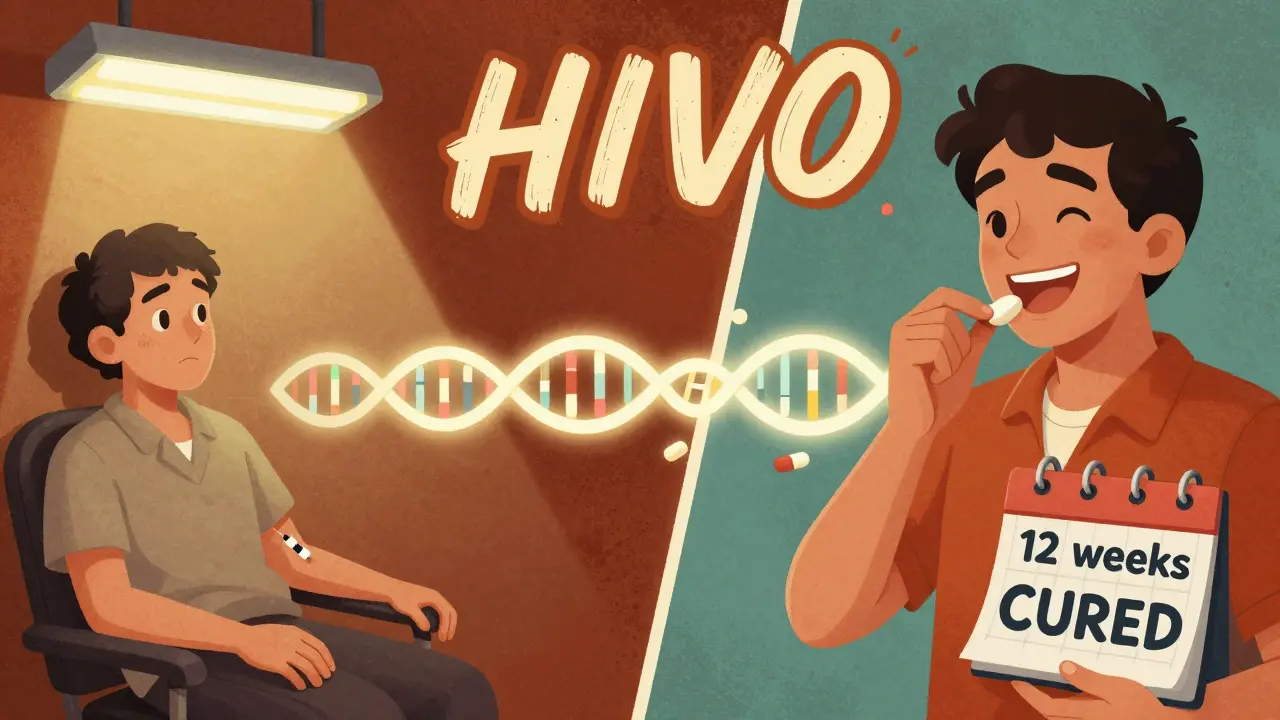
Before 2011, hepatitis C treatment meant weekly injections of interferon for up to a year, with harsh side effects like depression, fatigue, and flu-like symptoms. Cure rates were only 40-80%. Now, it’s all oral pills. Drugs like Harvoni, Epclusa, and Mavyret cure over 95% of cases in just 8 to 12 weeks. Side effects? Usually mild-headache or tiredness. Patients who’ve been through both say the newer drugs feel like a miracle.
HIV
HIV used to be a death sentence. Now, with combination therapy-usually two nucleoside reverse transcriptase inhibitors (NRTIs) plus an integrase inhibitor-people with HIV live just as long as anyone else. Drugs like dolutegravir and bictegravir suppress the virus so well, many patients never develop AIDS. And now, there’s Cabenuva, a long-acting injectable given every month or two. No more daily pills. For many, that’s life-changing.
Why Antivirals Aren’t a Magic Bullet
Even the best antivirals have limits. First, they’re narrow. Paxlovid works for SARS-CoV-2 but does nothing for flu or hepatitis. There’s no universal antiviral pill yet. Second, viruses evolve. Flu strains change every year. HIV mutates fast, which is why combination therapy is essential-hitting it from multiple angles keeps resistance from developing.
Third, access is uneven. In the U.S., only 38% of eligible high-risk patients got antivirals for COVID-19 in early 2023. Why? Some pharmacies ran out. Others didn’t stock them. Some doctors didn’t know how to prescribe them. In low-income countries, less than 5% of eligible patients got them at all. Cost is a huge barrier-even with insurance, copays can hit hundreds of dollars.
And rebound happens. About 10-15% of people on Paxlovid see symptoms return after finishing the course. It’s not a new infection-it’s the virus coming back temporarily. Most recover quickly, but it’s confusing and scary. The CDC says you’re still contagious during rebound, so isolation continues.
What’s Next for Antiviral Drugs
The future is promising. Researchers are working on broad-spectrum antivirals that could work against multiple viruses at once. One approach uses CRISPR gene-editing tools to slice up viral DNA inside cells. Excision BioTherapeutics is testing EBT-101 for HIV in early trials. If it works, it could lead to a cure.
Other innovations include new oral antivirals for flu, like ensitrelvir, which just got fast-track review in Europe. Long-acting injectables for prevention are also expanding. Apretude, an injectable for HIV prevention, is now used by people at high risk who don’t want to take a daily pill.
But experts warn we’re still playing catch-up. As Dr. Vincent Racaniello from Columbia University points out, most antivirals are designed after a virus emerges. We need drugs ready before the next pandemic. That’s why funding for broad-spectrum research is critical.
What You Should Know Before Taking an Antiviral
If you think you have a viral infection and might benefit from antivirals, here’s what to do:
- Get tested as soon as symptoms appear. Don’t wait.
- Tell your doctor about every medication, supplement, and herb you take. Drug interactions can be deadly.
- Ask: Is this antiviral right for my condition, age, and health history?
- Follow the full course-even if you feel better. Stopping early can lead to resistance.
- If you’re prescribed Paxlovid and taste a metallic flavor, don’t assume it’s broken. It’s normal.
For hepatitis C, testing is simple-a blood test-and treatment is highly effective. For flu and COVID-19, early action saves lives. But you have to act fast.
Who Should Consider Antiviral Treatment?
You’re a candidate if you have:
- One or more risk factors: age 50+, obesity, diabetes, chronic lung or kidney disease, or a weakened immune system
- Symptoms of flu, COVID-19, or another treatable viral infection
- Access to testing and a provider who can prescribe within the critical window
If you’re young, healthy, and have mild symptoms, you likely don’t need antivirals. Your immune system can handle it. But if you’re at risk, skipping treatment could cost you your health-or your life.
Do antiviral medications work for all viral infections?
No. Antivirals are virus-specific. For example, Paxlovid works for SARS-CoV-2 but not for flu or hepatitis. Oseltamivir treats influenza but has no effect on COVID-19. There’s no universal antiviral pill yet. Researchers are working on broad-spectrum options, but currently, treatment depends on matching the drug to the virus.
Can I take antivirals with other medications?
It depends. Paxlovid contains ritonavir, which interacts with 34+ common drugs, including statins, blood thinners, and some antidepressants. Taking them together can cause dangerous side effects. Always give your doctor a full list of everything you take-prescription, over-the-counter, and supplements. Use the University of Liverpool’s online drug interaction checker if you’re unsure.
Why do I need to start antivirals so soon after symptoms begin?
Viruses replicate quickly. By day 3-5, they’ve spread through your body and triggered a strong immune response. Antivirals work best when they stop the virus before it multiplies too much. After that window, the damage is already done. Taking them late won’t help much and may not prevent complications.
Are antivirals safe during pregnancy?
Some are. Oseltamivir and zanamivir are considered safe for flu during pregnancy. For COVID-19, Paxlovid is used when benefits outweigh risks, especially in high-risk pregnant patients. Always consult your OB-GYN. The CDC has specific guidelines for antiviral use in pregnancy, and many are now routinely recommended for pregnant people with high-risk conditions.
What’s the difference between antivirals and vaccines?
Vaccines train your immune system to recognize and fight viruses before you get sick. Antivirals treat you after you’re already infected. Vaccines prevent; antivirals heal. They’re both important. You shouldn’t rely on antivirals instead of vaccines. The best protection is prevention through vaccination, with antivirals as a backup if you still get infected.
Is it true that hepatitis C can be cured?
Yes. Direct-acting antivirals (DAAs) like Harvoni and Mavyret cure over 95% of hepatitis C cases in just 8 to 12 weeks. They’re oral pills with few side effects. The old treatments-interferon and ribavirin-had brutal side effects and lower success rates. Today, hepatitis C is one of the most curable chronic infections in medicine.
Why is Paxlovid so hard to get sometimes?
Supply issues, prescribing confusion, and drug interactions make Paxlovid tricky to distribute. Some pharmacies don’t stock it because of low demand or storage needs. Others won’t prescribe it because doctors aren’t trained to check for interactions. A 2022 Kaiser Family Foundation survey found 34% of eligible patients couldn’t access it due to pharmacy shortages or provider hesitation. Stewardship programs are now being rolled out to fix this.
Final Thoughts: Know Your Options
Antiviral medications aren’t magic, but they’re powerful tools. For flu, COVID-19, hepatitis C, and HIV, they’ve changed survival rates, quality of life, and even how we think about chronic disease. The biggest mistake people make? Waiting. If you’re at risk and feel sick, don’t wait for your symptoms to get worse. Call your doctor. Get tested. Ask if an antiviral is right for you. Early action saves lives-and it’s simpler than you think.





11 Comments
Andrew Kelly
December 19, 2025 at 14:29
Let me get this straight - you’re telling me we’re supposed to trust these ‘antivirals’ when Big Pharma wrote the playbook? The same companies that pushed opioids and lied about side effects? These pills are just temporary bandages while they patent the next ‘miracle cure’ that costs $1,200 a dose. And don’t even get me started on the ‘metallic taste’ - that’s not a side effect, that’s the government’s tracking chip activating. You think they’d let you swallow something harmless? Wake up.
Anna Sedervay
December 21, 2025 at 12:43
One must, with the utmost intellectual rigor, interrogate the epistemological foundations upon which the current antiviral paradigm is erected. The very notion that a pharmacological agent can ‘inhibit viral replication’ presupposes a reductive, mechanistic worldview that ignores the holistic interplay of bioenergetic fields, microbiome symbiosis, and the soul’s innate capacity for self-regulation. One wonders - if the body is so inherently capable of healing, why are we being conditioned to outsource this sacred process to corporate laboratories? The metallic taste? A metaphysical signal - the soul recoiling from synthetic intrusion.
Ashley Bliss
December 22, 2025 at 17:41
I just want to say - this whole antiviral thing? It’s not just about medicine. It’s about control. They want us to believe we’re helpless unless we swallow their little pills. I’ve seen people go from vibrant, alive, full of joy - to zombies on daily meds, scared to breathe without a prescription. And don’t even get me started on how they make you feel guilty if you don’t take it. ‘You’re risking your life!’ they say. But what if your life was already perfect - until they told you it wasn’t? I’m not saying don’t take them. I’m saying: who decided you needed saving in the first place?
Lynsey Tyson
December 23, 2025 at 19:44
I’ve been on HIV meds for 12 years now. The old stuff? Horrible. The new ones? I take one pill a day and feel better than I did in my 20s. I know it sounds like marketing, but it’s real. I’m not saying everyone needs it - but if you’re eligible and you’re scared, talk to your doctor. No one’s forcing you. But don’t let fear stop you from living.
Dikshita Mehta
December 24, 2025 at 13:27
As a clinical pharmacist in Mumbai, I’ve seen patients in rural India access hepatitis C treatment for under $20 thanks to generic DAAs. The WHO has listed these drugs as essential medicines. The real crisis isn’t the science - it’s distribution. In the U.S., access barriers are systemic. In India, we have shortages too, but community health workers bridge the gap. The solution isn’t more pills - it’s more equity.
Gloria Parraz
December 24, 2025 at 19:29
I had COVID in January. I was terrified. My doctor prescribed Paxlovid. I took it. I got the metallic taste - I thought I’d swallowed a battery. But I finished the course. My fever broke in 36 hours. My husband? He didn’t take it. He got pneumonia. Don’t be that person. If you’re high-risk, DO NOT WAIT. I’m not yelling - I’m begging you. Your future self will thank you.
Nicole Rutherford
December 25, 2025 at 12:47
Of course you’re going to take a pill that gives you a weird taste. You’re the same person who gets flu shots every year and still complains about ‘chemicals in the water.’ You think this is science? It’s theater. And you’re the audience. You’ll swallow anything if it’s labeled ‘FDA-approved.’ Meanwhile, your gut microbiome is screaming. But hey - at least you’re not ‘that guy’ who didn’t take the pill, right?
Mark Able
December 26, 2025 at 08:31
Wait - so if I’m 48, overweight, and have high blood pressure, I’m supposed to take this Paxlovid thing? But if I’m 30 and healthy, I’m just supposed to ‘ride it out’? That’s not medicine - that’s classism. Why are we treating people differently based on their BMI? This isn’t healthcare - it’s a popularity contest.
Dorine Anthony
December 28, 2025 at 02:52
I’m just here to say - if you’re reading this and you’re scared about taking antivirals, you’re not alone. I was too. I talked to my nurse, asked a million questions, and realized most of my fear came from not knowing. Knowledge is power. Not the pills - the info. Ask your doctor. Write down your questions. You’ve got this.
Janelle Moore
December 28, 2025 at 07:28
They say antivirals work but they don’t tell you they’re made from lab-grown viruses. The government put them in the water to keep us docile. That metallic taste? That’s the chip talking. And don’t even get me started on the flu shot - it’s the same stuff, just in your arm. They want you weak. They want you dependent. You think this is medicine? It’s mind control. And they’re watching you right now.
Henry Marcus
December 28, 2025 at 08:29
Let’s be real - antivirals? Sure, they’re ‘effective’ - but only if you ignore the fact that every single one of them was rushed through trials during a panic - and now they’re being pushed like candy at a carnival! And don’t get me started on the rebound effect - it’s not ‘rebound’ - it’s a cover-up! The virus didn’t come back - it was never gone! They’re lying to you! And that ‘metallic taste’? That’s the taste of betrayal! The taste of corporate greed! The taste of your freedom being slowly dissolved in a pill you didn’t ask for - and now you’re addicted to the lie!