

SSRIs with NSAIDs: How This Common Drug Combo Increases GI Bleeding Risk and What to Do About It
When you’re taking an SSRI for depression or anxiety and also need pain relief for arthritis, back pain, or headaches, it’s easy to assume that popping an ibuprofen or naproxen is harmless. After all, your doctor didn’t warn you. But here’s the truth: combining SSRIs with NSAIDs doesn’t just add side effects - it multiplies your risk of a dangerous, sometimes life-threatening, gastrointestinal bleed.
Why This Combination Is More Dangerous Than You Think
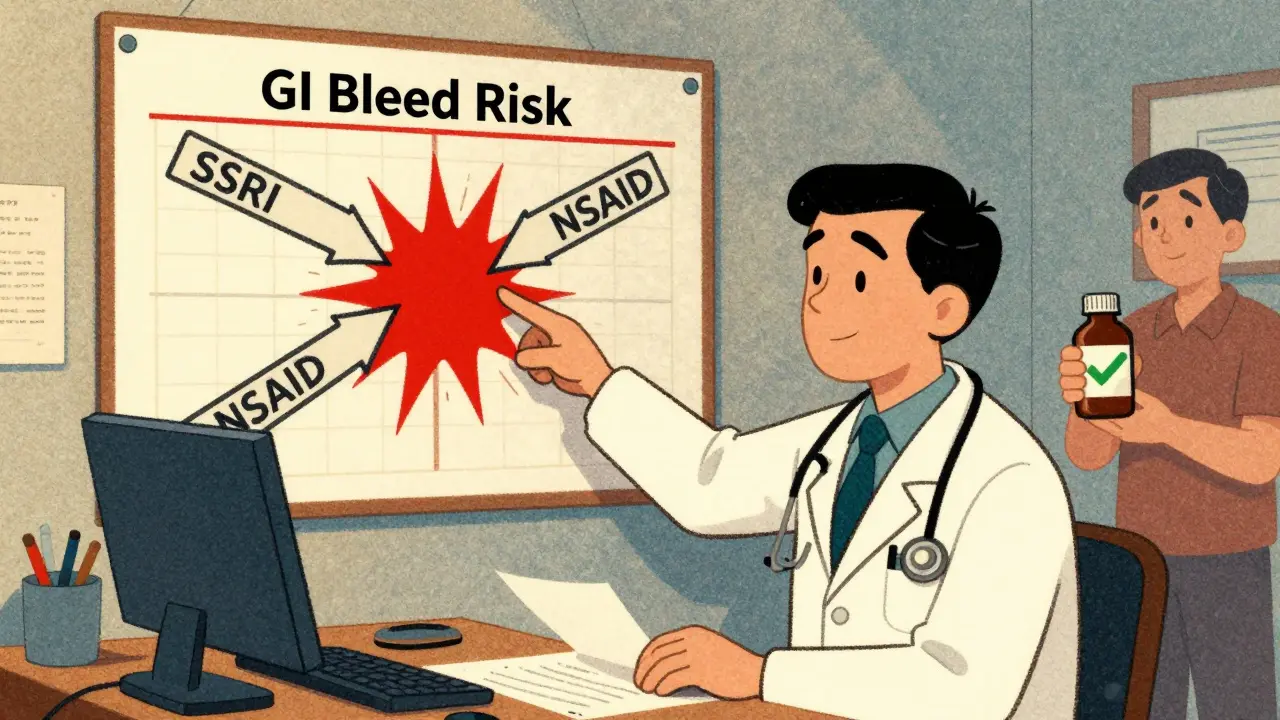
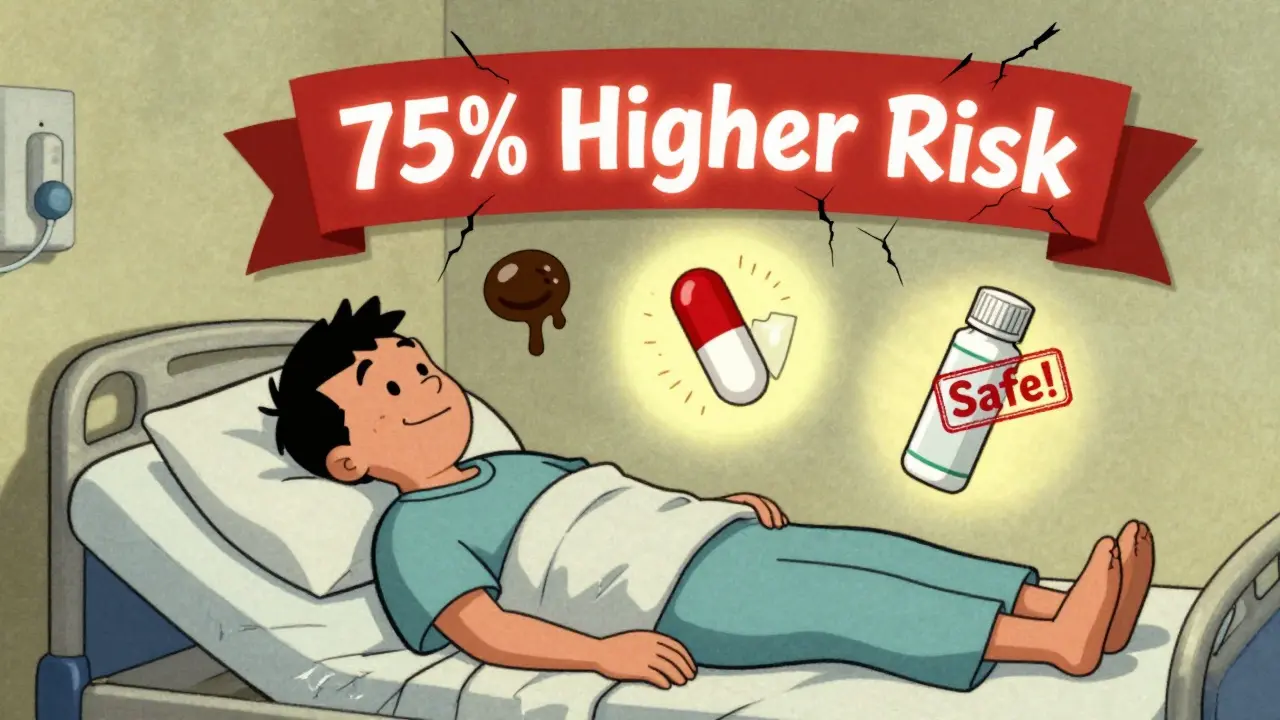
Selective serotonin reuptake inhibitors (SSRIs) like sertraline, fluoxetine, and escitalopram work by increasing serotonin in the brain. But serotonin isn’t just a mood chemical - it’s also critical for blood clotting. Platelets, the cells that stop bleeding, rely on serotonin to stick together and seal damaged blood vessels. SSRIs block the serotonin transporter in platelets, leaving them less able to clump when needed. That’s why even healthy people on SSRIs alone have a 1.5 to 2 times higher risk of upper GI bleeding than those not taking them. NSAIDs like ibuprofen, naproxen, and diclofenac work differently. They shut down prostaglandins - natural compounds that protect the stomach lining and promote blood flow to the gut. Without them, the stomach becomes vulnerable to acid damage. NSAIDs alone increase GI bleeding risk by 2 to 4 times. Put them together, and you don’t get a 3- to 6-fold increase. You get a 75% higher risk than NSAIDs alone - meaning the danger isn’t just added, it’s amplified. A 2022 meta-analysis in Nature Scientific Reports tracking over 1.2 million patients confirmed this: the odds ratio for upper GI bleeding with both drugs is 1.75. That’s not a small number. It’s the same risk level as taking warfarin in older adults.Who’s at the Highest Risk?
Not everyone on this combo will bleed. But some people are far more vulnerable:- People over 65 - aging stomachs heal slower and have thinner mucosal lining.
- Those with a history of ulcers or GI bleeding - even if it was years ago.
- Anyone taking low-dose aspirin - adding that to SSRIs and NSAIDs can spike bleeding risk over 12-fold.
- Patients on multiple blood-thinning meds - like clopidogrel or anticoagulants.
- Those taking high-dose NSAIDs - over 1,200 mg/day of ibuprofen equivalent.
- People on SSRIs for more than 90 days - the longer you’re on them, the more platelet function declines.
Here’s the scary part: many of these patients never get flagged. A 2020 BMJ Quality & Safety study found that EHR systems missed this interaction in 80% of cases. Doctors often assume NSAIDs are safe with antidepressants because they’ve been prescribed together for decades. But the science has changed - and the warnings haven’t caught up in practice.
Which SSRIs and NSAIDs Are Riskiest?
Not all SSRIs are equal when it comes to bleeding. Those with the strongest effect on platelet serotonin reuptake - like paroxetine and fluoxetine - carry the highest risk. Sertraline and citalopram are slightly safer, but still dangerous when mixed with NSAIDs. For NSAIDs, the risk varies too:- High risk: Naproxen, diclofenac, indomethacin
- Moderate risk: Ibuprofen
- Lowest risk: Celecoxib (a COX-2 inhibitor)
Even celecoxib isn’t risk-free. A 2017 study from the American Society for Clinical Pharmacology and Therapeutics found it still carries a 16% increased bleeding risk compared to no NSAID use. And while it’s better than other NSAIDs, it’s not a free pass - especially when combined with SSRIs.
What to Do Instead: Safer Alternatives
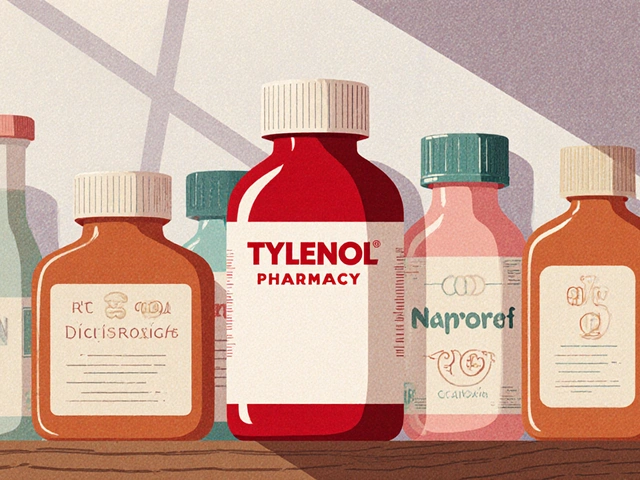
The best way to avoid this risk? Don’t combine them at all. Here’s how to manage pain safely while on an SSRI:- Switch to acetaminophen (paracetamol). This is the gold standard alternative. Multiple studies, including the 2023 Digestive Diseases and Sciences review, show no increased bleeding risk with acetaminophen and SSRIs. It’s not as strong as NSAIDs for inflammation, but it’s safe for headaches, muscle aches, and mild arthritis pain.
- Try non-drug options. Physical therapy, heat/cold therapy, acupuncture, or even cognitive behavioral therapy for chronic pain can reduce reliance on pills.
- Use topical NSAIDs. Gels like diclofenac gel (Voltaren) deliver the drug directly to the skin. Only about 6% enters the bloodstream - so the GI risk drops dramatically.
- Consider vortioxetine. This newer antidepressant works differently than SSRIs and has shown 40% lower bleeding risk in clinical trials. If your depression isn’t responding well to your current SSRI, talk to your doctor about switching.
One patient on Reddit shared: “My doctor switched me from naproxen to acetaminophen when I started sertraline. No stomach issues in two years. Why didn’t anyone tell me this was an option?”
When You Can’t Avoid the Combo: How to Protect Yourself
Sometimes, you can’t stop the NSAID - maybe you have severe rheumatoid arthritis or a recent injury. If you must take both, here’s what works:- Take a proton pump inhibitor (PPI). Omeprazole, esomeprazole, or pantoprazole reduce stomach acid and help heal the lining. The Lancet found PPIs cut bleeding risk by 70% in patients on both SSRIs and NSAIDs. Take it daily - not just when you feel pain.
- Use the lowest NSAID dose for the shortest time. No more than 7-10 days if possible. Avoid daily, long-term use unless absolutely necessary.
- Know the warning signs. Black, tarry stools; vomiting blood or material that looks like coffee grounds; sudden dizziness or weakness; unexplained fatigue. These aren’t normal. Call your doctor or go to the ER.
- Ask for an AIMS65 score. This simple tool (based on albumin, INR, mental status, blood pressure, and age) helps predict bleeding risk. If your score is 2 or higher, you need a PPI - no exceptions.
The Bigger Picture: Why This Keeps Happening
Over 264 million SSRI prescriptions and 70 million NSAID prescriptions are filled in the U.S. every year. That’s tens of millions of people potentially on this dangerous combo. The FDA added warnings to SSRI labels in 2019, but most patients never see them. Doctors don’t always check for interactions. And patients? They assume their meds are safe because they’re “prescribed.” A 2021 JAMA Internal Medicine study showed that after a simple clinician education program, inappropriate SSRI-NSAID combinations dropped from 28% to 9% in just six months. That’s proof this is fixable - if we act.What You Should Do Right Now
If you’re on an SSRI and take NSAIDs regularly:- Check your medication list. Are you taking ibuprofen, naproxen, or diclofenac?
- Have you ever had stomach pain, ulcers, or black stools?
- Are you over 65?
- Are you also on aspirin or another blood thinner?
If you answered yes to any of these, talk to your doctor before your next refill. Don’t wait for bleeding to happen. Ask: “Can I switch to acetaminophen?” or “Should I be on a PPI?”
It’s not about fear. It’s about awareness. This interaction is preventable. You just need to ask the right questions.
Can I take ibuprofen with sertraline?
It’s not recommended. Taking ibuprofen with sertraline increases your risk of upper GI bleeding by about 75% compared to ibuprofen alone. While ibuprofen is one of the safer NSAIDs, it still interferes with stomach protection and platelet function. If you need pain relief, switch to acetaminophen (Tylenol) instead. If you must use ibuprofen, take a proton pump inhibitor like omeprazole daily and only use the lowest effective dose for the shortest time possible.
Do all SSRIs increase bleeding risk the same way?
No. SSRIs vary in how strongly they block serotonin reuptake in platelets. Paroxetine and fluoxetine have the strongest effect and carry the highest bleeding risk. Sertraline and citalopram are slightly less risky, but still dangerous when combined with NSAIDs. Even the "safer" SSRIs aren’t risk-free. The key isn’t just which SSRI you’re on - it’s whether you’re combining it with any drug that affects bleeding, like NSAIDs or aspirin.
Is celecoxib safe to take with SSRIs?
Celecoxib (Celebrex) is the safest NSAID for the stomach, but it’s not safe with SSRIs. While it carries about 50% less GI bleeding risk than traditional NSAIDs like naproxen, studies still show a 16% increased risk compared to no NSAID use. When combined with an SSRI, that risk climbs significantly. It’s better than other NSAIDs, but acetaminophen or topical NSAIDs are still the better choices if you’re on an antidepressant.
What are the signs of a GI bleed from this combo?
Look for: black, tarry, or bloody stools; vomiting blood or material that looks like coffee grounds; sudden dizziness, lightheadedness, or fainting; rapid heart rate; unexplained fatigue or weakness. These aren’t normal side effects - they’re medical emergencies. If you experience any of these while on an SSRI and NSAID, seek care immediately. Many patients delay seeking help, thinking it’s just "upset stomach," but by the time they go to the ER, they often need blood transfusions.
Can I stop NSAIDs cold turkey if I’m on an SSRI?
If you’ve been taking NSAIDs daily for chronic pain, stopping suddenly can cause rebound pain or inflammation flare-ups. Don’t quit abruptly. Talk to your doctor about a plan. For arthritis or back pain, switching to acetaminophen, physical therapy, or topical treatments can help. If you’re taking NSAIDs for a short-term injury, you can usually stop safely. But if you’re on them long-term, your doctor may recommend tapering or adding a different pain management strategy before discontinuing.
Should I take a PPI if I’m on an SSRI and NSAID?
Yes - if you’re taking both, you should be on a proton pump inhibitor (PPI) like omeprazole or esomeprazole daily. The American Gastroenterological Association recommends this for all patients on this combination. Studies show PPIs reduce bleeding risk by about 70%. The cost is low - $15-$30 a month - and the benefit is huge. Don’t wait for symptoms. Prevention is the only reliable strategy.
Next Steps: What to Ask Your Doctor
Bring this list to your next appointment:- "I’m on [SSRI name]. I’ve been taking [NSAID name] for [reason]. Is this combination safe?"
- "Is there a safer pain reliever I can use instead?"
- "Should I be on a stomach-protecting medication like omeprazole?"
- "Could my symptoms - like stomach pain or fatigue - be related to this combo?"
- "Can we review all my meds together to check for other hidden interactions?"
This isn’t just about one drug interaction. It’s about learning to ask questions, challenge assumptions, and take control of your health. Millions of people are on this combo right now - unaware of the danger. You don’t have to be one of them.



11 Comments
Prakash Sharma
January 8, 2026 at 13:13
This is why India needs better drug safety education. My uncle took sertraline and naproxen for years - never told his doctor. Got a GI bleed at 72. Now he’s on acetaminophen and omeprazole. Why do we wait for disaster to act? This isn’t science - it’s negligence.
Doctors here don’t even know SSRIs affect platelets. They think antidepressants are just for "mood." We need public campaigns, not just blog posts.
Donny Airlangga
January 9, 2026 at 18:37
I’m a nurse in Chicago and I see this all the time. Patients come in with black stools, and when we check meds - boom, SSRI + ibuprofen daily. No PPI. No warning. It’s heartbreaking.
Most don’t even know they’re at risk. I wish every pharmacy had a sticker on the NSAID bottle: "Don’t mix with antidepressants." Simple. Clear. Life-saving.
swati Thounaojam
January 9, 2026 at 20:32
my doc just gave me naproxen with sertraline and never said a word. i’m 58. should i be scared? 🤔
Luke Crump
January 9, 2026 at 22:29
Let’s be real - this isn’t about "risk." It’s about control. The pharmaceutical industry doesn’t want you to know acetaminophen works just fine. Why? Because they make billions off NSAIDs and PPIs.
They invented "risk" to sell more pills. You think your doctor’s looking out for you? Nah. They’re paid by the system. The real danger isn’t the combo - it’s blind trust in authority.
Go primal. Fast. Move. Breathe. Your body doesn’t need pills. It needs truth.
Aubrey Mallory
January 11, 2026 at 16:56
To the person asking if they should be scared - yes, but don’t panic. This is fixable. Talk to your doctor tomorrow. Say: "I’m on sertraline and naproxen. I just learned this combo increases bleeding risk. What’s my safest path forward?"
You’re not alone. Thousands of us are in the same boat. And you’re already ahead because you’re asking. That’s the first step to taking back your health.
Also - if you’re over 55, ask for an AIMS65 score. It’s free, takes 30 seconds, and could save your life.
Dave Old-Wolf
January 11, 2026 at 21:56
So if I’m on citalopram and take ibuprofen for my back, how bad is it really? Like, am I gonna bleed out tomorrow or is this more of a "maybe in 5 years" thing?
Also, what if I only take ibuprofen once a week? Is that still risky?
I’m not trying to downplay this, I just want to know what level of risk I’m actually living with. Numbers help.
Evan Smith
January 12, 2026 at 19:32
Wait wait wait - so you’re telling me I’ve been risking my life for 3 years because I thought Tylenol was "bad for my liver" and ibuprofen was "the healthy choice"?
My bad. I’ll switch to acetaminophen tomorrow. And I’m printing this out and taping it to my pill bottle. This is the most useful thing I’ve read all year. Thanks, OP. Seriously.
Lois Li
January 14, 2026 at 17:09
I’m on sertraline and took naproxen for 6 months after my knee surgery. I had zero symptoms. Then I started taking omeprazole because my friend said "it’s good for stomachs."
Turns out I didn’t need it - but now I know I should’ve. I’m glad I found this. I’m going to tell my mom. She’s on fluoxetine and celecoxib. She thinks celecoxib is "safe." It’s not.
Thank you for writing this. I wish I’d seen it sooner.
christy lianto
January 14, 2026 at 19:55
My sister’s on paroxetine and takes diclofenac for RA. She’s 61. I freaked out when I read this. We called her doctor yesterday. They switched her to topical diclofenac gel and added omeprazole.
She’s already feeling better - not just physically, but mentally. She said, "I didn’t realize I was living with a ticking clock."
Don’t wait. Act now. Your body is not a lab experiment. It’s your home. Protect it.
Annette Robinson
January 15, 2026 at 21:22
Thank you for sharing this with such clarity. I’ve been on escitalopram for 5 years and used ibuprofen for migraines. I never connected the dots.
I’ve switched to acetaminophen and started daily stretching. No more NSAIDs. I feel empowered, not scared. Knowledge is power - and you just gave me a lot of it.
If you’re reading this and you’re on both - please, talk to your doctor. You deserve to be safe.
Molly Silvernale
January 16, 2026 at 10:32
It’s not just the drugs-it’s the silence. The quiet, institutional silence. The way medicine treats bleeding risk like a footnote, not a headline. We’ve normalized danger because it’s convenient. We’ve turned prevention into an afterthought because profit prefers reaction over prevention.
And yet-the body remembers. The stomach remembers. The platelets remember.
So when you read this, don’t just nod. Don’t just share. Act. Ask. Challenge. Demand. Because the next life saved won’t be by accident-it’ll be because someone refused to look away.
And that? That’s the real antidote.