
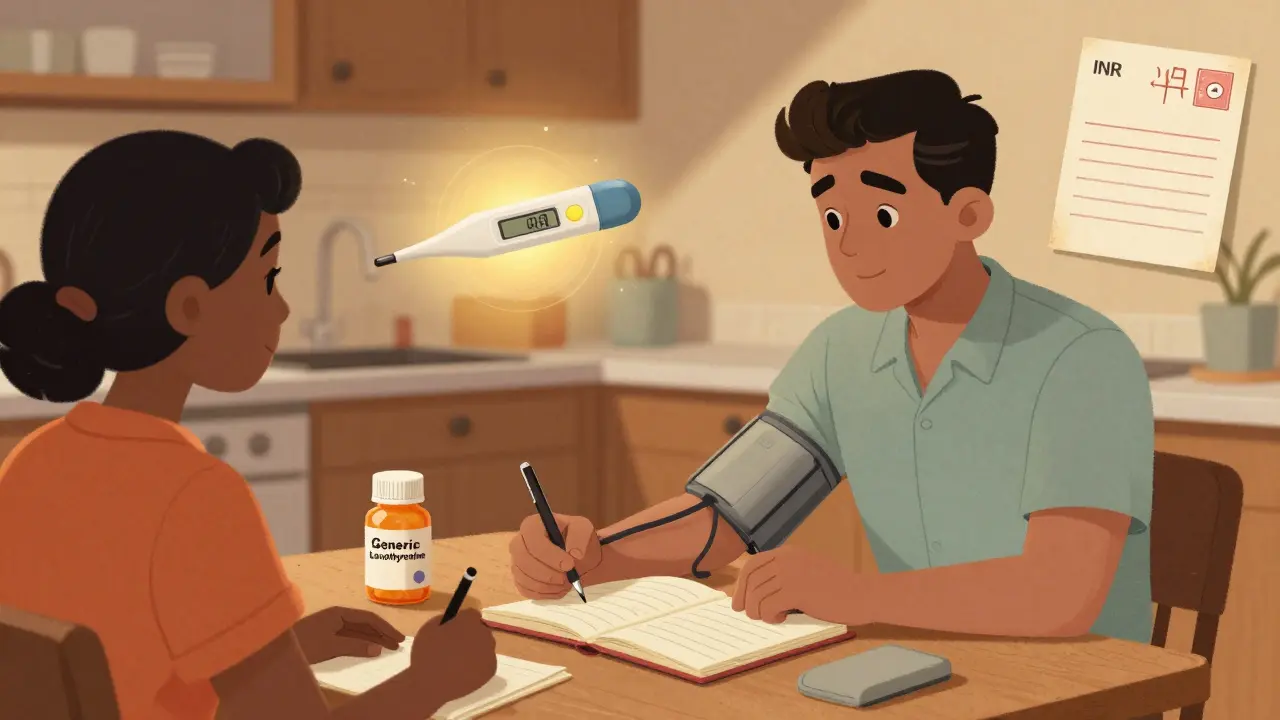
Monitoring Your Health After Switching to Generics
When you switch from a brand-name drug to a generic version, you’re not just saving money-you’re switching to a medication that the FDA says is identical in every way that matters. But here’s the thing: identical doesn’t always mean exactly the same in how your body reacts. Most people switch without a hitch. But for some, even tiny differences in how the drug is absorbed can cause noticeable changes. That’s why monitoring your health after switching to generics isn’t optional-it’s smart.
Why You Might Notice a Difference
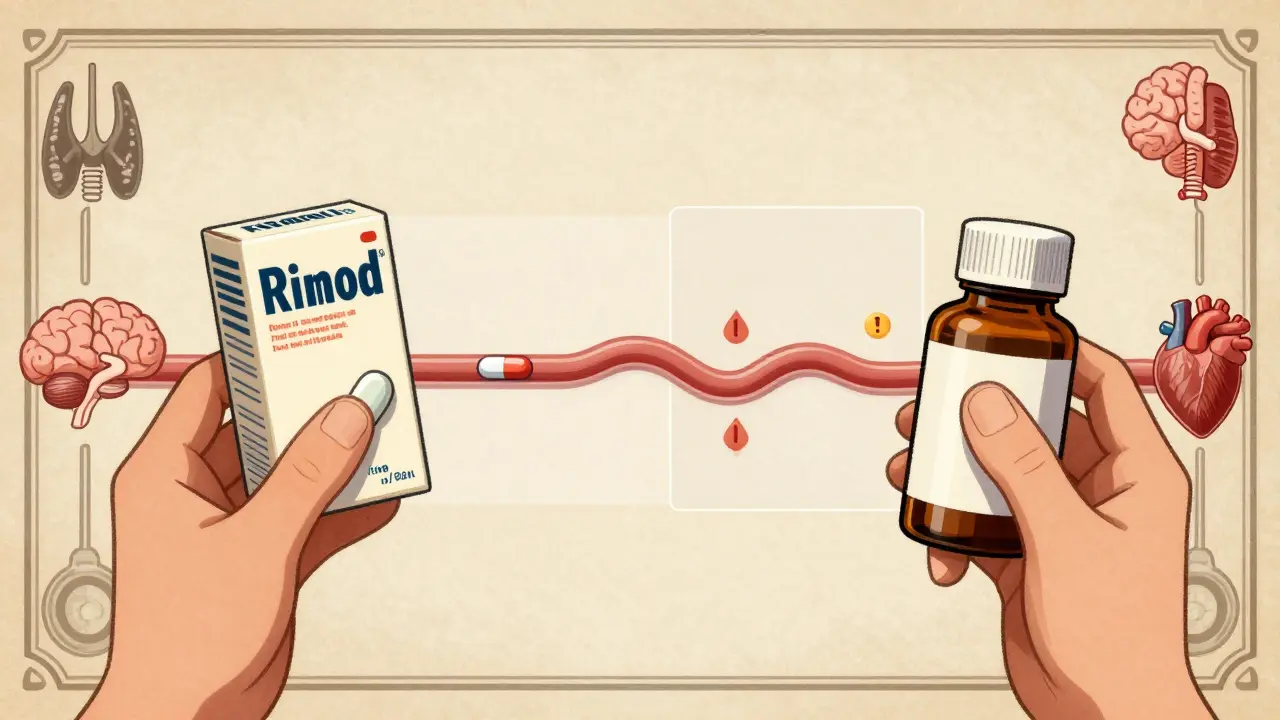
Generic drugs have the same active ingredient, strength, and dosage form as their brand-name cousins. The FDA requires them to prove they deliver the same amount of medicine into your bloodstream within the same time frame. That’s called bioequivalence. The standard? The amount of drug in your blood must fall within 80% to 125% of the brand-name version. Sounds tight, right? It is. But that still leaves room for small variations.These differences aren’t about safety. They’re about how your body responds. For most people, it’s like switching from one brand of coffee to another-you might notice the taste is a little different, but the caffeine kick is the same. But for people taking medications with a narrow therapeutic index-where the difference between an effective dose and a harmful one is razor-thin-even a 5% change can matter.
Drugs like warfarin (a blood thinner), levothyroxine (for thyroid issues), and certain anti-seizure meds like lamotrigine fall into this category. If your body absorbs 10% less of the drug after switching, your INR might drop, your thyroid levels could shift, or you might have a seizure you didn’t expect. That’s why monitoring isn’t about distrust-it’s about control.
What to Track After the Switch
The first 30 days after switching are critical. You don’t need to panic, but you do need to pay attention. Here’s what to watch for:- Symptoms: Are your original symptoms returning? If you’re on levothyroxine, are you suddenly more tired or gaining weight? If you’re on an anti-seizure drug, are you having more auras or muscle twitches?
- Side effects: Did you start feeling nauseous, dizzy, or having headaches where you didn’t before? These could be from inactive ingredients-fillers, dyes, or coatings-that differ between brands.
- Lab results: For chronic conditions, your numbers matter. If you’re on warfarin, check your INR at 7 days and again at 30 days. Diabetics should test HbA1c at 4 and 8 weeks. People with high blood pressure should check readings daily for the first two weeks.
- Pill appearance: If your pills look different-color, shape, markings-that’s normal. But if you notice a change in how they dissolve, taste, or even smell, write it down. That’s useful info for your doctor or the FDA.
A 2023 Consumer Reports survey found that 24% of people who switched to generics started tracking their health more closely. The most common metrics? Blood pressure (38%), blood sugar (29%), and seizure frequency (17%).
Which Medications Need Extra Care
Not all generics are created equal when it comes to switching. The FDA’s Orange Book lists which drugs have proven therapeutic equivalence. But even within that, some are trickier:| Drug Class | Examples | Why Monitor |
|---|---|---|
| Thyroid Hormones | Levothyroxine | Small changes in absorption can affect TSH levels significantly. 12% of switchers reported issues. |
| Anticoagulants | Warfarin | INR fluctuations can lead to clotting or bleeding. AHA recommends lab checks at 7 and 30 days post-switch. |
| Antiepileptics | Lamotrigine, Phenytoin, Carbamazepine | 62% of reported generic substitution issues involved these. Seizure recurrence is real. |
| Antidepressants | Bupropion, Sertraline | Some report mood shifts or side effects like insomnia or nausea after switching. |
| Immunosuppressants | Cyclosporine, Tacrolimus | Used after transplants. Even small changes can trigger organ rejection. |
These aren’t dangerous drugs. They’re just unforgiving when the dose isn’t spot-on. If you’re on one of these, don’t assume your doctor will automatically check your labs. Ask for them. Schedule follow-ups. Keep a log.
How to Track Your Progress
You don’t need an app. You don’t need fancy tools. Just a notebook or a notes app on your phone. For at least 30 days after switching, write down:- When you took the pill (time and date)
- Any symptoms you felt (good or bad)
- Any lab results or readings (BP, glucose, INR, etc.)
- How you felt overall (energy, mood, sleep)
At the end of 30 days, review it. Did your symptoms improve? Stay the same? Get worse? If they changed, bring this log to your doctor. It’s not just helpful-it’s powerful. One study found that patients who kept logs after switching generics were 3x more likely to catch an issue early and avoid hospitalization.
For chronic conditions like diabetes or hypertension, keep tracking beyond 30 days. Some changes take months to show up. A 2022 PatientsLikeMe analysis showed that 7.3% of switchers had some variation in symptoms, but only 1.2% needed medical intervention. Still-that’s 1 in 80 people. You don’t want to be one of them.
What to Do If Something Feels Off
If you notice a change-especially if it’s sudden or severe-don’t ignore it. Don’t assume it’s "just in your head."First, check the pill. Look at the National Drug Code (NDC) on the bottle. If it’s different from what you had before, that’s normal. But if you switched back and forth between generics, that could be part of the problem. Different manufacturers use different fillers. One might be easier for your stomach. Another might affect absorption.
Second, contact your doctor. Say: "I switched to a generic and I’m feeling X, Y, Z. Can we check my [lab value] or adjust my dose?" Most doctors will agree to a quick follow-up. They’ve seen this before.
Third, report it to the FDA. Use MedWatch. Go to www.fda.gov/medwatch or call 1-800-FDA-1088. Tell them:
- The name of the drug (brand and generic)
- The NDC number
- The lot number (on the bottle)
- Exactly what changed (symptoms, lab values, timing)
The FDA gets over a million reports a year. Only a small fraction are about generics. But when you report, you’re helping them spot trends. That’s how they find out if a specific batch has a problem.
When to Ask for the Brand Name Again
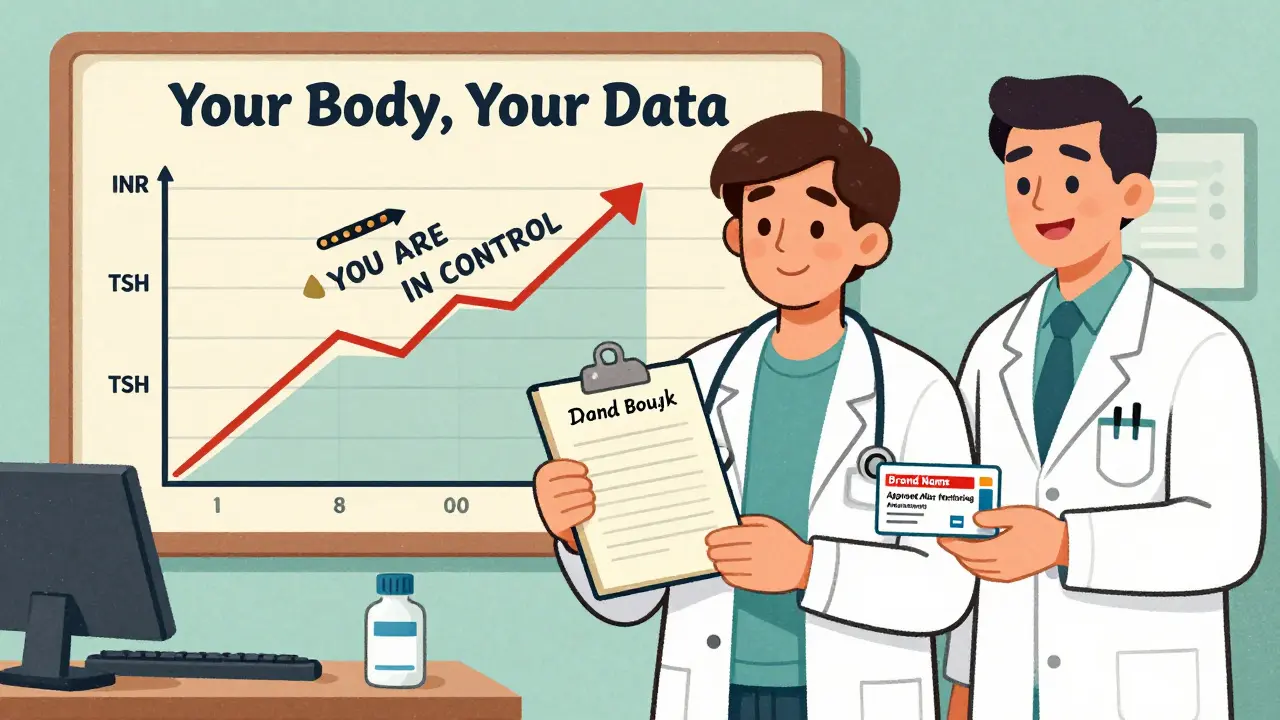
You don’t have to stay on a generic if it’s not working. If you’ve tracked your symptoms, checked your labs, and given it a fair shot-say, 60 to 90 days-and you’re still having issues, talk to your doctor about going back to the brand.Insurance might push back. But if you have documented evidence-lab results, symptom logs, a doctor’s note-you have a strong case. Many insurers will cover the brand if you can prove therapeutic failure. The FDA itself says: "If a patient experiences a therapeutic failure after switching, the prescriber may consider switching back to the brand-name product."
Don’t feel guilty for asking. You’re not being difficult. You’re being informed.
The Bigger Picture
Generics saved the U.S. healthcare system $373 billion in 2022. That’s real money. That’s millions of people who can afford their meds. But the system only works if we pay attention to the small stuff. The FDA approves generics because they’re safe. But they also monitor them because they know: people are not data points. Your body is unique.Most people switch and never look back. That’s great. But if you’re one of the 1 in 10 who notices something different, you’re not alone. And you’re not overreacting. You’re doing exactly what you should: staying in charge of your health.
Are generic drugs really as good as brand-name drugs?
Yes, for most people, generic drugs work just as well. The FDA requires them to meet the same standards for safety, strength, quality, and performance as brand-name drugs. Over 90% of prescriptions in the U.S. are for generics, and studies show they’re equally effective for the vast majority of patients. However, for drugs with a narrow therapeutic index-like warfarin, levothyroxine, or certain seizure meds-some individuals may notice differences due to small variations in how the body absorbs the drug. That doesn’t mean generics are inferior-it means some people need closer monitoring.
How long should I monitor my health after switching to a generic?
For most people, 30 days is enough to see if there’s a change. But if you’re taking a medication with a narrow therapeutic index-like thyroid, heart, or seizure drugs-you should monitor for at least 60 to 90 days. Labs like INR, TSH, or blood glucose should be checked at 7 days, 30 days, and again at 90 days. Symptoms can take weeks to stabilize. Don’t stop tracking just because you feel fine after a week.
Can different generic brands of the same drug affect me differently?
Yes. Even though they contain the same active ingredient, different manufacturers use different inactive ingredients-fillers, dyes, coatings, and binders. These can affect how fast the drug dissolves or how your stomach reacts. If you switch from one generic to another (say, from Teva to Mylan), you might notice changes in side effects or effectiveness. That’s why it’s important to check the NDC number on your bottle each time you refill. If it changes, track your symptoms closely.
What should I do if I think my generic isn’t working?
First, don’t stop taking it. Second, start tracking: write down your symptoms, medication times, and any lab results. Then talk to your doctor. Bring your log. Ask for a lab test if you’re on a critical medication like warfarin or levothyroxine. If your numbers are off or your symptoms returned, your doctor can request the brand-name version. Insurance often approves it if you have documented evidence of therapeutic failure.
How do I report a problem with a generic drug?
Use the FDA’s MedWatch system. Go to www.fda.gov/medwatch or call 1-800-FDA-1088. Be specific: include the drug name (brand and generic), the manufacturer, the NDC number, the lot number, and exactly what happened-symptoms, timing, lab changes. The FDA reviews all reports and uses them to detect patterns. Your report could help prevent problems for others.
Switching to generics is a smart, cost-saving move for most people. But health isn’t one-size-fits-all. Pay attention. Track what matters. Speak up when something feels off. Your body knows when something’s changed-even if the pill looks the same.




15 Comments
Matthew Brooker
February 22, 2026 at 01:26
Switched my levothyroxine last month and yeah I felt like a zombie for two weeks. Not joking. Super tired, weight jumped up, brain fog like I was underwater. Thought I was dying. Got my TSH checked and it was off by 2 points. Switched back to the old generic and boom-back to normal. Don’t let anyone tell you it’s all in your head. Your body knows.
Keep a log. Even if it’s just notes on your phone. It’s worth it.
Emily Wolff
February 23, 2026 at 16:04
People who panic over generics haven’t read the FDA guidelines. If your body ‘reacts’ to a 5% variance, you’re either hypochondriac or on a drug with zero margin for error. Warfarin users? Fine. Everyone else? Stop overthinking.
Jacob Carthy
February 25, 2026 at 14:51
USA makes the best meds in the world. Why would we let some foreign factory make our pills? I switched to generic and got a rash. Same drug. Different country. That’s not science-that’s betrayal. FDA should ban imports that don’t come from American plants. We’re not lab rats.
Lisandra Lautert
February 27, 2026 at 10:06
I switched my lamotrigine. Had a seizure. Not a ‘twitch.’ Not a ‘weird feeling.’ A full-on convulsion. I was in the ER. The NDC was different. They don’t test for individual biochemistry. They test for averages. That’s not medicine. That’s statistics.
Cory L
February 28, 2026 at 18:27
Man. I’ve been on generics for 8 years. No issues. But then I switched from one generic to another-same drug, different maker-and suddenly I felt like my brain was wrapped in cotton. No headaches. No nausea. Just… flat. Like my emotions were muted. Took me 3 weeks to connect the dots. Now I screenshot the NDC every time I refill. It’s not paranoia. It’s strategy.
Bhaskar Anand
March 1, 2026 at 07:02
India produces 60% of the world’s generic drugs. Quality is excellent. Why do Americans act like generics are dangerous? We have factories that supply WHO and FDA. Your fear is ignorance. Your body adapts. You just need to trust science, not fear-mongering blogs.
Stephen Archbold
March 1, 2026 at 09:29
I’ve been on cyclosporine since my transplant. Switched generics once. My levels dropped. I didn’t feel sick. No symptoms. But my doctor caught it in a routine check. Said if we’d waited another week, rejection could’ve started. So yeah. Log your labs. Even if you feel fine. Trust me. Your future self will thank you.
Nick Hamby
March 2, 2026 at 00:38
The fundamental tension here is between population-level pharmacology and individual biological uniqueness. The FDA’s 80-125% bioequivalence standard is statistically sound, but it assumes homogeneity where none exists. Human physiology is not a normal distribution-it is a landscape of micro-variances shaped by epigenetics, gut microbiota, and metabolic idiosyncrasies. To treat all patients as interchangeable units is not just inefficient-it is ethically incomplete. Monitoring is not a failure of trust in generics; it is an affirmation of personal agency in a system that often reduces individuals to data points.
kirti juneja
March 2, 2026 at 03:40
My mom switched to generic warfarin and started bleeding out her gums. We didn’t even know it was the pill until we checked the bottle. Now she only takes the brand. Insurance said no. We fought. We won. You think money saves you? It doesn’t if you lose your life over a pill that doesn’t dissolve right. Track. Speak up. Don’t let anyone tell you you’re being dramatic.
Haley Gumm
March 2, 2026 at 08:10
So you’re telling me that 24% of people who switched to generics started tracking their health… and you’re surprised? People are not stupid. They’ve been burned. The system is designed to maximize profit, not patient outcomes. You think the FDA cares if your INR drops? They care if the manufacturer’s profit margin stays above 15%. Wake up.
Gabrielle Conroy
March 4, 2026 at 04:27
OMG YES PLEASE TRACK YOUR STUFF!!! 📊🩺📱 I started a Google Sheet after switching my sertraline-mood, sleep, headaches, even how my skin felt. Within 10 days I noticed a spike in anxiety. Called my doc. We checked levels. Switched back. Saved my sanity. Do it. It’s easy. I’ll send you the template if you want 😊
Spenser Bickett
March 5, 2026 at 12:20
Wow. So we’re just gonna let people go around saying "my body feels different" and call that science? Next they’ll say their aura changed. I mean… if you’re so sensitive to 5% variance maybe you should stop taking medicine altogether. Or move to a cabin. Alone. With goats.
Christopher Wiedenhaupt
March 5, 2026 at 22:46
As a pharmacist, I’ve seen this play out dozens of times. The most common issue isn’t absorption-it’s the filler. Corn starch vs. lactose vs. microcrystalline cellulose. Some people have subtle intolerances. One guy I worked with couldn’t tolerate any pill with talc. He’d get migraines. No one knew until he kept a log. Point is: don’t dismiss anecdotal evidence. It’s the first step toward clinical discovery.
John Smith
March 5, 2026 at 23:36
Generics are fine. If you can’t handle a 10% variance in your blood levels then maybe you shouldn’t be on meds at all. You’re not special. You’re just lazy. Take the pill. Shut up. Stop tracking. Your life isn’t a clinical trial.
Shalini Gautam
March 6, 2026 at 20:15
My cousin switched to generic carbamazepine and had a seizure at work. Now he’s on disability. His company didn’t cover the brand. Insurance said "it’s the same drug." Same drug? Same pill? No. Different manufacturing. Different binders. Different soul. I’m not crying. I’m just saying: if you’re on something critical, don’t gamble. Ask for the brand. Fight for it. Your life isn’t a cost-cutting spreadsheet.