
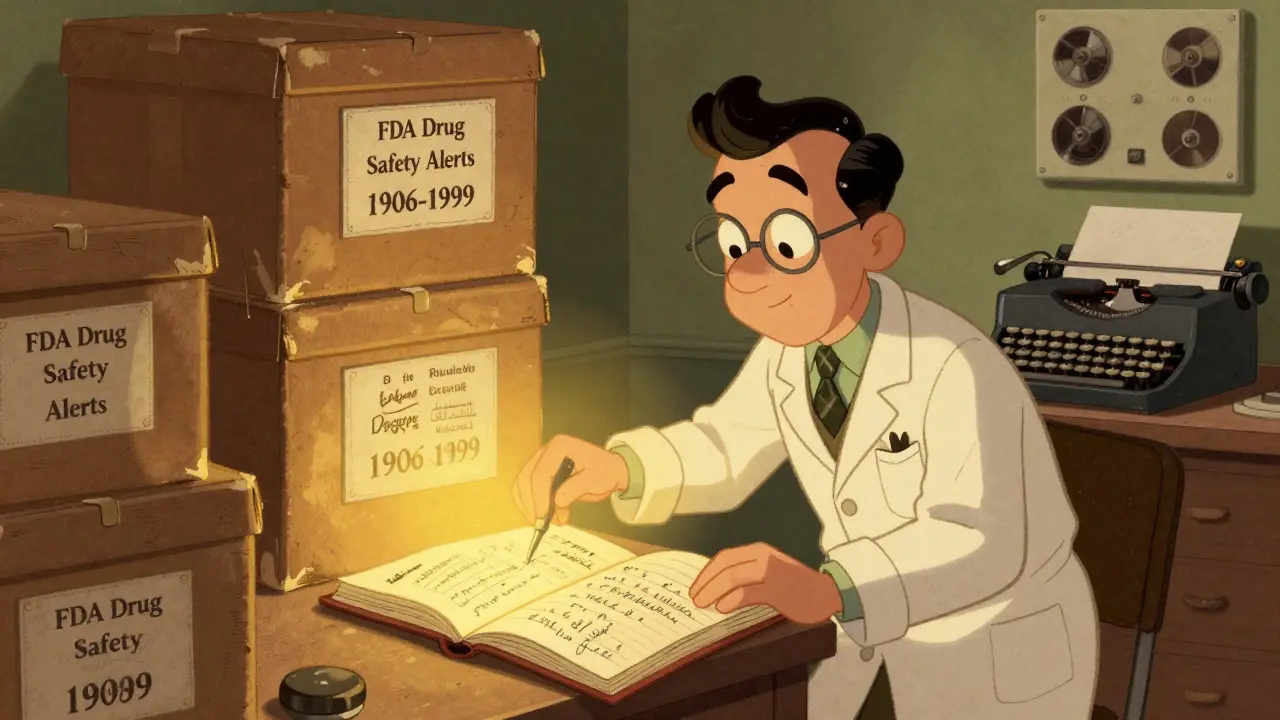
FDA Safety Communications Archive: How to Research Historical Drug and Device Warnings
The U.S. Food and Drug Administration (FDA) doesn’t just approve drugs and medical devices - it tracks what happens after they reach millions of patients. For over a century, the FDA has issued safety warnings when new risks emerge. These aren’t just press releases. They’re official, legally grounded communications that change how doctors prescribe, how pharmacies dispense, and how patients use life-saving treatments. If you’re researching a drug’s history - say, why a black box warning was added to a common painkiller, or why a specific heart monitor was pulled from shelves - the FDA Safety Communications Archive is your most reliable source.
What’s in the FDA Safety Communications Archive?
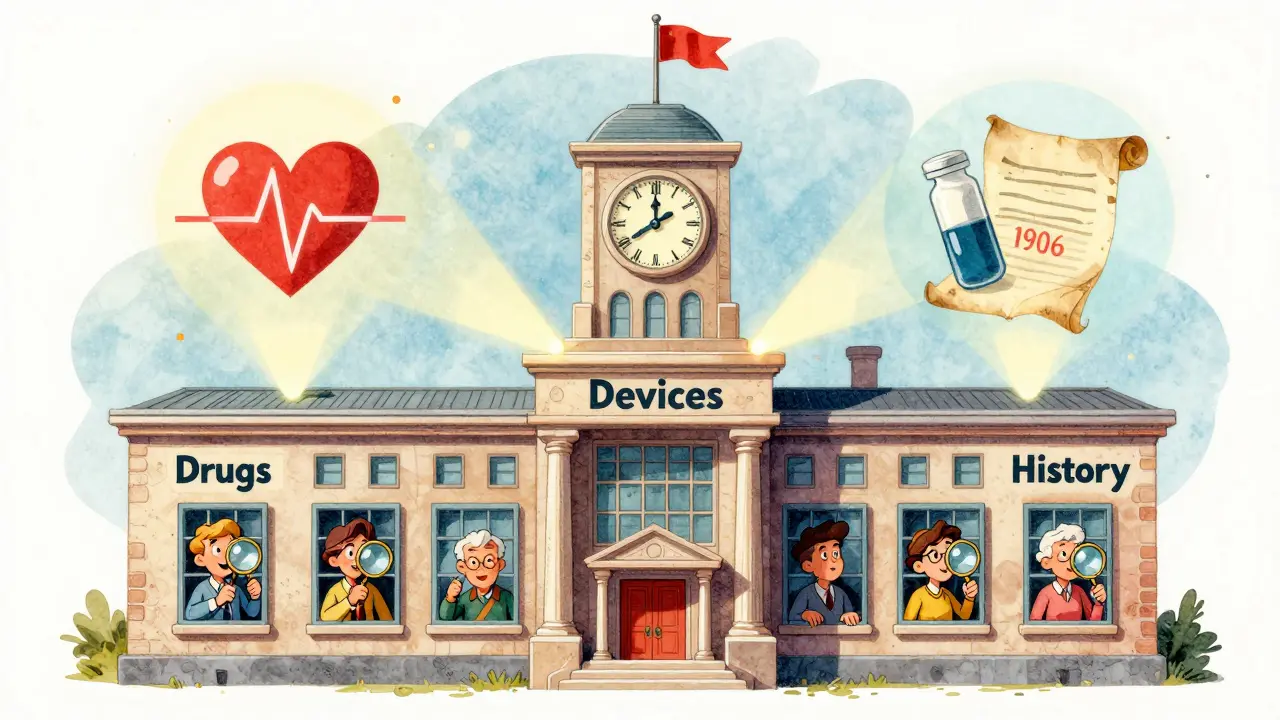
The archive isn’t one single database. It’s three interconnected systems, each tracking different types of safety information. The first is the Drug Safety Communications (DSCs), which started being formally archived in 2010. These are alerts about risks tied to prescription drugs and biological products. They cover everything from rare liver damage to dangerous interactions with common foods. Each communication includes the drug name, the specific risk, who it affects, and what actions patients or providers should take.The second system is the Drug Safety-related Labeling Changes (SrLC) Database. This one is more technical. It tracks every single change made to the official labeling of drugs since January 2016. That means if the FDA forced a manufacturer to update the “Warnings and Precautions” section to include a new risk of seizures in elderly patients, that change is recorded here - down to the exact wording. The database includes updates to sections like BOXED WARNINGS, CONTRAINDICATIONS, ADVERSE REACTIONS, and PATIENT COUNSELING INFORMATION. It’s the go-to source if you need to know exactly what changed on a drug’s label and when.
The third component is the Medical Device Safety Communications. Unlike drug alerts, these often include “Early Alerts” - warnings issued before a formal recall, when the FDA believes a device could cause serious harm. As of September 29, 2025, this program was expanded to cover all medical devices, not just high-risk ones. This means if a glucose monitor gives false readings or a hip implant breaks prematurely, you’ll find the FDA’s official analysis here.
How far back does the archive go?
For drug safety communications, the official archive starts in 2010. But if you’re looking for warnings from the 2000s or earlier, you’ll need to dig deeper. The FDA’s website has a dedicated archive section that lets you view older versions of web pages - including safety alerts that were replaced or updated. For example, if a 2012 alert about a blood thinner was superseded by a 2020 update, the original 2012 version still exists in the archive.For research going back before digital records - say, to the 1970s or 1980s - you’ll need to visit the National Archives. They hold physical and scanned records from the FDA’s early years, including correspondence with drug manufacturers, inspection reports, and internal memos dating back to 1906. These aren’t easy to navigate, but they’re invaluable for historians or legal researchers tracing the roots of a safety issue.
A major update came in October 2023, when the FDA announced a new resource specifically designed to help researchers collect historical data on drug approvals. This tool is still being rolled out, but it’s meant to bridge the gap between pre-2016 records and today’s digital systems. It won’t replace the SrLC Database, but it will make it easier to connect older warnings with current labeling.
Why the FDA’s system is different from others
Other countries have safety alert systems, but the FDA’s is uniquely detailed and structured. The European Medicines Agency (EMA), for example, publishes alerts but doesn’t maintain the same level of chronological organization before 2015. Health Canada combines drug and device alerts into one list, making it harder to isolate specific types of risks. The FDA keeps them separate - drugs and devices have different review processes, different regulations, and different risk profiles. That separation matters.Another key difference: the FDA links its safety communications directly to its Drugs@FDA database. If you find a warning about a drug, you can click through to see its full approval history, labeling documents, and even the original clinical trial data. This level of integration doesn’t exist in most other systems.
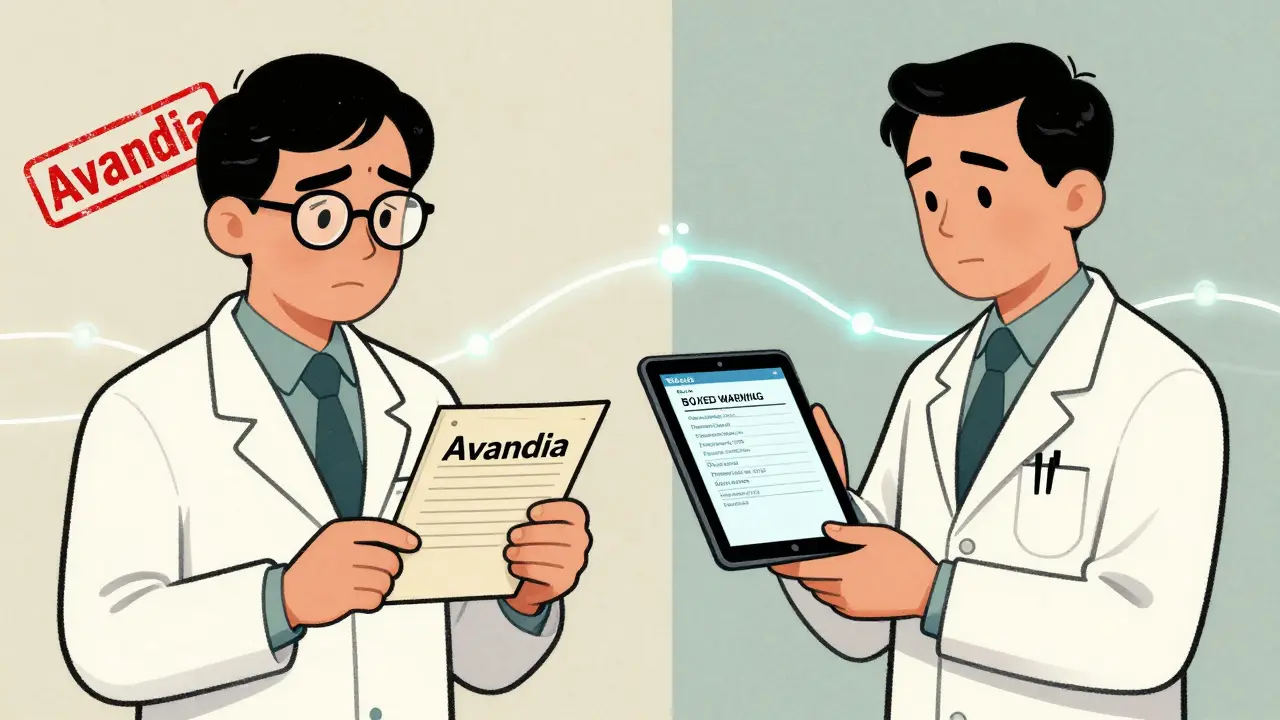
What you can’t find in the archive
The archive is powerful, but it has limits. First, it doesn’t include all adverse event reports. Those are stored in the FDA’s Adverse Event Reporting System (FAERS), which is a separate database of voluntary reports from doctors, patients, and manufacturers. The safety communications are the FDA’s analysis of those reports - not the raw data.Second, the SrLC Database only goes back to January 2016. If you’re studying a drug that had a major safety update in 2014, you won’t find the exact labeling change in the SrLC system. You’ll need to find the original DSC from that year and cross-reference it with archived versions of the drug’s label.
Third, the archive doesn’t tell you how effective the warnings were. A 2012 study found that some FDA alerts caused immediate changes in prescribing habits, while others had little to no effect. A warning about a drug’s risk of sudden death might get wide attention, but a subtle change in dosage guidance for elderly patients might be ignored. The archive records what was said - not how it was received.
How to use the archive for research
If you’re a student, researcher, journalist, or healthcare professional, here’s how to navigate the system:- Start with the FDA’s Drug Safety and Availability page - this is the main hub. From there, click on “Drug Safety Communications” to browse by year (2010-2024).
- For labeling changes since 2016, go directly to the SrLC Database. Use the search filters to narrow by drug name, change type (e.g., “BOXED WARNING”), or date.
- For medical devices, use the Medical Device Safety Communications page. Look for “Early Alerts” if you’re investigating potential recalls.
- For pre-2010 alerts, use the FDA.gov Archive tool. Enter the drug name and a date range to find old web pages.
- For pre-digital records, contact the National Archives or request records under the Freedom of Information Act (FOIA).
Pro tip: Always check the “Related Links” section at the bottom of each safety communication. The FDA often links to related alerts, product recalls, or updated labeling documents. This can lead you to a chain of related warnings you didn’t know existed.
Real-world example: The case of rosiglitazone
In 2007, the FDA issued a safety alert about rosiglitazone (Avandia), a diabetes drug linked to increased heart attack risk. By 2010, the agency added a black box warning and restricted access to the drug. In 2013, the warning was modified after new data emerged. Today, you can trace all of this through the archive: the original 2007 alert (via the archive), the 2010 labeling change (in the SrLC Database), and the 2013 update (in the DSC archive). Each step shows how the FDA’s understanding evolved - and how the drug’s use changed in response.What’s next for the archive?
The FDA is working on better search tools and more consistent tagging across drug and device alerts. There’s also growing pressure to include patient-reported outcomes in safety communications, not just clinical data. The 2023 launch of the new historical drug approvals resource is a sign that the agency recognizes the value of long-term data. Future updates may allow researchers to track how a single drug’s safety profile changed over 20 years - from approval, through early warnings, to eventual withdrawal or restriction.One thing won’t change: the archive will remain free and publicly accessible. No subscription, no login, no paywall. It’s one of the most transparent public health resources in the world - built on over 100 years of scientific oversight and regulatory accountability.
Can I find old FDA drug safety alerts from before 2010?
Yes, but not in the main Drug Safety Communications archive. For alerts from 2000-2009, use the FDA.gov Archive tool, which preserves older versions of web pages. For alerts before 2000, you’ll need to request records from the National Archives, which holds FDA documents dating back to 1906.
Is the SrLC Database the same as the Drug Safety Communications?
No. The SrLC Database tracks exact changes to drug labeling since January 2016 - like updated warnings or dosage instructions. Drug Safety Communications are broader public alerts that may include labeling changes, but also cover recalls, new risks, or recommendations for providers. The SrLC Database is a subset of what’s covered in DSCs, but only for labeling updates after 2016.
How do I know if an FDA warning is still active?
Each Drug Safety Communication includes a note at the top saying whether it’s current or archived. If it’s archived, it means the FDA issued a newer communication with updated information. Always check the most recent version for the latest guidance. For labeling changes, the SrLC Database only lists active updates - outdated changes are removed from the database.
Can I search the archive by drug brand name or generic name?
Yes. The FDA’s search tools accept both brand and generic names. For example, searching for “Lipitor” or “atorvastatin” will return the same results. The SrLC Database also lets you search by the exact section of the label that was changed, such as “CONTRAINDICATIONS” or “ADVERSE REACTIONS.”
Do FDA safety alerts apply to over-the-counter (OTC) drugs?
Yes, but less frequently. Most Drug Safety Communications focus on prescription drugs and biologics. OTC drug safety issues are often handled through recalls or labeling updates posted on the FDA’s OTC Drug Monograph pages. Medical device alerts cover both prescription and OTC devices, like glucose meters or heating pads.
How often does the FDA update the archive?
The FDA issues new Drug Safety Communications weekly. The SrLC Database is updated daily as labeling changes are approved. Medical Device Safety Communications are posted as new issues are identified. All archives are automatically updated - you don’t need to request new data.



9 Comments
Vikrant Sura
December 23, 2025 at 03:00
This archive is useless if you don’t have a PhD in regulatory jargon. I tried looking up metformin’s warnings and got lost in 12 different databases. Why can’t they just make one search bar? I’m not a data scientist, I just want to know if my pill’s gonna kill me.
Also, why does every alert sound like it was written by a lawyer who hates humans?
Sai Keerthan Reddy Proddatoori
December 24, 2025 at 21:01
They say it's transparent but everyone knows the FDA is just a puppet for Big Pharma. That ‘black box warning’ on Avandia? Came out after the stock dropped. They only act when the lawsuits pile up. You think they care about patients? Nah. They care about not getting sued next quarter.
And don’t get me started on how they let Chinese factories make half our meds. No one checks those. This whole archive is just PR fluff.
Johnnie R. Bailey
December 26, 2025 at 09:37
What’s wild is how this system evolved from handwritten memos in 1906 to real-time labeling updates today. The FDA didn’t just build a database-they built a living record of medical ethics in motion.
Back in the 1950s, they didn’t even have computers. A single typo in a drug label could kill someone and there’d be no way to trace it. Now? You can pull up the exact sentence that changed in 2018 because a 72-year-old woman had a seizure after mixing her blood thinner with grapefruit juice.
This isn’t bureaucracy. It’s history. And it’s free. That’s rare in the digital age.
Tony Du bled
December 27, 2025 at 21:44
Just used this to check why my old blood pressure med got pulled. Took me 10 minutes, found the 2021 alert, linked to the labeling change, saw it was a kidney risk in seniors. Saved me from asking my doctor a dumb question.
Good stuff. No fluff. Just facts. Wish more gov sites were like this.
Art Van Gelder
December 29, 2025 at 18:01
Let’s be real-the real magic here isn’t the archive itself, it’s the fact that someone, somewhere, in a cubicle in Silver Spring, Maryland, decided that every single change to every single drug label since 2016 should be timestamped, tagged, and made publicly accessible.
That’s not efficiency. That’s devotion. That’s the kind of institutional memory we don’t even know we need until we’re trying to prove that a drug’s side effect was known since 2017 and your doctor ignored it.
And then there’s the device alerts-early warnings for glucose monitors that give false readings? That’s not just data, that’s life insurance for diabetics who don’t know their meter’s lying to them. This archive isn’t a tool. It’s a safety net woven out of paperwork and principle.
Kathryn Weymouth
December 30, 2025 at 15:40
Minor correction: The SrLC Database doesn’t remove outdated changes-it archives them separately. The interface just hides them by default to avoid clutter. You can still access prior versions via the ‘Historical Labeling’ filter if you know where to look. The FDA’s documentation on this is actually very thorough, if you’re willing to read it.
Also, the 2023 historical drug approvals tool is live and searchable. It’s under ‘Drug Approvals and Databases’ > ‘Historical Drug Approval Records.’ I’ve been using it for my thesis.
Herman Rousseau
December 31, 2025 at 07:26
Y’all are overcomplicating this. Just go to Drugs@FDA, type in the drug name, click ‘Labeling History,’ and boom-you’ve got every version since approval. No need to juggle three databases unless you’re writing a novel.
Also, if you’re worried about OTC drugs, check the ‘OTC Monograph’ section. It’s not flashy, but it’s there. The FDA doesn’t hide stuff. You just gotta know where to look.
And yes, it’s free. No login. No paywall. Just pure public health. That’s worth celebrating.
Aliyu Sani
January 1, 2026 at 07:52
Bro, this archive is fire but the UI is sus. I tried to find the metformin alert and got lost in a maze of PDFs and XMLs. Why no API? Why no simple search? I’m a med student from Lagos and I ain’t got time for this.
Also, why the hell is the device alert for insulin pumps buried under 50 other alerts? That’s not transparency, that’s negligence.
Gabriella da Silva Mendes
January 2, 2026 at 06:09
USA still the only country that actually gives a damn about patient safety. 🇺🇸
Europe? They wait for 3 people to die before they say anything. Canada? They lump everything together like it’s a grocery list. Here? We got timelines, exact wording changes, and links to the original clinical trials. This is how you do public health.
And yeah, I know it’s clunky-but it’s OUR clunky. I’ll take it over your ‘efficient’ foreign systems any day. 🇺🇸💪