
How the FDA Inspects Drugs Entering the U.S. to Ensure Safety and Quality
All drugs sold in the U.S. must meet the same safety and quality standards-whether they’re made in a lab in New Jersey or a factory in India. But how does the FDA actually check that? With over 100 million drug shipments entering the country every year, the agency doesn’t inspect every box. Instead, it uses a smart, risk-based system that catches problems before they reach pharmacy shelves. This isn’t just paperwork-it’s a real-time, high-stakes operation that keeps millions of Americans safe.
How the FDA Screens Every Drug Shipment
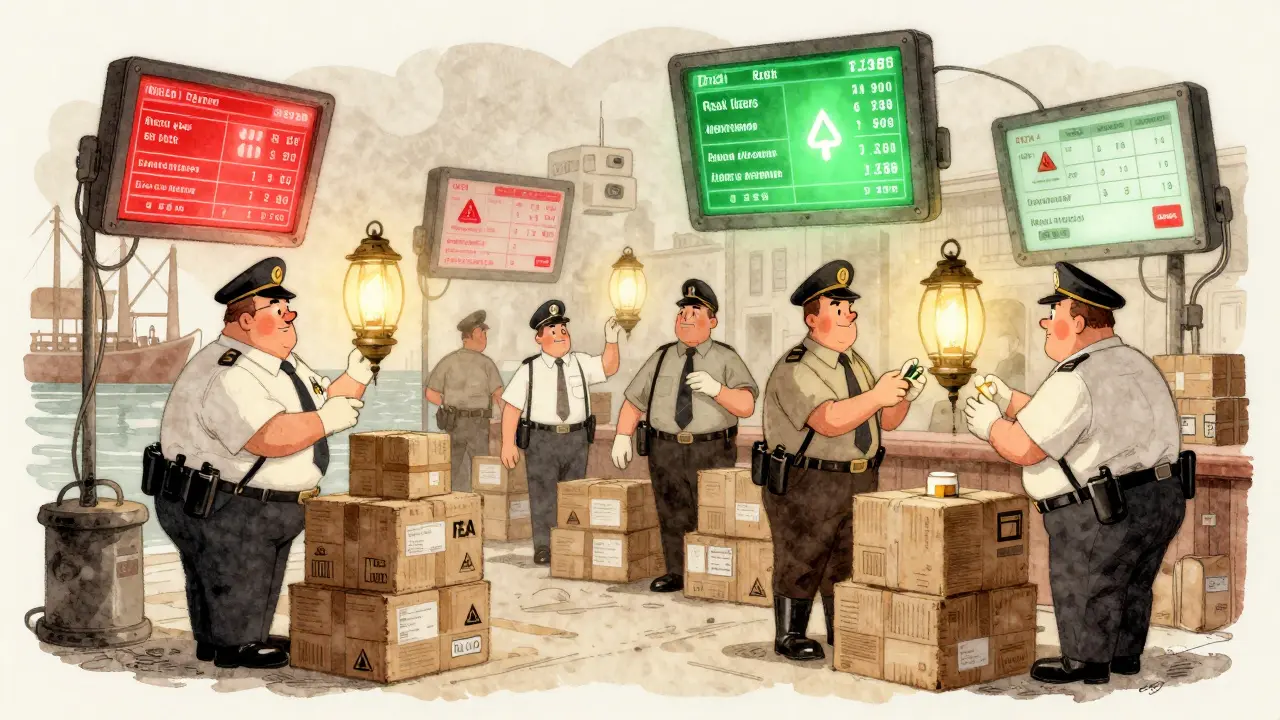
Every time a shipment of pills, injectables, or raw ingredients arrives at a U.S. port, it goes through five stages before it’s allowed in. First, the importer submits an electronic entry through the FDA’s system. This includes details like the product name, manufacturer, quantity, and where it’s coming from. Then, an automated system scans the entry. About 98% of these are reviewed electronically, no human needed. The system flags anything risky: a company with past violations, a country with a history of substandard manufacturing, or a product that’s been detained before.
Only about 15.7% of entries get flagged for deeper review. These might be high-risk products like insulin, antibiotics, or heart medications. Others get flagged because the paperwork is incomplete or the product code is wrong. If something looks off, the shipment is held at the port. It can’t be moved, sold, or used until the FDA makes a decision. This isn’t a delay-it’s a legal hold. And it happens fast. If a dangerous product is found at one port, the FDA’s real-time alert system notifies every other port within 45 minutes.
What Happens When a Shipment Gets Inspected
When a shipment is selected for physical inspection, FDA staff do three things: check the product, check the label, and take samples. The physical exam looks for signs of tampering, contamination, or improper storage. Is the packaging damaged? Are the pills discolored? Is the cold chain broken for vaccines? Then they check the label against FDA rules. Does it list the correct active ingredient? Is the dosage clear? Are there false claims like “cures diabetes”?
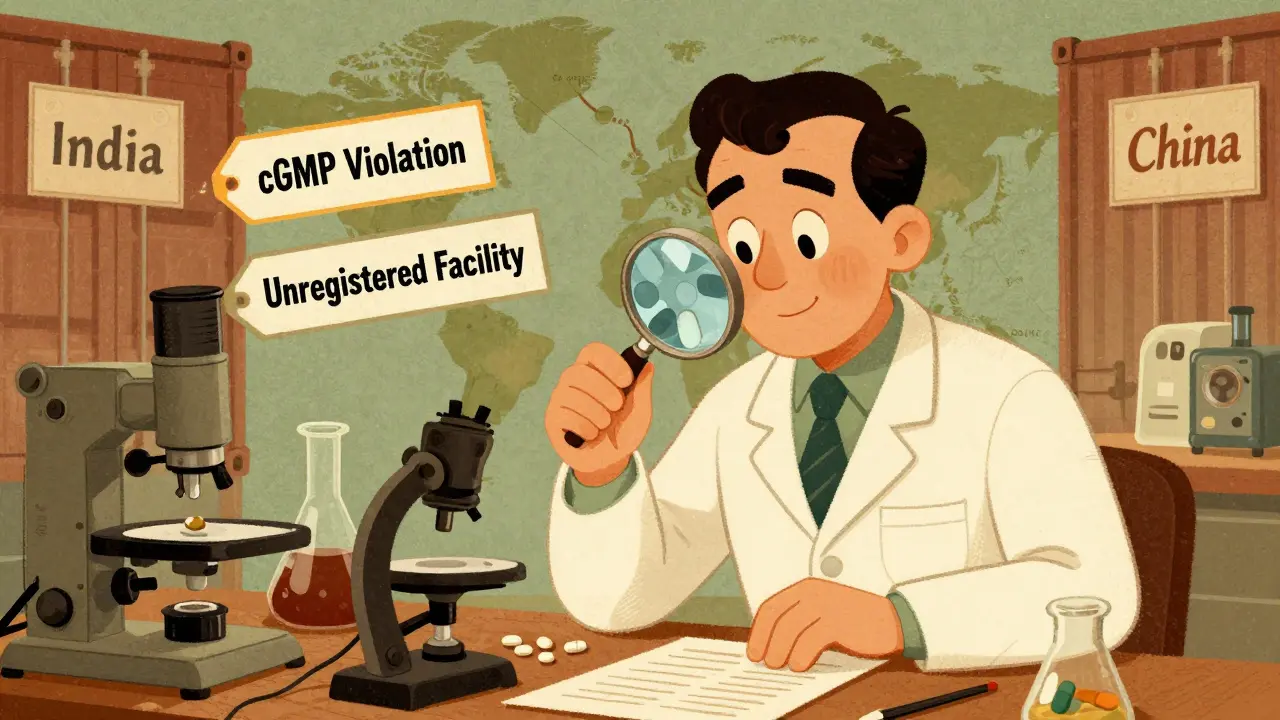
The third step-sampling-is where the real testing happens. FDA labs get 1 to 3 units from each shipment. They test for purity, potency, and whether the drug contains illegal substances. In 2022, 14.3% of physically inspected drug shipments were detained. Of those, nearly 68% were refused entry entirely. That means over 1 in 7 inspected shipments failed. Common reasons? Violations of current good manufacturing practices (cGMP), unregistered facilities, or fake ingredients. One 2022 case found valsartan, a blood pressure drug, contaminated with a carcinogen because the API came from an unapproved supplier. That shipment was caught-but only because it was flagged by the system. Thousands of others slip through.
The Fast Track: How Some Companies Skip the Line
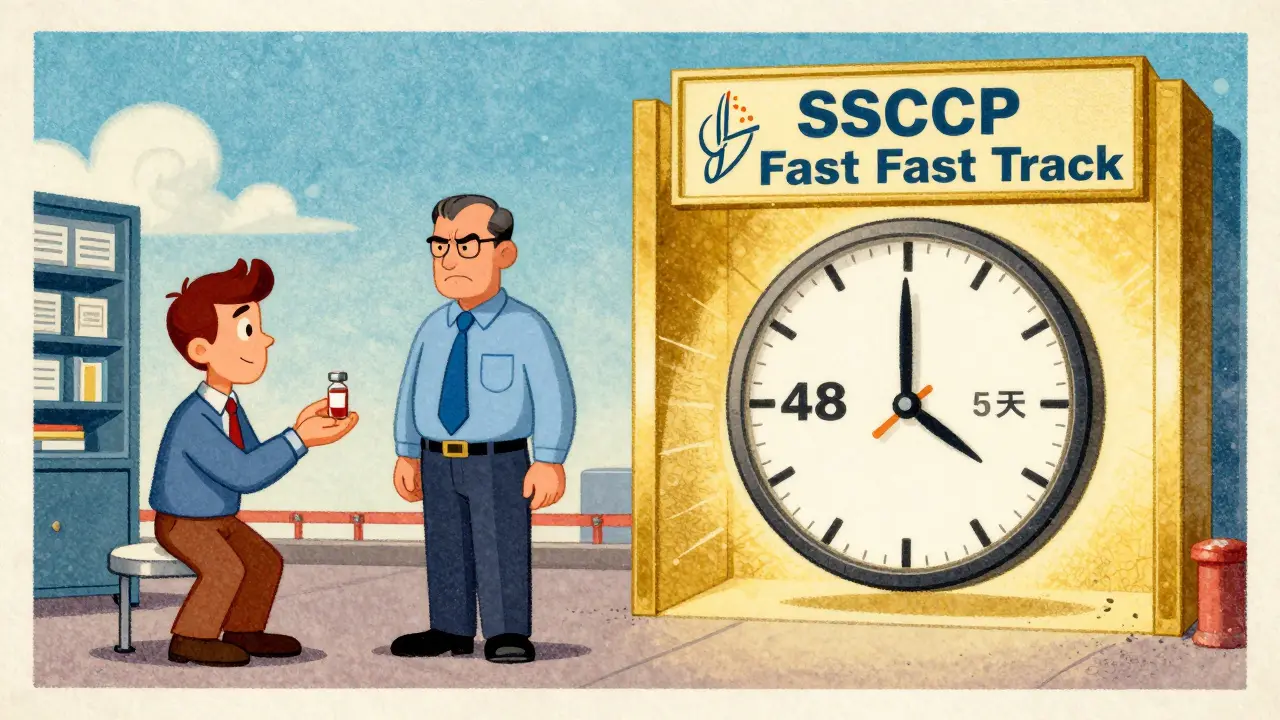
Not everyone waits weeks for clearance. The Secure Supply Chain Pilot Program (SSCPP) lets trusted manufacturers move drugs through U.S. ports in under 48 hours. To qualify, a company must have a perfect compliance record for at least three years. They must also have strong internal controls, documented supply chains, and proven quality testing. As of late 2023, only 27 companies made the cut. Big names like Johnson & Johnson use it. Their Global Regulatory Affairs Director says it cut shipment variability from ±5 days to ±8 hours.
But this program isn’t open to everyone. Smaller generic drug makers can’t afford the years of audits and documentation. And even if they meet the standards, the program is capped at five products per company. For many, the system feels stacked. Teva Pharmaceuticals reported that in Q2 2023, 37% of their API shipments from certain Indian factories were detained-even though their quality records were clean. Why? The FDA’s risk model still flags certain countries and suppliers automatically, regardless of actual performance.
Why Imports Keep Failing: The Biggest Problems
Most failed imports aren’t because of fraud. They’re because of simple mistakes. According to CBP data, 28% of delays come from incorrect product coding. A manufacturer might label a tablet as “Metformin 500mg” when the FDA’s system expects “Metformin Hydrochloride 500mg.” That’s enough to trigger a hold. Another 21% of issues come from missing or outdated facility registrations. If a factory isn’t registered with the FDA, even a perfect shipment gets detained. Labeling errors make up 19% of problems-wrong language, missing lot numbers, or missing expiration dates.
These aren’t hard fixes. But for small biotech startups, they’re costly. One founder on Reddit said their biological samples now cost $420 more per shipment and take 5 extra days to clear. Before 2023, shipments under $800 were exempt. That loophole let dangerous products slip through. Now, every shipment-even a $10 vial of research chemical-is tracked. The change was necessary, but it’s hitting researchers and small businesses hard.
Who’s Watching the Watchers?
The FDA inspects only about 1.2% of all drug shipments physically. That means 98.8% rely on paperwork, risk scores, and electronic alerts. Critics say that’s not enough. The Government Accountability Office found that only 4 out of 17 performance metrics required by law have been fully implemented. The Partnership for Safe Medicines estimates $4.3 billion in counterfeit drugs entered the U.S. in 2022-mostly through online pharmacies or small packages before the de minimis rule changed.
And the problem is growing. The U.S. imports 88% of its active pharmaceutical ingredients, mostly from China and India. Generic drug makers, who supply 90% of U.S. prescriptions, are under the most pressure. A 2023 survey by the National Association of Chain Drug Stores found 78% of pharmacy executives believe the system works fine for brand-name drugs-but not for generics. Why? Because generic manufacturers have thinner margins, tighter timelines, and less leverage with regulators.
What Importers Need to Get It Right
If you’re shipping drugs into the U.S., you need three things: perfect paperwork, a registered facility, and a clear understanding of FDA rules. Missing one document-a commercial invoice, a bill of lading, or an Affirmation of Compliance-can delay your shipment by nearly 5 days. You must keep records for three years. Violate that, and you could get placed on an Import Alert. That means every future shipment gets automatically detained.
Experienced importers say building relationships with FDA reviewers at specific ports helps. One survey found direct contact with port staff reduced processing times by 22-35%. That’s not bribery-it’s communication. Knowing who to call when a shipment stalls saves weeks. The FDA offers 24/7 port hotlines and free webinars. They also update their electronic systems every two weeks. But you have to check them. Don’t assume your customs broker knows the latest rules. Most don’t.
The Future: AI, Blockchain, and Global Standards
The FDA isn’t standing still. By 2025, they plan to use AI to improve risk scoring by 25%. Instead of just flagging countries, the system will analyze patterns across thousands of past shipments to predict which ones are most likely to fail. A pilot blockchain project launching in early 2024 will let importers verify the chain of custody for drugs-from factory to warehouse to pharmacy. That’s meant to stop counterfeiters from injecting fake products into the supply chain.
The agency is also working with international regulators through the Pharmaceutical Inspection Co-operation Scheme (PIC/S). The goal? Align U.S. standards with Europe, Canada, and Japan so inspections done abroad count here. That could cut down duplication and speed up approvals. But progress is slow. The Congressional Budget Office estimates these upgrades will cost $187 million over five years. And the FDA admits they’re still struggling to monitor online pharmacies-41% of websites selling drugs to Americans operate outside U.S. law.
For now, the system works-but it’s stretched thin. It catches the worst offenders. It blocks tainted insulin, fake antibiotics, and deadly counterfeit pills. But it still misses things. The goal isn’t perfection. It’s prevention. And as long as drugs keep flowing across borders, the FDA’s job won’t get easier. It just gets more complex.


8 Comments
Gray Dedoiko
December 23, 2025 at 16:45
Just read this and honestly? I’m relieved. My grandma takes six different meds, and the thought that some of them could be laced with crap from unregulated factories gives me nightmares. Glad someone’s watching the store, even if it’s not perfect.
Aurora Daisy
December 23, 2025 at 20:08
Oh wow, the FDA’s doing a *great* job. 1.2% physical inspections? That’s not oversight, that’s a casino. Meanwhile, my cousin’s cousin’s friend’s kid died from fake blood pressure pills bought off Instagram. But hey, at least the system’s ‘risk-based.’ Right? 🙄
Paula Villete
December 24, 2025 at 02:13
So the FDA catches 68% of the bad stuff… but only after it’s already at the port? And we’re supposed to be impressed? 🤔
Meanwhile, a $10 research vial gets held up for 5 days because someone forgot to write ‘hydrochloride’-but the guy shipping fentanyl laced with rat poison? He gets a free pass because his country’s on the ‘high risk’ list. Classic.
Georgia Brach
December 25, 2025 at 11:33
The data presented here is statistically misleading. The 14.3% detention rate applies only to physically inspected shipments, not the entire population of imports. To claim this system is effective without contextualizing the sampling bias is irresponsible. Furthermore, the SSCPP program is not a meritocracy-it’s a corporate subsidy disguised as efficiency. The narrative of ‘risk-based’ is a euphemism for discriminatory profiling of developing nations. The FDA’s metrics are not transparent, nor are they auditable by independent parties. This is regulatory theater.
Katie Taylor
December 26, 2025 at 03:07
People are freaking out over 1.2% inspections? That’s still over 1 million shipments checked! And the AI upgrades coming in 2025? That’s gonna be a game-changer. We’re not perfect, but we’re moving forward. Stop complaining and support the system that keeps your kids’ asthma inhalers safe.
Isaac Bonillo Alcaina
December 27, 2025 at 07:52
You think this is bad? Try being a small lab in Ohio trying to import a single vial of a novel compound. You spend $2,000 and three months filling out forms, only to get flagged because your facility registration expired by 11 days. Meanwhile, a Chinese factory with 17 violations ships 200,000 pills with no human ever laying eyes on them. This isn’t safety-it’s bureaucratic terrorism.
Chris Buchanan
December 27, 2025 at 13:04
Bro, the FDA isn’t trying to be perfect-it’s trying to be smart. They’re not stopping every shipment, they’re stopping the ones that matter. The fact that they catch 68% of the bad stuff during inspection? That’s not failure-that’s a win. And the blockchain pilot? That’s next-level stuff. You wanna fix the system? Help them fund it, don’t just yell at it.
Also, if your shipment gets held because you typed ‘Metformin’ instead of ‘Metformin Hydrochloride’-you got what you deserved. Precision matters. Get better at your job.
Andy Grace
December 27, 2025 at 15:34
It’s a miracle anything gets through at all. I’ve shipped medical supplies from Australia to the U.S. before. One typo, one missing stamp, one wrong box label-and it vanishes into a black hole for weeks. The system’s not broken, it’s just… tired. And overloaded. Hope they get more staff soon.