
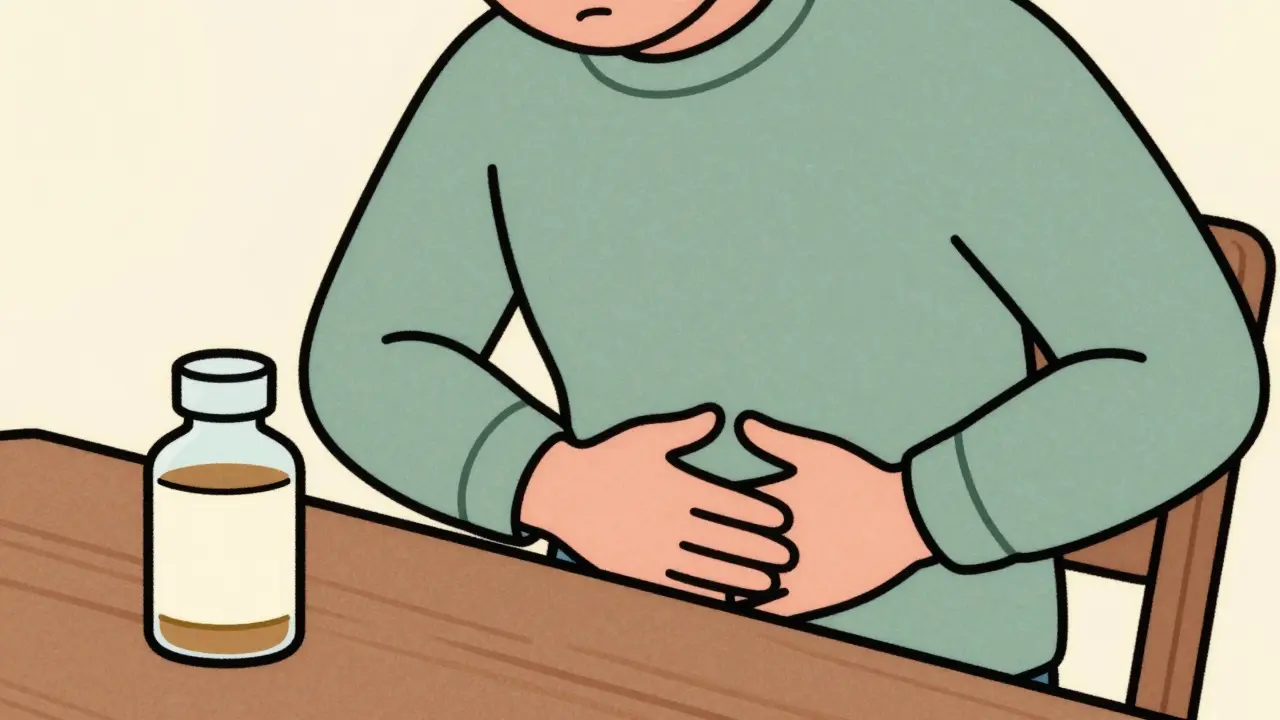
Mycophenolate GI Side Effects: Comprehensive Management Guide
Mycophenolate Symptom Triage & Action Plan
Step 1: Your Current Symptoms
Emergency Indicators (Check ALL that apply)
Step 2: Recommended Action
Management Strategies
Please select symptoms to view specific strategies.
Use the menu on the left to check for 'Red Flag' warning signs and generate a safety plan based on clinical guidelines.
Formulation Comparison Tool
Click buttons to compare standard vs. enteric-coated versions.
The Reality of Life-Saving Medications
If you are reading this, you likely know that organ transplants offer a second chance at life. Yet, the medications that keep that organ working often come with their own set of challenges. Many patients find themselves juggling the hope of recovery with the daily struggle of stomach pain, nausea, or uncontrollable diarrhea. These symptoms aren't just annoying; they can threaten the survival of the transplant itself.
Mycophenolate is a critical immunosuppressive medication used primarily to prevent rejection in organ transplant recipients. While highly effective, it affects roughly half of the people who take it through gastrointestinal distress. You are not alone in this fight. Understanding how to manage these side effects empowers you to stay compliant without suffering unnecessarily.
Understanding the Medicine Behind the Mess
Before tackling the symptoms, it helps to know exactly what you are dealing with. Mycophenolate mofetil, commonly known by the brand name CellCept, works by stopping certain white blood cells from multiplying. This suppression prevents your immune system from attacking the new organ. Another formulation, Mycophenolate sodium, marketed as Myfortic, contains the same active ingredient but uses special coating technology.
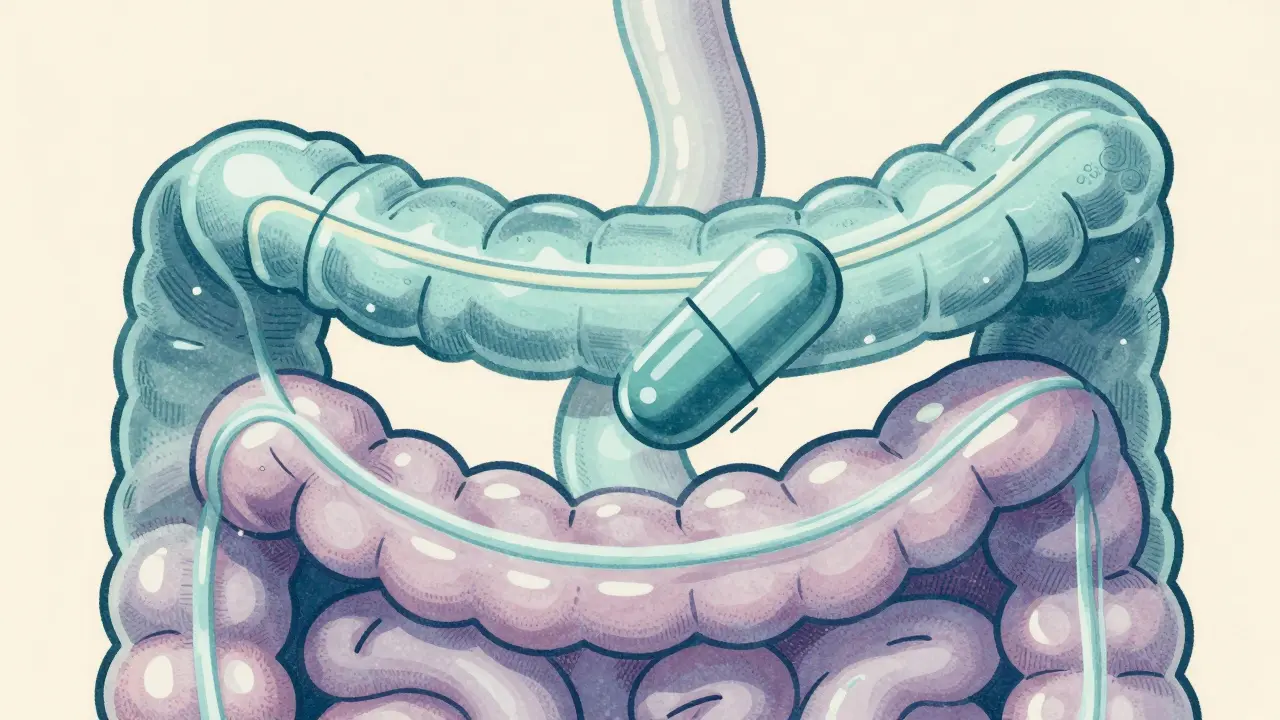
Why does your gut react so strongly? The drug targets rapidly dividing cells, including those lining your digestive tract. Unlike other tissues, the gut lining regenerates quickly, making it a primary target for the medication's mechanism. Statistics from recent clinical trials show that nearly 30% of patients report nausea, while another 30% experience diarrhea. For some, this means missing work or struggling to get out of bed.
Recognizing the Warning Signs
Not every upset stomach indicates a problem, but ignoring severe symptoms can be dangerous. Most side effects appear within the first few weeks after starting therapy. Common signs include cramping, bloating, and loose stools. However, distinguishing between simple irritation and serious toxicity is crucial.
When Gastrointestinal Side Effects persist beyond a week, doctors worry about Mycophenolate-induced colitis. This condition involves inflammation of the colon that can mimic infections. Symptoms escalate to bloody diarrhea, severe abdominal cramps, or fever. A systematic review indicated that while this occurs in less than 2% of patients, it requires immediate medical attention to rule out viral or bacterial causes.
Practical Steps for Symptom Control
You have options before asking your doctor to stop the medication entirely. Small changes in how you take the pill can make a massive difference in your daily comfort. Here is a roadmap many transplant teams recommend.
- Timing Matters: Taking the drug on an empty stomach is standard for absorption. However, if nausea is overwhelming, ask about taking it with a small snack like crackers. Avoid high-fat meals right before dosing, as these slow down absorption significantly.
- Dose Splitting: Sometimes swallowing the full load at once overwhelms the system. Some protocols allow dividing the total daily dose into three smaller parts throughout the day.
- Swallow Strategies: Capsules are hard pills. Crushing or opening them releases the powder directly onto the esophagus, causing irritation. Swallow them whole with plenty of water. Liquid suspensions exist for those who struggle with swallowing tablets.
- Dietary Tweaks: Many patients find relief by avoiding spicy foods or dairy during flare-ups. Ginger tea or applesauce before the dose has anecdotal support for settling the stomach.
Medical Interventions and Formulation Switches
When lifestyle tweaks fail, medical adjustments become necessary. Your provider has several levers to pull without abandoning the drug's benefits.
One common strategy involves switching formulations. Mycophenolate sodium (Myfortic) features an enteric coating designed to pass through the stomach acid intact before dissolving in the intestine. Clinical data suggests this switch reduces upper stomach irritation in about two-thirds of patients compared to standard mycophenolate mofetil.
| Feature | Mycophenolate Mofetil (CellCept) | Mycophenolate Sodium (Myfortic) |
|---|---|---|
| Absorption | Rapid release in stomach | Enteric-coated (gut release) |
| Nausea Rate | Higher incidence | Lower incidence |
| Dosing Frequency | Twice daily | Twice daily |
| Bioavailability | ~94% | Similar exposure profile |
If diarrhea persists, your team might monitor your blood levels closer. Therapeutic Drug Monitoring checks the concentration of the drug in your blood. Levels that run too high often correlate with worse side effects. Keeping trough levels between 1-3.5 μg/mL is a common target. Dropping the dose slightly while monitoring for rejection risks allows the gut time to heal.
When to Seek Emergency Help
Pain tolerance varies, but some symptoms demand an urgent visit. Severe dehydration from persistent diarrhea puts stress on the kidneys-the very organ you are trying to protect. Call your doctor immediately if you cannot keep fluids down for over 24 hours. Blood in the stool is another major red flag that warrants a colonoscopy to rule out infection versus drug toxicity.
Infections like Cytomegalovirus (CMV) look similar to drug toxicity. Your body is already suppressed, making you vulnerable. Doctors often perform a biopsy during a colonoscopy to distinguish between Colitis caused by the drug and colitis caused by viruses. Misdiagnosis here can lead to unnecessary changes in life-saving medication.

Long-Term Perspectives and Alternatives
Will you ever stop having these issues? For most, the severity tapers off after the first six months as the body adjusts. However, about 20% of patients eventually require switching to a different class of drugs. Azathioprine is an older alternative that is generally easier on the gut but offers slightly weaker protection against rejection. Newer options like Leflunomide are emerging for those who cannot tolerate mycophenolate at all.
Recent advancements in 2023 and 2024 have shown promising results with extended-release versions of the drug, potentially lowering the peak concentration spikes that trigger nausea. Staying informed gives you leverage in conversations with your healthcare providers.
Frequently Asked Questions
Can I eat food with my mycophenolate?
Generally, you should take mycophenolate on an empty stomach for best absorption. However, if nausea is severe, ask your doctor about taking it with a light meal rather than fasting completely.
How long does the nausea last?
Nausea typically peaks within the first month. Most patients adjust and see significant improvement after three to four weeks of consistent dosing.
Is diarrhea always caused by the medication?
No. Infection, diet, or other health issues can cause diarrhea. Since you are immunosuppressed, you are prone to viruses like CMV. Always get tested before assuming it is the drug.
Should I switch brands if I get sick?
Switching from mycophenolate mofetil to mycophenolate sodium often helps reduce stomach irritation due to the enteric coating. Discuss this change with your transplant pharmacist.
Are probiotics safe with mycophenolate?
Many patients report relief from gentle strains like Lactobacillus GG. However, consult your team before adding supplements, as immunity-modulating supplements interact with transplants.
Moving Forward with Confidence
Living with a transplant is a balancing act. The goal isn't perfection; it's stability. If you are struggling with GI symptoms, speak up early. There is no reason to suffer silently when effective management strategies exist. Whether through formulation switches, dietary tweaks, or dosage adjustments, modern medicine offers ways to keep your gut healthy while protecting your new organ.



9 Comments
Jonathan Sanders
March 30, 2026 at 20:17
Living with this stuff feels like you signed up for a prison term disguised as a cure. I guess they think pain is just a side effect we can ignore while you stay alive. It really sucks knowing your own body fights the thing keeping your heart beating. You just swallow the poison to stop the rejection. Nobody tells you it gets better after six months though. Most of us are stuck in the misery zone wondering why nobody warned us properly. I feel like I am trading my digestive health for extra years. And honestly those extra years don't seem worth the daily diarrhea. Maybe I am just unlucky or maybe it is the standard experience. Whatever it is nobody gives you a pep talk beforehand.
emma ruth rodriguez
March 31, 2026 at 12:02
It is absolutely imperative that patients understand the mechanics!! The enteric coating is designed specifically to bypass stomach acid!!! Please consult your pharmacist regarding the sodium formulation immediately!!! Many individuals overlook this simple switch when they could alleviate symptoms!!! Compliance is the key to survival in transplant scenarios!!! Never skip doses even if the nausea strikes unexpectedly!!!
Rick Jackson
March 31, 2026 at 21:08
There is a strange peace in finding what works for you. Balance is everything in this journey. We accept the cost. The gut takes a hit. But the organ stays. That is the trade.
Beccy Smart
April 1, 2026 at 12:15
Reading doesn't help the suffering anyway 😩
Debbie Fradin
April 3, 2026 at 05:57
They tell us it's necessary but the reality hits harder every single day. People say push through the pain but nobody pushes back against the manufacturers. You are fighting your own immune system constantly. The gut lining regenerates faster than the liver can process the chemical mess. They know exactly how painful this pill makes you. Unoptimized absorption rates persist despite decades of research. It feels like planned obsolescence in the drug industry. We need more honest data about the actual quality of life impact.
Carolyn Kask
April 4, 2026 at 19:14
American medicine still leads the way despite these flaws. Other countries struggle to manage these drugs half as well as we do here. We have the best protocols for monitoring blood levels in our clinics. Everyone should demand their insurance covers the newer versions like Myfortic. If they won't pay you know you are dealing with bureaucratic idiots. Stay strong and keep taking your pills as prescribed. This is freedom compared to being dead.
Katie Riston
April 5, 2026 at 15:49
The human condition is defined by what we endure to survive. Medicine becomes a weapon when used incorrectly but a shield when managed well. I think about how fragile the barrier between life and death truly is. Sometimes we forget that the pill is just a delivery mechanism for hope. Our bodies react violently to chemicals meant to suppress natural defenses. It creates a cycle where healing feels like self harm initially. We must consider the long arc of recovery rather than the immediate discomfort. Pain serves a purpose even when it feels pointless. Doctors see hundreds of cases but never feel the cramping themselves. There is a disconnect between clinical statistics and lived experience. Patients often carry a burden that medical literature cannot fully capture. We navigate the grey areas of toxicity versus necessity constantly. Trusting your team requires blind faith during flare ups. Hope remains the only currency that holds value during treatment. Resilience is built one dose at a time through the nausea. Eventually the mind adjusts to the presence of the medication. Finding stability means accepting the discomfort is temporary.
Brian Yap
April 6, 2026 at 09:08
Mate it's rough going but you get there in the end. Down here we take whatever they give us without asking too many questions. Just glad the kidneys still working after all this hassle. Cheers for sharing the details though.
Ruth Wambui
April 8, 2026 at 02:53
Something fishy goes on with how big pharma releases these drugs. They want us dependent on their endless supply chains forever. The ingredients probably have hidden agendas buried in the fine print. Stomach reactions are consistently ignored until patients nearly quit. They profit off the sickness management loop rather than a cure. Keep digging deeper into the safety sheets before trusting blindly.