
Opioids: Understanding the Risks of Tolerance, Dependence, and Overdose
When opioids are prescribed for severe pain, they work fast and work well. But for many people, what starts as medical relief turns into a dangerous cycle - needing more to feel the same effect, feeling sick without it, and risking death from a single dose. This isn’t rare. In 2021, over 80,000 people in the U.S. died from opioid overdoses. And the biggest driver behind those deaths isn’t just misuse - it’s tolerance.
How Tolerance Turns Medical Use Into a Lifesaving Battle
Tolerance isn’t just ‘getting used to’ pain meds. It’s your brain and body rewiring themselves at a molecular level. Every time you take an opioid, it locks onto mu-opioid receptors in your brain, spinal cord, and gut. These receptors control pain, pleasure, and breathing. Over time, your cells respond by reducing the number of receptors or making them less responsive. This is called downregulation. Your body also starts breaking down the drug faster, and your nervous system fires off counter-signals to balance the opioid’s effects.
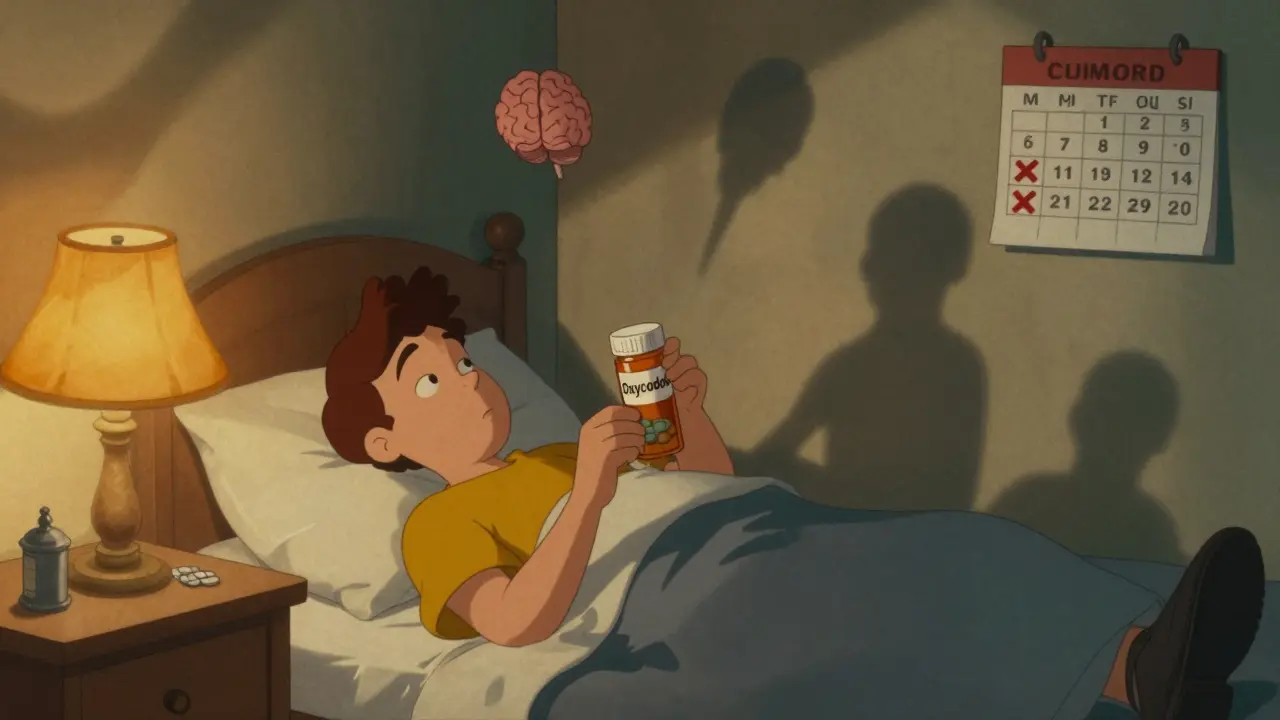
What does this look like in real life? A patient on oxycodone for back pain might start with 10 mg twice a day. After three months, they’re up to 20 mg. Six months later, they’re on 30 mg - and still not sleeping through the night. That’s not failure. That’s biology. Studies show most people on chronic opioid therapy need a 25-50% dose increase within the first six months just to keep pain under control.
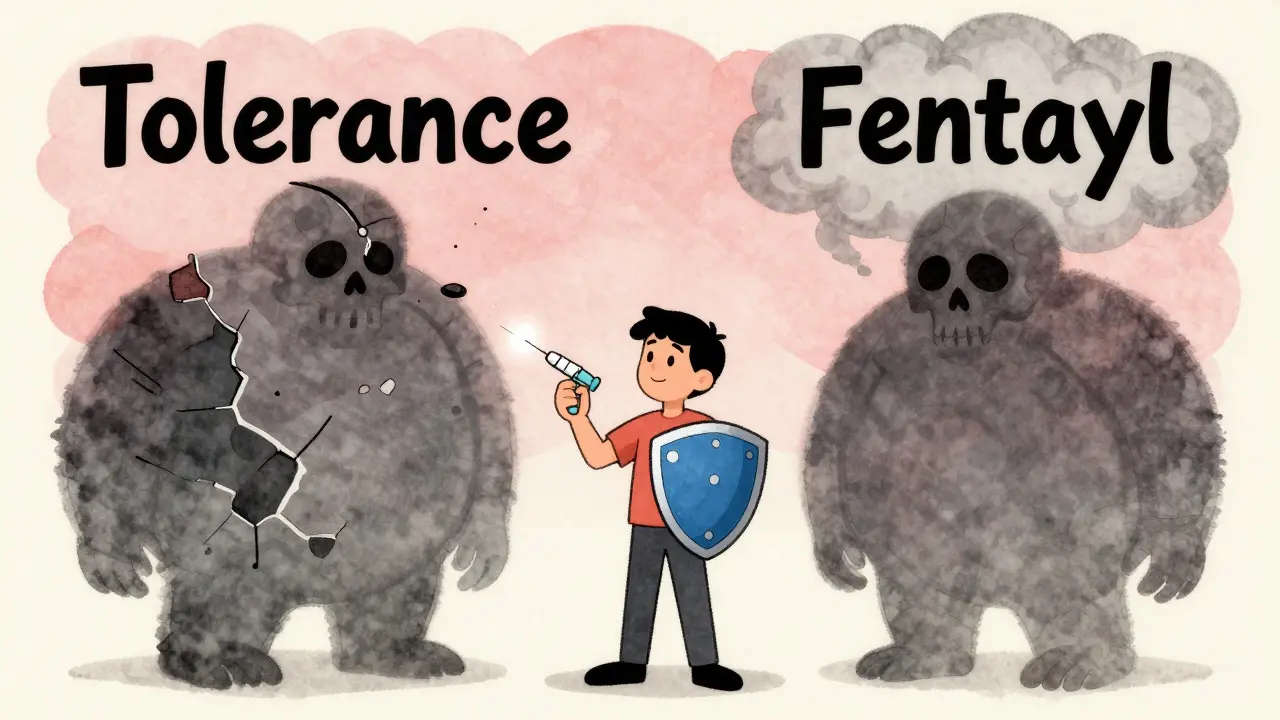
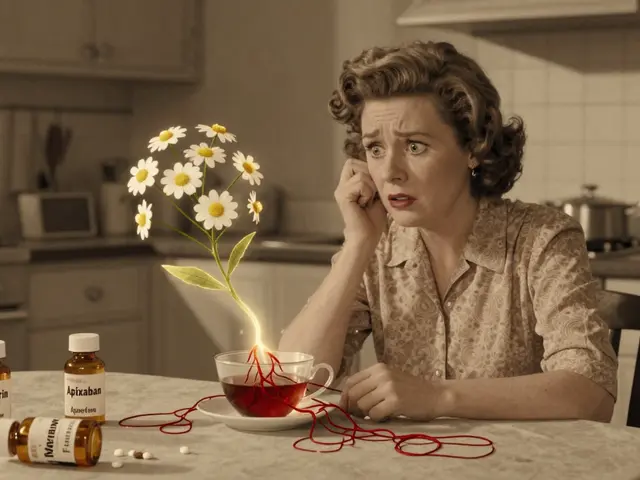
But here’s the trap: tolerance to pain relief builds faster than tolerance to respiratory depression. That means you can keep taking more to chase relief - but your breathing doesn’t adapt as quickly. One extra pill, one night of drinking, one dose of fentanyl-laced heroin - and your brain stops telling your lungs to breathe. That’s how someone who’s been on opioids for years can die from what they used to take without a second thought.
Dependence Is Not Addiction - But It’s Still Dangerous
Dependence means your body physically needs the drug to function normally. Stop suddenly, and you get withdrawal: nausea, sweating, muscle aches, insomnia, anxiety. It’s not pleasant - but it’s not usually life-threatening. That’s different from addiction, which is compulsive use despite harm.
But here’s the problem: dependence makes quitting hard. People don’t stop because they want to. They stop because they can’t afford it, their doctor cuts them off, or they’re scared. And that’s when overdose risk spikes.
Take someone who’s been using heroin for five years. They’ve built up a high tolerance. They quit for six months - maybe because they got a job, had a baby, or went to rehab. Their body clears the drug. Their receptors reset. Their tolerance drops. Then, one day, they relapse. They take the same dose they used to - the dose that used to feel fine. But now, their body can’t handle it. Their breathing slows. They pass out. Paramedics arrive too late.
Research from the Journal of Substance Abuse Treatment found that 65% of opioid overdose deaths happened in people who had previously been treated for opioid use disorder. That’s not a statistic. That’s someone’s brother, friend, neighbor. Someone who tried to get better - and nearly died because their body forgot how to cope.
Fentanyl Changed Everything - And It’s Still Rising
Before 2015, most opioid deaths came from prescription pills or heroin. Today, synthetic opioids - mostly fentanyl - are responsible for 70% of all opioid overdose deaths. Fentanyl is 50 to 100 times stronger than morphine. A few milligrams can kill. And it’s not always labeled. Pills sold as oxycodone or Xanax often contain fentanyl. Users don’t know what they’re taking.
Even experienced users aren’t safe. A person who’s used heroin for years might think they can handle a strong pill. But fentanyl doesn’t care about your history. It hits your receptors all at once. No warning. No gradual build-up. Just silence.
And it’s everywhere. Between 2015 and 2022, fentanyl seizures by the DEA jumped 1,200%. Illicit drug markets don’t care about safety. They care about profit. A gram of fentanyl can be cut into thousands of pills. That’s why even people who’ve never used opioids before are dying from accidental exposure.
Why Buprenorphine Is a Game-Changer
Not all opioids are the same. Buprenorphine is a partial agonist. That means it activates opioid receptors - but only partly. It gives pain relief and reduces cravings, but it has a ceiling effect. After a certain dose, it doesn’t increase the high - or the risk of stopping your breathing.
This makes it far safer than full agonists like oxycodone, heroin, or fentanyl. In 2023, the U.S. passed the Mainstreaming Addiction Treatment (MAT) Act. Before this, only 150,000 doctors could prescribe buprenorphine. Now, all 1.1 million licensed physicians can. That’s a massive shift. It means someone in rural Texas or inner-city Chicago can walk into their family doctor and get help - no special training needed.
Studies show people on buprenorphine are 50% less likely to die from an overdose. It’s not a cure. But it’s a shield. And for people trying to get off opioids, it’s often the only thing standing between them and death.
The Relapse Trap - Why Former Users Are at Highest Risk
One of the most heartbreaking truths about opioids is this: the people most likely to die from an overdose aren’t the ones just starting out. They’re the ones who tried to quit.
After months or years without using, tolerance plummets. The body forgets how to handle the drug. But the urge? That doesn’t go away. The brain still remembers the high. The environment still triggers cravings. So when someone relapses - even once - they often take their old dose.
Reddit user u/StopOpiates shared in 2022: “After 6 months clean, I used my old dose and nearly died - paramedics said I was clinically dead for 4 minutes.” That story isn’t unique. Narcan Saves Lives reports that 87% of overdose reversals since 2018 involved people who had been abstinent.
This is why naloxone (Narcan) matters. It reverses opioid overdoses in minutes. It’s safe. It’s easy to use. And if you or someone you know has ever used opioids - even once - you should have it on hand. It doesn’t matter if you’re in recovery. It doesn’t matter if you think you’re “strong enough.” Tolerance resets fast. Death doesn’t wait.
What’s Being Done - And What Still Needs to Change
Prescription opioid use has dropped since its 2012 peak. Doctors are more cautious. The CDC now recommends non-opioid options first - physical therapy, NSAIDs, nerve blocks. But when pain is severe, opioids still have a place. The problem isn’t the drug. It’s the system.
Pharmaceutical companies are now required by the FDA to fund education on tolerance and overdose risk. New formulations like AVERSION technology make pills harder to crush or snort - but they don’t stop tolerance. The real progress is in access. More doctors can now prescribe buprenorphine. More pharmacies carry naloxone. More communities have overdose prevention programs.
The NIH has poured $1.5 billion into research for non-addictive pain treatments. Scientists are testing “biased ligands” - drugs that relieve pain without triggering respiratory depression. That could be the next big breakthrough. But until then, the tools we have - buprenorphine, naloxone, counseling - are saving lives.
What You Need to Know Right Now
- If you’re prescribed opioids, ask: Is this the lowest effective dose? Can I try something else in 30 days?
- If you’re using opioids recreationally, never use alone. Always have naloxone nearby.
- If you’ve quit opioids, never go back to your old dose. Your tolerance is gone. Start low. Go slow.
- If someone you know is using, learn how to use naloxone. Keep it in your bag, your car, your medicine cabinet.
- If you’re in recovery, buprenorphine is not giving up - it’s staying alive.
Opioids aren’t evil. They’re powerful. And power without understanding is dangerous. The key isn’t to fear them. It’s to respect them. Know the risks. Know the signs. Know what to do if something goes wrong.
Can you develop tolerance to opioids even if you take them exactly as prescribed?
Yes. Tolerance develops with regular use, even when taken exactly as directed by a doctor. It’s a biological response, not a sign of weakness or misuse. Many patients on long-term opioid therapy for chronic pain will need higher doses over time to maintain pain control. This is why doctors now recommend the lowest effective dose for the shortest possible time.
Is opioid dependence the same as addiction?
No. Dependence means your body physically relies on the drug to avoid withdrawal symptoms. Addiction is compulsive use despite negative consequences - like losing a job, relationships, or health. Someone can be dependent without being addicted (like a cancer patient on morphine). But dependence often leads to addiction, especially if the drug is used for euphoria or emotional relief.
Why do people overdose after being clean for months?
When someone stops using opioids, their body gradually loses tolerance. Their brain resets its opioid receptors. But cravings and triggers remain. If they relapse and take their old dose - the dose they used before quitting - their body can’t handle it. Respiratory depression kicks in fast. This is why relapse is the leading cause of fatal overdose. It’s not about willpower. It’s about biology.
Is fentanyl more dangerous than heroin?
Yes - by a huge margin. Fentanyl is 50 to 100 times stronger than morphine. A dose as small as 2 milligrams can be lethal. Unlike heroin, which users often know the strength of, fentanyl is mixed into other drugs without warning. A pill sold as oxycodone might contain enough fentanyl to kill. That’s why overdose deaths have skyrocketed since 2016. Fentanyl doesn’t care about your experience - it only cares about your dose.
Can naloxone save someone who overdosed on fentanyl?
Yes. Naloxone reverses opioid overdoses, including fentanyl. But because fentanyl is so strong, sometimes multiple doses of naloxone are needed. It’s still life-saving. If you suspect an overdose - unresponsiveness, slow or no breathing, blue lips - give naloxone immediately, call 911, and keep giving rescue breaths until help arrives. Naloxone has no effect on non-opioid drugs, but it’s safe to use even if you’re unsure.
Is buprenorphine just replacing one drug with another?
No. Buprenorphine is a medication used in treatment, not a substitute for misuse. It reduces cravings and withdrawal without causing a high or dangerous respiratory depression. People on buprenorphine can work, drive, parent, and live stable lives. Studies show it cuts overdose deaths by half. It’s like insulin for diabetes - a tool to manage a chronic condition, not a crutch.


14 Comments
Melissa Taylor
December 15, 2025 at 12:06
After my dad went through opioid therapy for his spine surgery, I saw firsthand how tolerance creeps up on you. He wasn’t abusing it-he followed every rule. But by month four, he was doubling his dose just to sleep. It wasn’t weakness. It was his body fighting back. That’s why I’m so glad buprenorphine is becoming more accessible. It’s not a crutch. It’s a bridge.
John Brown
December 15, 2025 at 15:40
I used to work in ER. Saw too many overdoses where the person had been clean for a year. One guy came in after taking his old 80mg oxycodone pill-hadn’t used since his kid was born. His lungs just shut down. No warning. No second chance. Naloxone saved him, but it shouldn’t have to be this way. Everyone should have a kit. Even if you think you’re done.
Michelle M
December 17, 2025 at 07:27
There’s something deeply human about how our bodies adapt. We don’t just ‘get used to’ opioids-we rewire. It’s not moral failure. It’s biology mimicking evolution. The brain doesn’t care about your intentions. It only cares about survival. And when you stop, it forgets how to breathe without the drug. That’s not addiction. That’s physiology. We need to stop shaming and start equipping people with tools-buprenorphine, naloxone, community. Not judgment.
People think recovery means going cold turkey. But sometimes, staying alive means staying on medication. That’s not surrender. That’s wisdom.
I’ve watched friends die because they thought they were strong enough. Strength is knowing when to ask for help. Strength is carrying naloxone in your pocket. Strength is not pretending tolerance doesn’t exist.
Fentanyl doesn’t care if you’re a veteran, a single mom, or a college student. It only cares if you’re breathing. And if you’re not, no amount of willpower brings you back.
So if you’ve ever used-even once-keep Narcan nearby. It’s not about trust. It’s about probability. And the odds are higher than you think.
Doctors are finally catching up. The MAT Act was a start. But we still need pharmacies to stock it without a prescription. We need schools to teach this in health class. We need families to talk about it without shame.
This isn’t a war on drugs. It’s a war on ignorance. And we’re losing because we’re still treating pain like a character flaw.
My sister’s on buprenorphine. She’s working, raising two kids, and going to therapy. She’s not ‘substituting’-she’s surviving. And that’s the real victory.
Let’s stop calling it ‘opioid crisis’ like it’s some external force. It’s a system failure. And we’re the ones who can fix it.
One pill at a time. One life at a time.
Nupur Vimal
December 17, 2025 at 09:33
fentanyl is the real killer not the pills people used to take its like someone handed you a grenade and said its a candy
Jake Sinatra
December 17, 2025 at 20:07
The data is unequivocal: tolerance to respiratory depression lags behind tolerance to analgesia. This neurobiological dissociation is the primary driver of iatrogenic and recreational overdose mortality. Buprenorphine’s partial agonism and high receptor affinity provide a critical safety margin. The MAT Act represents a paradigm shift in public health policy.
Raj Kumar
December 18, 2025 at 03:24
bro i been through this. my cousin took his old dose after 8 months clean. he was a strong guy. used to lift weights. didn’t even make it to the hospital. naloxone was in his car but no one knew how to use it. now i carry two. my mom too. we all do. it’s not weird. it’s smart.
also fentanyl in fake xanax? yeah. i saw a girl die from one. she thought it was her usual blue pill. no one knew it was laced. just like that. gone.
don’t be that guy who says ‘i know what i’m doing’. you don’t. not anymore.
Christina Bischof
December 18, 2025 at 08:32
i had a friend who quit cold turkey after 5 years. got a job. moved cities. felt like a new person. then one night he took a pill he thought was oxy. just one. didn’t even mean to. just grabbed it off the shelf. didn’t wake up.
we buried him with his old prescription bottle in his pocket. like a sad trophy.
now i keep naloxone in my purse. and i teach everyone i know how to use it. not because i think they’ll need it. because i know they might.
Jocelyn Lachapelle
December 19, 2025 at 16:27
my aunt was on oxycodone for arthritis. her doctor cut her off suddenly because of new rules. she didn’t use it for fun. just to walk. then she turned to heroin because she couldn’t afford the pills anymore. didn’t know it had fentanyl. died at 62.
we need better pain management. not just less opioids.
John Samuel
December 21, 2025 at 07:35
Let us not mince words: the opioid epidemic is a direct consequence of systemic medical negligence, pharmaceutical malfeasance, and societal apathy. The introduction of buprenorphine as a mainstream therapeutic modality represents not merely a clinical advancement, but a moral imperative. One must not confuse pharmacological maintenance with moral deficiency. The neurochemical recalibration wrought by chronic opioid exposure is neither a character flaw nor a personal failing-it is a physiological inevitability. The deployment of naloxone must be as routine as the distribution of epinephrine auto-injectors. We must normalize harm reduction as a pillar of public health, not an afterthought.
Lisa Davies
December 21, 2025 at 12:34
my brother’s on buprenorphine. he’s been clean for 3 years. works as a mechanic. fixes cars. takes his kid to soccer. no one knows unless he tells them. and he doesn’t tell people unless they ask.
people think he’s ‘still addicted’ but he’s not. he’s healed. he just needs a little help staying that way.
if you think that’s weak, you’ve never felt withdrawal.
Cassie Henriques
December 21, 2025 at 12:51
the mu-opioid receptor downregulation mechanism is well-documented, but what’s rarely discussed is the role of glial cell activation in amplifying tolerance. Astrocytes and microglia release pro-inflammatory cytokines that reduce receptor efficacy independently of neuronal adaptation. This means even low-dose chronic use can trigger neuroinflammatory feedback loops that accelerate tolerance. Buprenorphine’s kappa antagonism may partially mitigate this-hence its superior safety profile. This is why the NIH’s biased ligand research is so promising.
RONALD Randolph
December 22, 2025 at 15:15
THIS IS WHY WE NEED MORE POLICE, NOT MORE DRUGS! PEOPLE WHO USE THIS STUFF ARE WEAK! THEY SHOULD JUST SAY NO! WHY ARE WE PAYING FOR THEIR MISTAKES WITH TAXPAYER MONEY?! BUPRENORPHINE IS JUST ANOTHER WAY TO ENABLE LAZINESS AND SELF-INDULGENCE! THE REAL PROBLEM IS MORAL DECAY, NOT PHARMACEUTICALS!
Benjamin Glover
December 22, 2025 at 18:19
It is a curious phenomenon, this modern obsession with pharmacological palliation. One cannot help but observe the erosion of stoicism in Western societies. A century ago, men bore pain without recourse to such chemical crutches. Now, we treat biological adaptation as a crisis requiring institutional intervention. The data is compelling, yes-but the cultural cost? Unmeasured.
Mike Nordby
December 24, 2025 at 17:49
The most dangerous myth is that tolerance equals abuse. That’s like saying a diabetic becomes ‘addicted’ because they need insulin. The science is clear: tolerance is a predictable, dose-dependent adaptation. The solution isn’t to stop prescribing-it’s to prescribe smarter. Lower doses. Shorter durations. And always, always pair it with access to MAT. We’re not failing patients. We’re failing systems.
And to anyone who says naloxone encourages use: that’s like saying seatbelts encourage reckless driving. It’s not logical. It’s cruel.