Pediatric Hearing Loss: A Guide to Screening, Causes, and Early Intervention
The Roadmap for Hearing Screenings
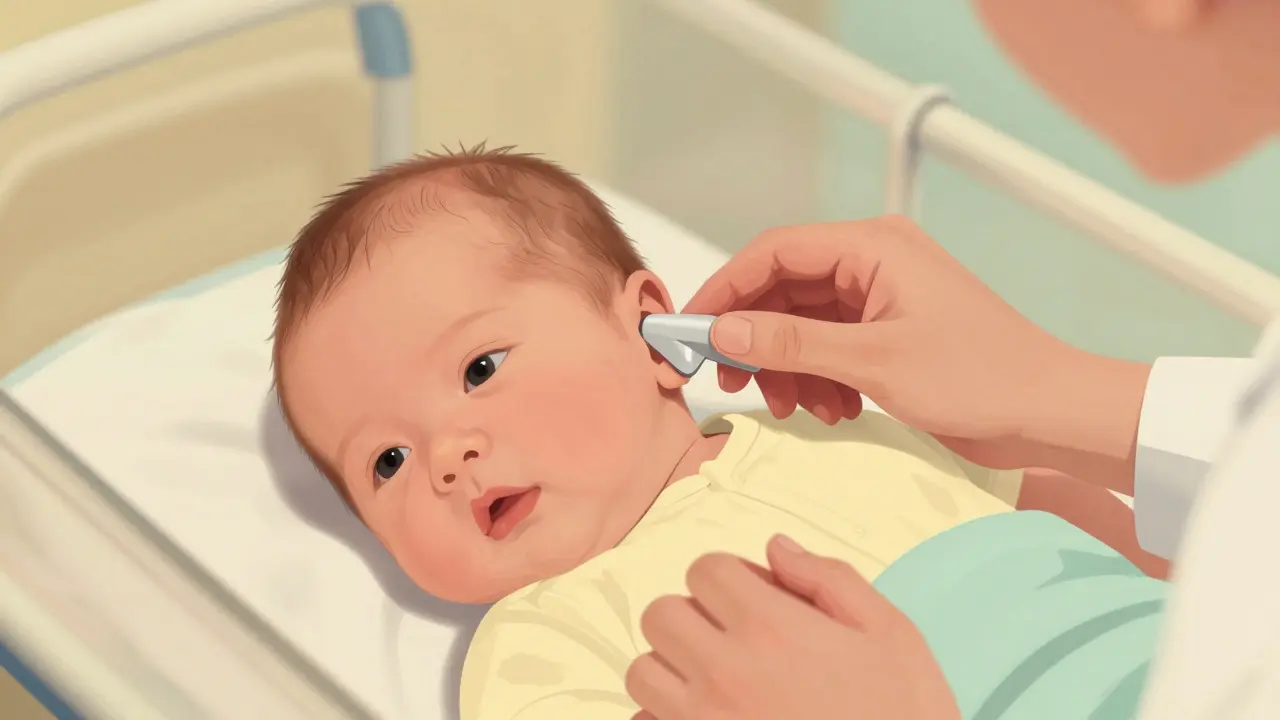
Hearing health isn't a "one and done" checkup. Because children's ears and brains develop so rapidly, we use a tiered approach. The gold standard is the Early Hearing Detection and Intervention EHDI framework. This system ensures that babies are screened early and those who need help get it fast. For newborns, doctors typically use Otoacoustic Emissions OAE screening. This test measures the echo produced by the inner ear in response to sound. If a baby doesn't pass, they need a full diagnostic evaluation by 3 months of age. As kids grow, the strategy shifts. Between 6 months and 3 years, pediatricians focus on developmental surveillance. By the time a child hits age 4, the focus moves toward pure-tone audiometry, where the child wears headphones and signals when they hear a specific beep. According to the American Academy of Pediatrics AAP, screenings should happen at ages 4, 5, 6, 8, and 10, with further checks throughout the teenage years.| Age Group | Screening Method | Key Goal |
|---|---|---|
| 0-6 Months | OAE / Newborn Screening | Identify congenital loss before 3 months |
| 6 Months - 3 Years | Developmental Surveillance | Monitor speech and risk indicators |
| 4 - 10 Years | Pure-Tone Audiometry (20-25 dB) | Catch acquired loss before school years |
| 11 - 21 Years | Expanded Pure-Tone (inc. 6000 Hz) | Monitor adolescent hearing health |
Why Does Pediatric Hearing Loss Happen?
Understanding the "why" helps doctors determine the best treatment. Roughly 50-60% of cases are congenital, meaning they are present at birth. Genetic factors are a huge piece of the puzzle; for example, mutations in the GJB2 gene account for half of all genetic hearing loss cases. Prenatal infections also play a role, with cytomegalovirus CMV being a common culprit in about 15-20% of congenital cases. However, not all hearing loss is there from day one. Acquired hearing loss happens as a child grows. You've probably heard of otitis media-the medical term for middle ear infections. This causes temporary hearing loss in a staggering 80% of children by age 3. While often temporary, frequent infections can lead to long-term issues. Other causes include:- Meningitis: This severe infection can lead to permanent sensorineural hearing loss in 30% of pediatric cases.
- Noise Exposure: Around 12.5% of kids aged 6-19 suffer from noise-induced hearing loss, often from loud music or gaming headsets.
- Prematurity: Complications from being born very early can put infants at higher risk.
Closing the Gap: The Power of Early Intervention
Finding a hearing loss is only half the battle. The other half is the intervention. The goal is to start services by 6 months of age. When we hit this window, we aren't just fixing a physical problem; we are protecting the child's cognitive and social development. There are several evidence-based paths families can take. Some choose Auditory-Verbal Therapy, which focuses on teaching the child to listen and speak. When started before 12 months, this approach helps 65-75% of children achieve age-appropriate language skills. Others prefer the Bilingual-Bicultural approach, incorporating American Sign Language ASL, which has shown high success rates for graduation and social integration. Technology is the bridge that makes these therapies possible. For mild to moderate loss, hearing aids can improve speech perception by 85% in quiet settings. For profound loss, cochlear implants are a game-changer, allowing 60-70% of children to recognize open-set speech-meaning they can understand words without seeing the speaker's lips.The Professionals on Your Team
Navigating this journey requires a village. You'll likely work with a variety of specialists, each with a specific role:- Pediatric Audiologists: These are the experts who perform the diagnostic tests and fit hearing devices. They typically have hundreds of hours of specialized clinical experience with children.
- Speech-Language Pathologists (SLPs): SLPs often act as the first line of defense in schools, conducting the initial screenings and then helping kids develop communication skills.
- Primary Care Providers: Your pediatrician uses tools like the Parents' Evaluation of Developmental Status (PEDS) to spot red flags during routine checkups.
- LSLS Specialists: Listening and Spoken Language Specialists are certified pros who focus specifically on spoken language outcomes for children with implants or aids.

Challenges and New Frontiers
Despite the great tools we have, the system isn't perfect. There is a frustrating "loss to follow-up" problem. About 37.5% of babies who fail their initial newborn screen never actually get the diagnostic test they need by 3 months. This gap is even wider in rural areas, where getting to a specialist can be a day-long trip. To fight this, we're seeing a surge in telehealth. Remote audiologic evaluations have reached 92% accuracy, meaning a specialist in a big city can help a child in a remote town without the family needing to travel hours. We're also seeing AI step in; some AI-powered audiogram tools now show 98.7% accuracy compared to human assessments. Looking ahead, the focus is shifting toward genetic screening at birth. Instead of waiting for a child to fail a hearing test, doctors may soon be able to use genetic panels to detect 80% of potential hearing causes immediately, allowing for even earlier intervention.What should I do if my baby fails the newborn hearing screen?
Don't panic, but do act quickly. A failed screen doesn't always mean permanent hearing loss-sometimes it's just fluid in the ear. However, you must schedule a diagnostic audiologic evaluation. The clinical goal is to have this completed by 3 months of age to ensure that if there is a loss, intervention can start by 6 months.
Can an ear infection cause permanent hearing loss?
Most cases of otitis media (middle ear infections) cause temporary conductive hearing loss. However, if infections are chronic and untreated, or if they lead to complications, they can potentially cause permanent damage. This is why routine screening throughout childhood is so important.
What is the difference between a hearing aid and a cochlear implant?
A hearing aid amplifies the sound entering the ear, making it louder for people with mild to severe loss. A cochlear implant is a surgically implanted device that bypasses the damaged part of the ear and directly stimulates the auditory nerve. It is typically used for children with profound hearing loss who do not benefit enough from traditional aids.
Are there risk factors I should tell my pediatrician about?
Yes. Tell your doctor if you have a family history of hereditary childhood hearing loss, if your child has craniofacial anomalies (like cleft palate), or if the child has had bacterial meningitis. These are key risk indicators that may require more frequent monitoring even if the newborn screen was passed.
How does early intervention affect a child's future?
Early intervention is the single most important factor in language acquisition. Children who receive help before 6 months are significantly more likely to have language comprehension scores within normal limits. This prevents the "language gap" that can lead to cognitive and social-emotional delays later in school.