
Glycyrrhizin: What It Is, How It Works, and What You Need to Know
When you see glycyrrhizin, a natural compound found in licorice root that has been studied for its anti-inflammatory and antiviral properties. Also known as glycyrrhizic acid, it’s not just a flavoring agent—it’s one of the most researched plant-derived substances in modern herbal medicine. People use it in teas, supplements, and even some traditional remedies for everything from sore throats to liver support. But it’s not harmless. Too much can raise blood pressure, lower potassium, and mess with hormones. Knowing how it works—and where it shows up—is key to using it safely.
Glycyrrhizin is closely tied to licorice root, the dried root of the Glycyrrhiza glabra plant, long used in both Eastern and Western herbal traditions. It’s the reason licorice tastes sweet—about 50 times sweeter than sugar. But its power goes beyond taste. Studies show glycyrrhizin can block viruses from entering cells, which is why it’s been looked at for hepatitis and even some respiratory infections. It also helps reduce inflammation by calming down overactive immune signals. That’s why it shows up in natural remedies for skin rashes, stomach ulcers, and even coughs. But here’s the catch: most of these benefits come from concentrated extracts, not the candy you eat. And if you’re on blood pressure meds, diuretics, or heart drugs, glycyrrhizin can interfere. It’s not just a supplement—it’s a biochemical player.
It connects to other natural substances you might already know. Like natural remedies, herbal or plant-based options people turn to for symptom relief without prescription drugs, glycyrrhizin fits into a bigger picture of people looking for alternatives to pharmaceuticals. You’ll find it in the same conversations as turmeric, milk thistle, or echinacea—especially when it comes to liver health. In fact, some of the posts here look at how natural compounds interact with medications like zidovudine or everolimus, and glycyrrhizin can play a role in those same discussions. It’s not a cure-all, but it’s one of the few plant compounds with enough clinical data to be taken seriously. The problem? Many people don’t realize how strong it is. A daily licorice tea might be fine. A daily supplement with concentrated glycyrrhizin? That’s a different story.
What you’ll find in the posts below isn’t just a list of articles. It’s a practical map of how glycyrrhizin and similar substances show up in real-world health decisions. Some posts talk about how natural remedies affect drug side effects. Others dive into liver safety, medication interactions, or how to spot hidden ingredients in supplements. You’ll see how people are using these compounds, what risks they’re ignoring, and what science actually supports. Whether you’re taking something for diabetes, HIV, or just a sore throat, you need to know what’s in it—and what it might be doing to your body. This isn’t theory. It’s what’s happening in kitchens, pharmacies, and clinics right now.
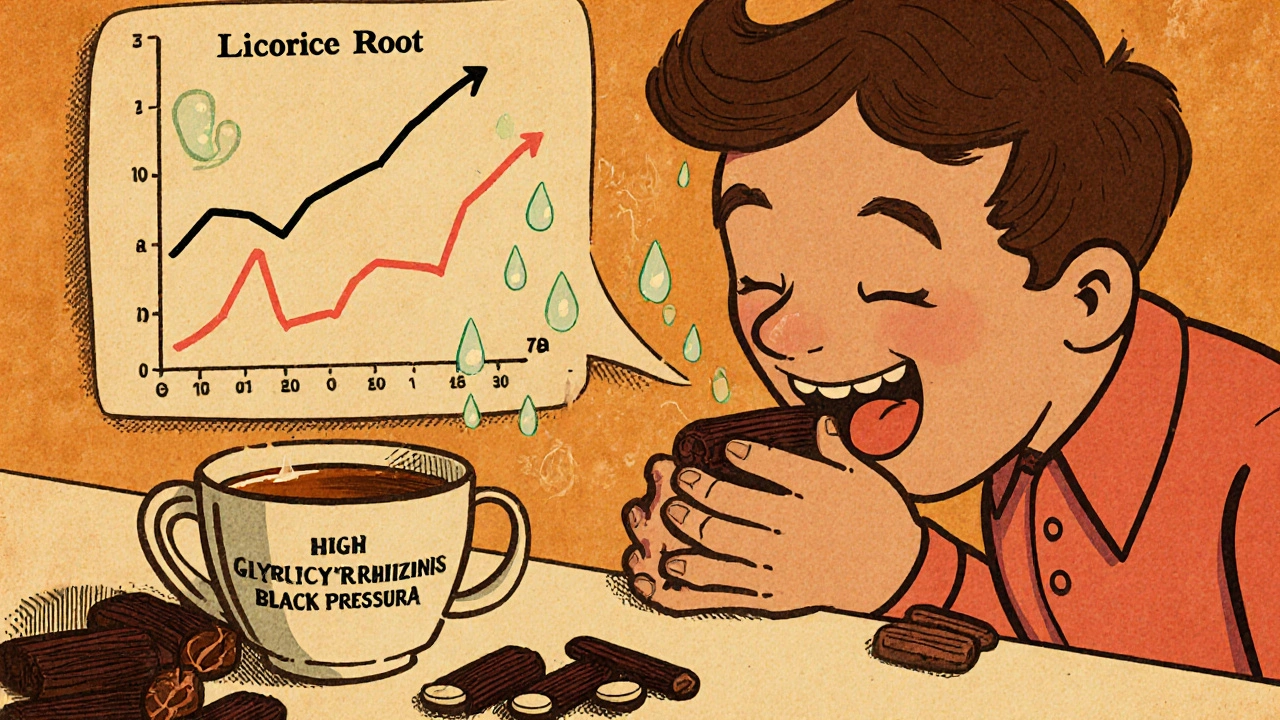
Licorice and Blood Pressure Medication Interactions: What You Need to Know
Licorice contains glycyrrhizin, which can raise blood pressure and interfere with medications like diuretics and ACE inhibitors. Even small daily amounts can cause dangerous drops in potassium and make treatments less effective.
Read MoreLatest Post
-

How Desonide is Changing the Landscape of Topical Steroid Treatments 20 February 2025
-
Medications You Should Never Use After the Expiration Date 19 November 2025
-

-

How to Buy Cheap Generic Premarin Online - Safe Guide & Cost Comparison 26 September 2025
-
Medicare Part D Formularies: How Generic Coverage Works in 2025 1 December 2025