
Aspirin for Primary Prevention: Who Should Skip Daily Doses
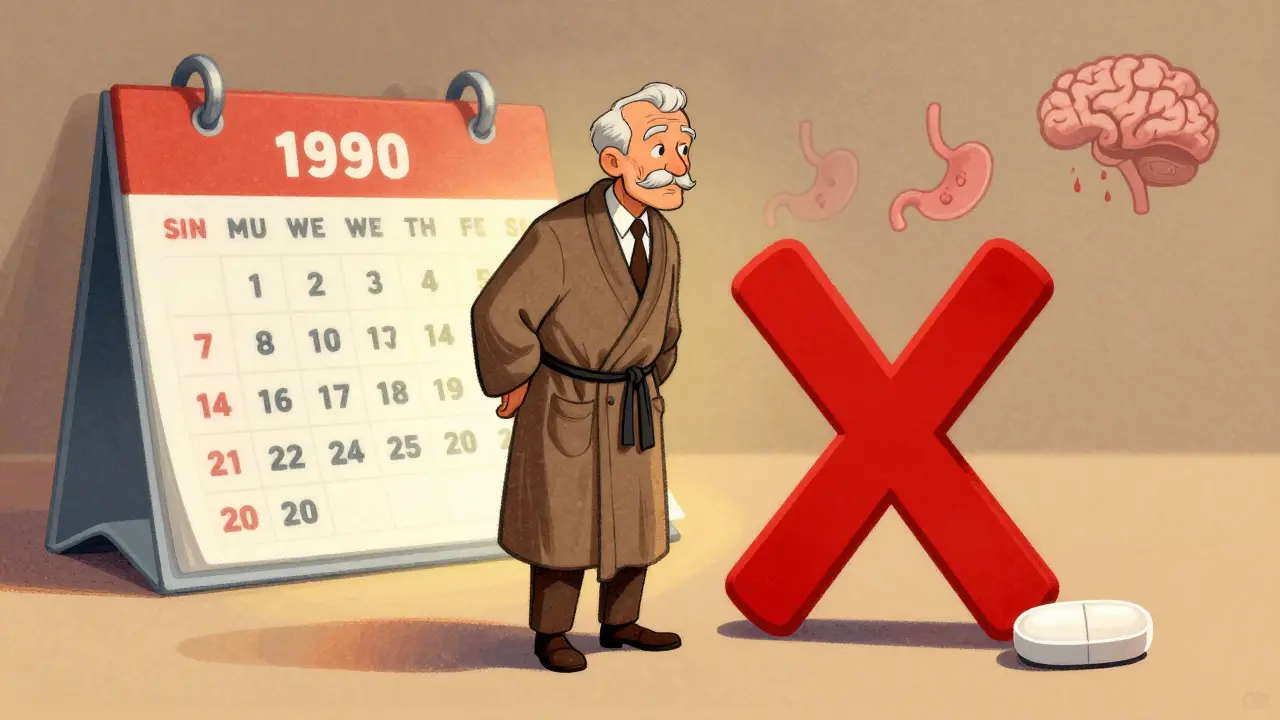
For years, taking a daily aspirin was as routine as brushing your teeth-if you were over 50 and wanted to avoid a heart attack. Doctors handed out the recommendation like candy. But things have changed. Today, the science says aspirin isn’t for everyone. In fact, for many people, it’s doing more harm than good.
Why the Big Shift?
Back in the 1990s, studies showed aspirin could lower the chance of a first heart attack. That led to millions of people popping a pill every day, even if they’d never had a heart problem. But those early studies didn’t fully account for the risks. Over time, bigger, longer trials revealed a troubling pattern: the bleeding dangers of daily aspirin often outweigh the tiny benefit of preventing a first heart attack or stroke. The U.S. Preventive Services Task Force (USPSTF) updated its guidelines in 2022, and the message was clear: Don’t start aspirin for primary prevention if you’re 60 or older. The American College of Cardiology and American Heart Association followed suit. They now say aspirin should only be considered in very specific cases-and even then, only after careful discussion with your doctor.Who Definitely Should Skip Daily Aspirin
If you’re 60 or older and have never had a heart attack, stroke, stent, or bypass, you should probably stop or never start daily aspirin. Here’s why:- Major bleeding risk goes up with age. After 60, your stomach lining becomes more fragile. Blood vessels in the brain weaken. Aspirin thins your blood. That combo means a higher chance of dangerous internal bleeding. Studies show for every 1,000 people over 60 taking aspirin daily for 10 years, about 1.6 more will have a major bleed-like a stomach ulcer or brain hemorrhage-than those not taking it.
- The benefit is tiny. In the same group, only about 0.9 fewer heart attacks happen. That’s less than one person per 1,000. The math just doesn’t work.
- Other medications make it worse. If you’re already on blood thinners like warfarin, apixaban, or rivaroxaban-or even regular NSAIDs like ibuprofen or naproxen-your bleeding risk shoots up. Many older adults take these for arthritis or pain. Adding aspirin is a recipe for trouble.
Who Might Still Benefit (But Only With Caution)
There’s a small group-mostly people in their 40s and 50s-who might still get a net benefit. But it’s not automatic. You need to meet all these conditions:- You’re between 40 and 59 years old.
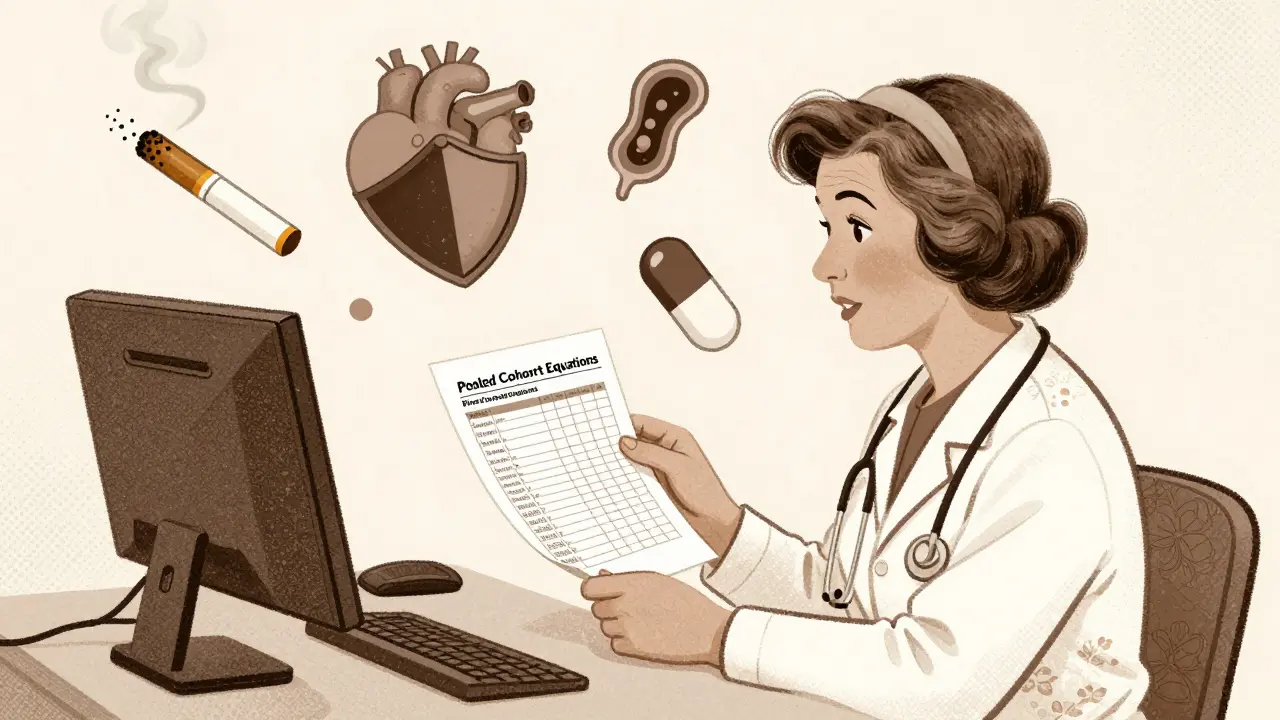
- Your 10-year risk of heart attack or stroke is 10% or higher. That’s calculated using the Pooled Cohort Equations, which factor in your age, sex, race, blood pressure, cholesterol, diabetes status, and smoking.
- You have no history of stomach ulcers, bleeding disorders, or liver disease.
- You’re not taking other blood thinners or NSAIDs regularly.
- You’re willing to stick with it long-term-because the benefit only shows up after years of use.
The Diabetes Dilemma
People with diabetes have higher heart disease risk. That’s why many assumed they should be on aspirin. But the 2025 AHA/ACC guidelines changed that too. Now, aspirin is only considered for diabetics aged 40-70 if their 10-year risk is 15% or higher and they have no bleeding risk. For most diabetics under 60 without other major risk factors, aspirin isn’t recommended. One exception? Diabetics with Lp(a) over 50 mg/dL. A 2024 study showed aspirin cut their heart events by nearly 20%. But testing for Lp(a) isn’t routine. If you have diabetes and a family history of early heart disease, ask your doctor about this test.What About the People Who’ve Been on Aspirin for Years?
If you’re over 60 and have been taking aspirin daily for 10 years because your doctor told you to, you’re not alone. A 2023 Mayo Clinic survey found 41% of people 60+ kept taking it even after the new guidelines came out. Why? Fear. “I’ve been on it since I was 55. I’m scared to stop,” one patient told a researcher. But stopping isn’t dangerous. Unlike blood pressure or cholesterol meds, aspirin doesn’t cause rebound effects. Your body doesn’t suddenly go into overdrive without it. If you’re unsure, talk to your doctor. Don’t quit cold turkey if you’re also on other meds-but don’t keep taking it just because “it’s always been there.” Your risk profile has changed since you started.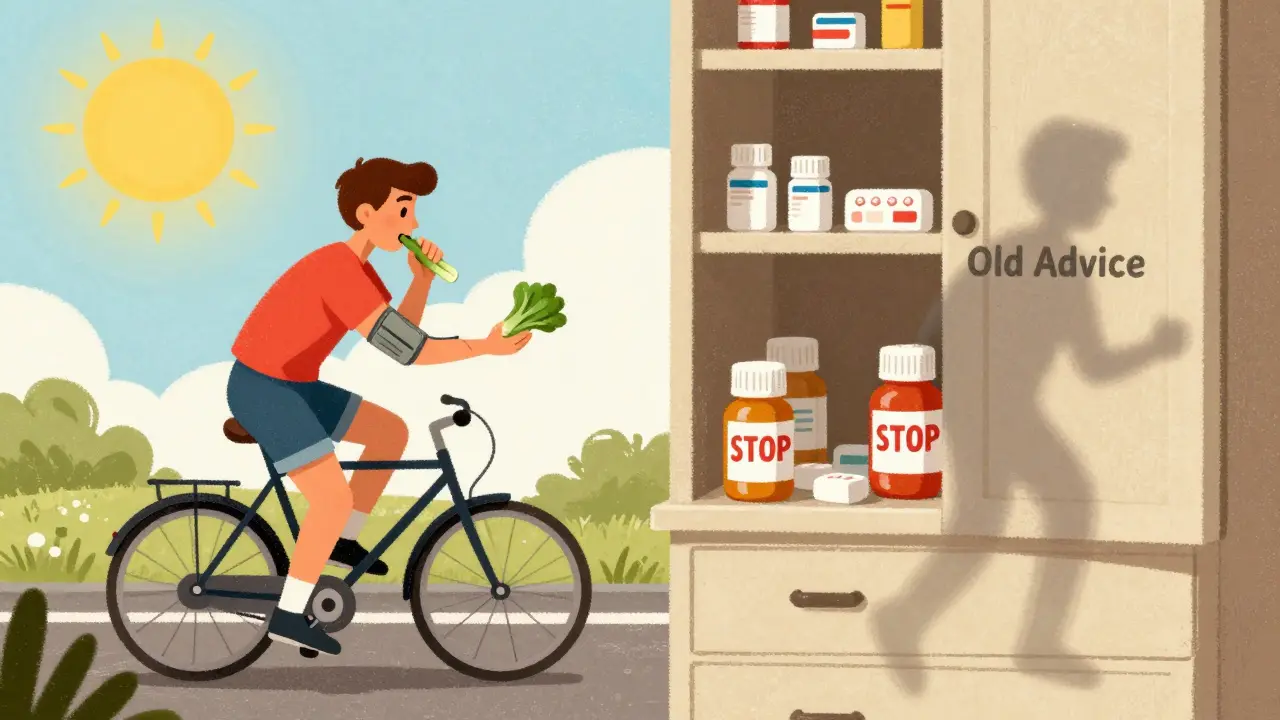
Why Do Doctors Give Conflicting Advice?
You’re not imagining it. One doctor says stop. Another says keep going. That’s because guidelines are broad. Real people are messy. Cardiologists, who see patients with advanced disease, are more likely to stick with aspirin for high-risk cases-even if guidelines say no. Primary care doctors, who see the big picture, are more likely to follow the new rules. Plus, not every doctor has time to run the risk calculators. A 2023 study found 63% of primary care visits didn’t include a formal CVD risk assessment. Many still rely on age or “family history” as a shortcut.What Should You Do Instead?
Aspirin was never a magic bullet. The real winners in heart disease prevention are the basics:- Don’t smoke.
- Move your body-150 minutes a week of walking, cycling, or swimming.
- Control your blood pressure. Aim for under 120/80.
- Manage your cholesterol. If your LDL is over 100, diet and exercise come first.
- Keep your blood sugar in check, especially if you have prediabetes.
The Bottom Line
Daily aspirin for heart health isn’t dead-but it’s not for most people anymore. If you’re under 40, skip it. If you’re 60+, don’t start it. If you’re 40-59 and have high risk and low bleeding risk, talk to your doctor. But don’t assume it’s right for you just because your neighbor takes it. The goal isn’t to take more pills. It’s to live longer, healthier, and without a hospital stay from a bleed you didn’t need.Should I stop taking aspirin if I’m over 60 and have never had a heart attack?
Yes, if you’re over 60 and have never had a heart attack, stroke, or related condition, you should stop daily aspirin. The risk of serious bleeding-like stomach or brain bleeds-now clearly outweighs the small benefit of preventing a first heart event. This is the official stance of the U.S. Preventive Services Task Force and the American Heart Association.
Is it safe to take aspirin if I have high cholesterol but no other heart disease?
Not necessarily. High cholesterol alone doesn’t make aspirin right for you. What matters is your overall 10-year risk of heart attack or stroke, calculated using your age, blood pressure, cholesterol, diabetes status, and smoking. If your risk is below 10%, aspirin won’t help. If it’s above 10% and you’re under 60, talk to your doctor-but only if you have no bleeding risk.
Can I take aspirin if I’m on blood pressure or diabetes meds?
Yes, if you’re otherwise eligible. Blood pressure and diabetes medications don’t interfere with aspirin. But if you’re also taking NSAIDs like ibuprofen, naproxen, or any blood thinner (warfarin, apixaban, etc.), aspirin increases your bleeding risk. Always tell your doctor what else you’re taking before starting or continuing aspirin.
What if I have a high calcium score in my heart arteries?
A high coronary calcium score (over 100 or especially over 300) means you have significant plaque buildup, even if you feel fine. Some cardiologists recommend aspirin in these cases, even if you’re over 60. But this is still debated. The evidence isn’t strong enough for a blanket recommendation. If you have a high score, discuss it with your doctor-consider a full risk-benefit analysis, not just the score alone.
Will stopping aspirin cause a rebound heart attack?
No. Unlike some heart medications, aspirin doesn’t cause rebound effects. Stopping it won’t suddenly trigger a heart attack. However, if you were taking it because you had a stent or previous heart event (secondary prevention), stopping could be dangerous. Always confirm with your doctor whether you’re on aspirin for primary or secondary prevention before stopping.
Are there alternatives to aspirin for preventing heart disease?
Yes-better ones. The most effective ways to prevent a first heart attack are lifestyle changes: quitting smoking, regular exercise, eating more vegetables and less processed food, managing blood pressure and cholesterol, and controlling blood sugar. For some people, statins are a better choice than aspirin. They lower LDL cholesterol, reduce inflammation, and have proven benefits with fewer bleeding risks.

12 Comments
Luke Davidson
January 25, 2026 at 01:36
Man I remember when my grandpa took aspirin like candy every day - said it kept his ‘thin blood’ flowing. Now he’s on blood thinners for AFib and his doc told him to ditch it. Guess we all thought aspirin was like vitamins, but turns out it’s more like a chainsaw you hand to a toddler. 😅
Jenna Allison
January 25, 2026 at 06:05
As a nurse who’s seen three GI bleeds from people ‘just taking aspirin for heart health’ - this is long overdue. The math is brutal: 1.6 major bleeds per 1000 vs 0.9 fewer heart attacks. That’s not prevention, that’s gambling with your insides. Stick to statins, exercise, and actual food. Not pills you bought without a prescription.
Tommy Sandri
January 26, 2026 at 07:51
The shift in medical consensus around aspirin reflects a broader trend in preventive medicine: moving away from one-size-fits-all interventions toward risk-stratified, evidence-based decision-making. While laypersons may perceive this as inconsistency, it is in fact the scientific method working as intended - updating recommendations as new data emerges.
venkatesh karumanchi
January 27, 2026 at 12:25
In India, we don’t even think about aspirin for heart unless we’re in the hospital. Most people here take turmeric, neem, or just walk 5 km a day. Maybe the West overmedicates because we forgot how to live. 🌿
Helen Leite
January 27, 2026 at 23:37
EVERYONE KNOWS BIG PHARMA doesn't want you to stop aspirin because they sell the tests to justify it. CAC scores? Lp(a)? Pooled Cohort Equations? That’s all a scam to get you to pay for more blood draws and scans. The truth? Aspirin is safe. They just want you scared so you’ll take their $500/month pills. 🚨💊
Elizabeth Cannon
January 28, 2026 at 17:43
My mom’s 68 and took aspirin since 55. She stopped last year after reading this. No heart attack. No bleed. Just… alive. 🤷♀️ If your doc didn’t run the risk calc, they’re lazy. Don’t be afraid to ask for the numbers. You deserve to know what you’re really risking.
Phil Maxwell
January 30, 2026 at 13:10
Yeah I’ve been on it since my 40s. 58 now. My LDL’s 130, BP’s good, no diabetes. Doc said I’m borderline. I’m just gonna keep taking it. Why not? Feels like insurance. If it’s not hurting me, why stop?
Karen Conlin
January 31, 2026 at 04:14
Let’s be real - the real hero here isn’t aspirin. It’s the 70-year-old grandma who walks 2 miles every morning, eats beans and greens, and doesn’t own a scale because she doesn’t need one. Lifestyle doesn’t need a prescription. It needs a damn schedule. Stop looking for a pill. Start looking for your next walk.
asa MNG
January 31, 2026 at 07:21
ok but what if i take baby aspirin with a glass of wine and a banana? does that make it safer?? like i dont wanna be one of those people who dies of a stroke but also dont wanna bleed out in the bathroom 🤔😭
Patrick Gornik
January 31, 2026 at 11:25
The aspirin debate isn’t about medicine - it’s about epistemology. We’ve constructed a medical-industrial complex that equates intervention with care, when true healing often lies in restraint. The ancient Greeks didn’t have statins - yet Hippocrates lived to 80. Perhaps our obsession with molecular intervention is the disease, not the cure. We’ve forgotten that the body is not a machine to be tuned, but a living system to be honored.
Sushrita Chakraborty
January 31, 2026 at 19:32
While the guidelines are scientifically sound, implementation remains inconsistent across healthcare systems. In resource-limited settings, aspirin remains a low-cost, accessible intervention - and discontinuation without access to alternative preventive strategies may inadvertently increase cardiovascular risk. Context matters profoundly.
Darren Links
February 1, 2026 at 10:08
So now the government says I can’t take aspirin? Next they’ll ban coffee because it’s ‘linked to anxiety’ and water because ‘it causes hyponatremia’. This is tyranny dressed as science. I’m an American. I’ll take what I want, when I want. And if I bleed? At least I died free.