
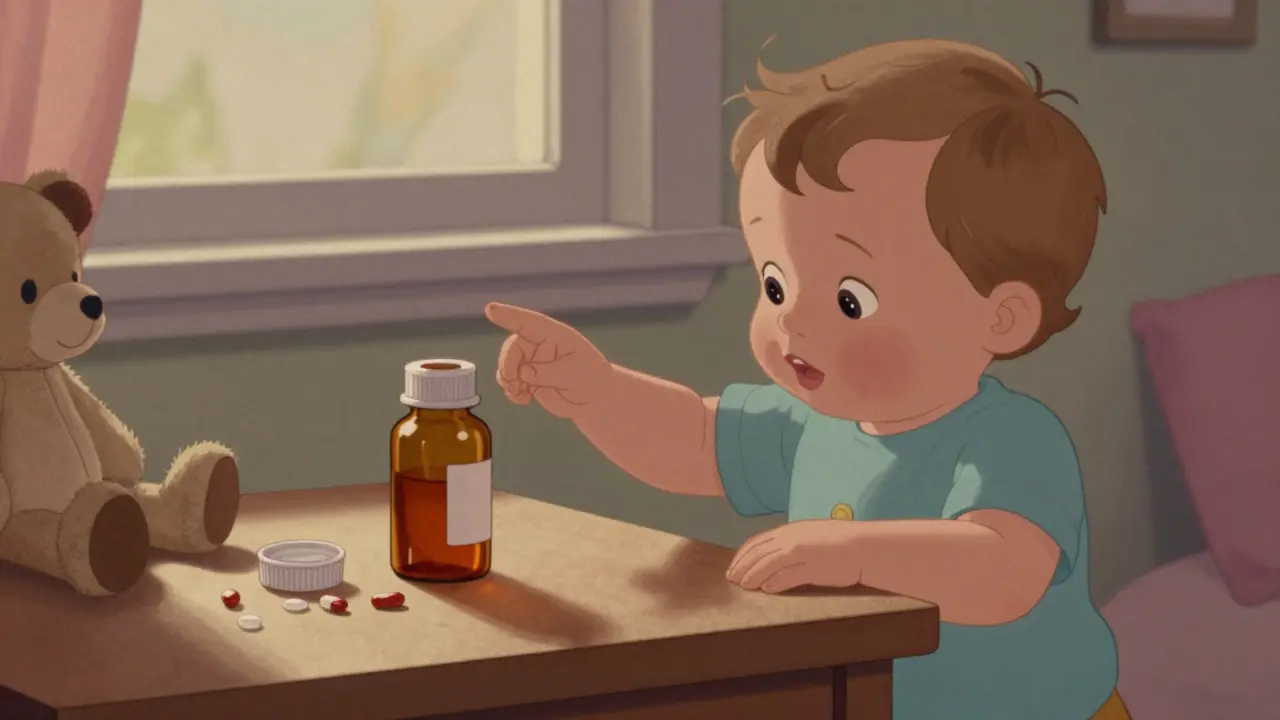
Child-Resistant Containers and Medication Safety Caps Explained
Every year, over 900,000 children in the U.S. accidentally get into medicines they shouldn’t. Most of these incidents happen at home-on a countertop, in a purse, or left open on the nightstand. The good news? Child-resistant packaging has cut pediatric poisoning deaths by 45% since the 1970s. The bad news? It’s not foolproof. And if you don’t know how it really works, you might be giving your child more access than you think.
What Exactly Is Child-Resistant Packaging?
Child-resistant packaging, or CR packaging, isn’t meant to be child-proof. That’s a common misunderstanding. No container is completely impossible for a determined kid to open. Instead, CR packaging is designed to slow them down-enough so that an adult is likely to notice and intervene. The U.S. Consumer Product Safety Commission (CPSC) sets strict rules for this. Under the Poison Prevention Packaging Act (PPPA) of 1970, any medicine that could be deadly if swallowed by a child under five must come in packaging that 85% of kids aged 42 to 51 months can’t open within 10 minutes.The testing doesn’t stop there. Kids who fail the first round get a five-minute demo on how to open it. Then they try again. If they still can’t open it, the packaging passes. But here’s the catch: the same packaging must also be easy enough for adults to use. At least 90% of seniors aged 50 to 70 must be able to open and close it correctly within five minutes. That’s the senior-friendly (SF) requirement. It’s a tight balance-keeping kids out without locking out Grandma.
How Do These Caps Actually Work?
The most common design you’ll see is the push-and-turn cap. You press down on the lid while twisting it counterclockwise. That two-step motion is hard for small hands to coordinate. Other types include squeeze-and-turn caps, where you have to compress the sides while turning, or interlocking caps that require simultaneous motions in different directions.Not all medications use the same system. Solid pills like ibuprofen or amoxicillin capsules usually come in standard screw-top bottles made of high-density polyethylene (HDPE), which are 97% effective at blocking kids. But liquids? They’re trickier. About 39% of non-compliant packaging cases involve liquid medicines. Why? Because liquid bottles often have wider openings and softer caps that kids can twist open more easily-or even bite through.
Nasal spray pumps are another weak spot. The CPSC made it clear in 2012: a spray nozzle alone doesn’t count as child-resistant. The pump mechanism itself or the outer cap must have a locking feature. Only 22% of nasal sprays on the market met that standard before special CR spray pumps were developed. Even then, many pharmacies still dispense them in non-CR packaging because the design is harder to manufacture.
Why Do Some Caps Still Fail?
You might think, “I always close the cap tightly.” But here’s the problem: CR packaging only works if it’s resealed properly. The CPSC found that 73% of child access incidents happen because the cap was left loose after the first use. One study showed that after just one opening, the effectiveness of CR caps drops by about 15% because people don’t twist them back on fully.Also, not all brands are created equal. Consumer Reports tested 12 different CR caps in 2023. CVS Health’s generic caps failed child resistance tests 22% of the time. Manufacturer-specific caps, like those from Pfizer or Merck, failed only 8% of the time. Why? Because big pharma companies invest more in testing and design. Generic or store-brand packaging sometimes cuts corners to save money.
And then there’s damage. If the cap is cracked, the threads are stripped, or the seal is broken, the whole system fails. A child doesn’t need to be a locksmith-just persistent. One parent reported finding their 3-year-old with an open bottle of liquid Tylenol because the cap had been damaged during transport and never noticed.
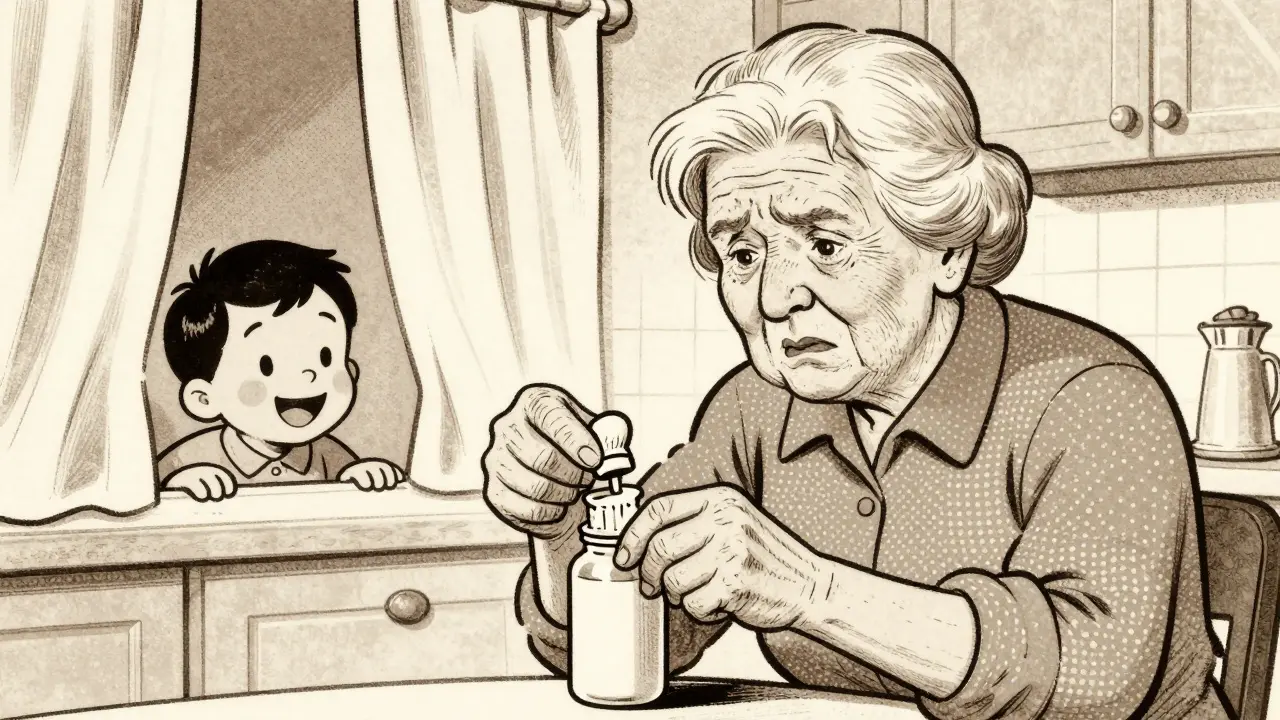
Who Struggles the Most With These Caps?
While CR packaging protects kids, it can make life harder for adults-especially seniors and people with arthritis. A 2022 survey by the Arthritis Foundation found that 68% of people with hand impairments had trouble opening medication bottles. The average force needed to open a standard CR cap is around 8 pounds. The recommended limit for senior-friendly access? Just 5 pounds.That’s why new designs are emerging. Companies like Aptar Pharma now make “child-resistant, senior-friendly” (CR/SF) caps that use a push-and-turn mechanism requiring less grip strength. Amazon reviews for Blisterpak’s Easy-Open system show a 4.2 out of 5 rating, with users saying things like, “My 70-year-old mom can finally open her meds without help.”
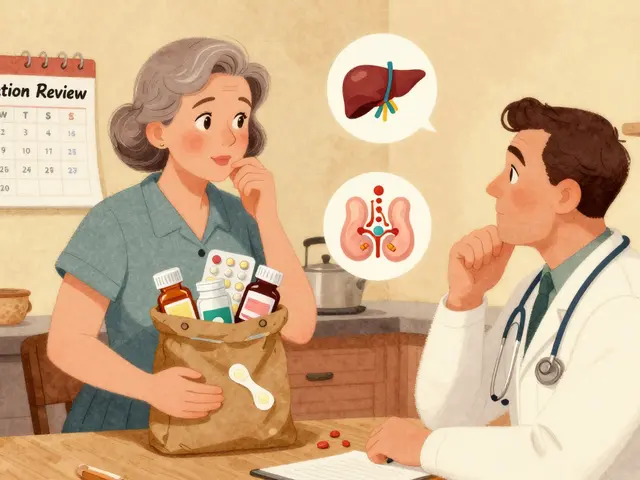
But not every pharmacy offers these alternatives. If you or a loved one struggles, ask for non-CR packaging. It’s legal-if you sign a form acknowledging the risk. Many seniors do this, especially if they live alone and don’t have kids around. But they need to know: removing the CR cap means you’re removing a layer of protection. Store those meds in a locked cabinet, out of reach.
What’s New in Medication Safety?
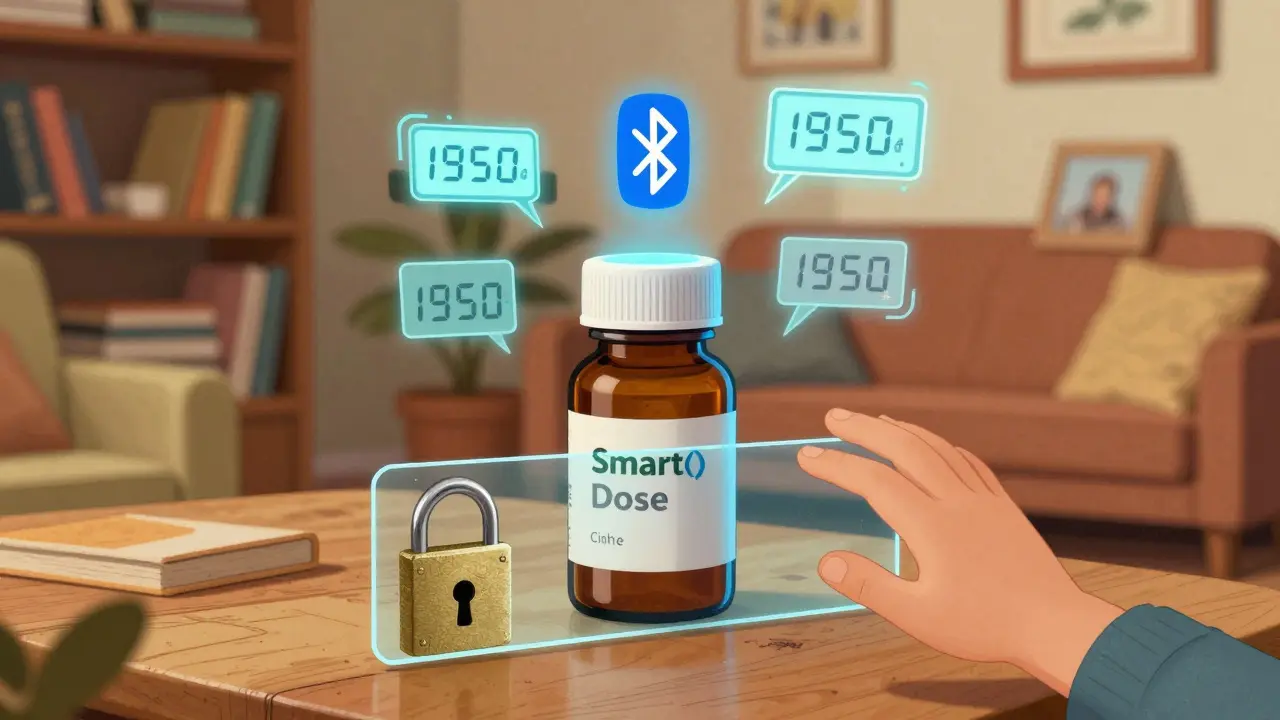
The field is evolving fast. In January 2023, Aptar launched the first FDA-cleared smart CR cap called SmartDose. It’s a Bluetooth-enabled cap that tracks when the bottle is opened and sends alerts to your phone if it’s opened at odd hours-like 3 a.m. That’s not just for kids. It helps seniors who forget if they took their pill, and caregivers who worry about missed doses.Regulations are expanding too. In 2016, the CPSC started requiring CR packaging for nicotine e-liquid refill pods. In 2023, they proposed rules for THC edibles containing more than 2mg per serving. And now, laundry detergent pods-which have caused thousands of poisonings-are under review for mandatory CR packaging.
Meanwhile, international standards are catching up. The EU follows EN ISO 8317:2023, which is similar to U.S. rules. Brazil and India passed their own CR laws in 2021 and 2022. The global market for this packaging is expected to hit $4.87 billion by 2028.
What Should You Do?
Here’s what actually works:- Always reseal the cap after use-push down and twist until you hear or feel a click.
- Store meds in a locked cabinet or high shelf-even if it’s “child-resistant.”
- Don’t transfer pills to pill organizers unless they’re also CR-approved.
- If you have young kids, avoid leaving meds in purses, nightstands, or coat pockets.
- If you or someone in your home has trouble opening caps, ask your pharmacist for senior-friendly alternatives.
- Know your poison control number: 1-800-222-1222. Save it in your phone.
CR packaging saved hundreds of thousands of lives. But it’s not magic. It’s a tool. And like any tool, it only works if you use it right.
What About Blister Packs?
Blister packs-those plastic sheets with pills pressed into foil pockets-are popular because they’re easy to carry and keep pills separated. But standard blister packs? They’re not child-resistant. A child can just peel the foil back with their fingernails.Some newer blister packs are designed with CR features: thicker foil, extra resistance, or even a push-through mechanism that requires more force. These are marked as CR-compliant and must meet the same 85% child resistance standard. But they’re still rare. Most pharmacies still use regular blister packs for OTC meds like aspirin or allergy pills.
If you’re buying meds in blister packs, check the box. If it doesn’t say “child-resistant,” assume it’s not. And don’t rely on the packaging alone.
What’s Next for Medication Safety?
The future is smarter, not just stronger. Researchers are testing packaging that changes color if opened, or that releases a harmless alarm sound if tampered with. Some prototypes even include tiny sensors that detect moisture or temperature changes-signs a child might be trying to swallow the pills.But the biggest challenge remains: balancing safety for kids with usability for adults. With over 61 million Americans living with arthritis or mobility issues, the demand for CR/SF packaging will only grow. The next big wave won’t be about making caps harder to open-it’ll be about making them easier for seniors to open without compromising child safety.
Are child-resistant caps really effective?
Yes, but only if used correctly. Since the 1970s, CR packaging has prevented an estimated 900,000 pediatric poisonings each year. However, effectiveness drops by about 15% after the first opening if the cap isn’t properly resealed. In testing, 85% of children under five can’t open compliant packaging within 10 minutes, but that number falls if the cap is loose or damaged.
Can I ask my pharmacist for easier-to-open caps?
Yes. Under federal law, you can request non-child-resistant packaging if you’re over 18 and live in a home without young children. You’ll need to sign a form acknowledging the risk. Many pharmacies now offer senior-friendly CR/SF caps as a standard option-ask if they have them.
Why do some medicine bottles still get opened by kids?
Most often, it’s because the cap wasn’t closed properly. In 73% of cases, the bottle was left slightly loose after the last use. Other reasons include damaged caps, children learning how to open them after seeing an adult, or using non-CR packaging like pill organizers or transfer containers.
Do all prescription drugs need child-resistant packaging?
Yes. All prescription medications classified as Schedule II-V controlled substances are legally required to have CR packaging. Even non-controlled prescriptions like antibiotics or blood pressure meds must use CR packaging if they contain ingredients listed under the PPPA. Over-the-counter drugs only need it if they contain specific active ingredients at certain strengths, like acetaminophen, ibuprofen, or iron.
Is it safe to use non-child-resistant packaging if I don’t have kids?
It’s legal, but risky. Even if you don’t have kids, visitors might-grandchildren, nieces, nephews, or friends’ children. Accidental poisonings often happen when kids are visiting. The CPSC recommends keeping all medications in CR packaging unless you’re absolutely certain no child will ever be near them.


8 Comments
Mario Bros
January 11, 2026 at 08:23
Just saw my niece crack open a bottle of ibuprofen like it was a snack. Kids are tiny little engineers. CR caps help, but they’re not magic. Always lock ‘em up.
Bradford Beardall
January 13, 2026 at 02:50
Wait, so nasal sprays aren’t automatically child-resistant? I had no idea. My kid got into my allergy spray last month. We thought the nozzle was enough. That’s wild. Guess I need to check every single bottle now.
anthony martinez
January 14, 2026 at 10:56
Of course the FDA lets CVS sell caps that fail 22% of the time. Meanwhile, the same company charges $12 for a 30-day supply of Tylenol. Capitalism wins again. At least the kids get a free lesson in lockpicking.
McCarthy Halverson
January 16, 2026 at 01:11
Always reseal. Lock it up. Don’t transfer pills. Ask for senior caps if you need them. Simple. Do it.
Christine Milne
January 17, 2026 at 13:11
It is patently irresponsible to suggest that non-child-resistant packaging is an acceptable alternative under any circumstances. The United States has the most rigorous pharmaceutical safety standards in the world, and to undermine them based on anecdotal inconvenience is not merely negligent-it is a direct affront to public health policy as codified under the Poison Prevention Packaging Act of 1970. One must consider the collective welfare over individual convenience, regardless of arthritis or perceived low risk.
Michael Marchio
January 18, 2026 at 09:31
People don’t even bother reading the labels anymore. I’ve seen grandmas leave bottles on the coffee table because they ‘don’t have kids around.’ And then they wonder why their neighbor’s 2-year-old ended up in the ER. It’s not just about the cap-it’s about the mindset. You think your home is safe? You think your sister won’t bring her kids over? You think your dog won’t knock it off the counter? Wake up. This isn’t a puzzle. It’s a liability waiting to happen. And if you’re too lazy to twist it shut, then you’re part of the problem.
Ashlee Montgomery
January 19, 2026 at 01:40
It’s interesting how we design safety around the idea of preventing harm, but rarely consider how it isolates the vulnerable. The same caps that protect children make life harder for the elderly, the disabled, the lonely. We build walls instead of bridges. Maybe the real question isn’t how to make caps harder for kids to open-but how to make them easier for everyone else to use without sacrificing safety. What if the solution isn’t stronger plastic, but smarter design? Or better systems? Or maybe, just maybe, we need to stop treating people like problems to be locked away.
Jake Nunez
January 19, 2026 at 11:47
Just got back from visiting my cousin in Brazil. They’ve had CR packaging for meds since 2021. Same rules as here, but they also put QR codes on the bottles that link to safety videos in Portuguese. Smart. We’re still stuck with push-and-turn caps and zero education. We’re not just behind on packaging-we’re behind on culture.