
Exercise and Diabetes: Proven Physical Activity Plans to Control Blood Sugar
Why Movement Matters More Than Ever for Diabetes
Diabetes isn’t just about pills or insulin-it’s about how your body moves. If you have type 1 or type 2 diabetes, regular physical activity isn’t optional. It’s one of the most powerful tools you have to lower your blood sugar, reduce insulin resistance, and protect your heart. Studies show that people who stick with a consistent exercise routine can lower their HbA1c by 0.5% to 0.7%. That’s the same drop you might see from adding a new medication-but without the side effects.
The science is clear: exercise makes your muscles more sensitive to insulin. That means your body uses glucose more efficiently, whether you’re walking after dinner or lifting weights on Tuesdays and Thursdays. And it’s not just about long-term numbers. Even a 10-minute walk after meals can cut post-meal blood sugar spikes by nearly a quarter. This isn’t theory. It’s measurable, repeatable, and backed by decades of clinical data.
The Basic Blueprint: How Much Exercise Do You Really Need?
You don’t need to run marathons or join a gym to see results. The standard recommendation from the American Diabetes Association and the American College of Sports Medicine is simple: 150 minutes of moderate-intensity aerobic activity per week. That’s 30 minutes, five days a week. Or if you prefer, 75 minutes of vigorous activity-like brisk hiking, cycling fast, or stair climbing.
Here’s what moderate intensity actually feels like: you can talk, but you can’t sing. If you’re out walking and can hold a conversation but are breathing a little harder than normal, you’re in the right zone. The key isn’t intensity-it’s consistency. Missing two days in a row can undo the insulin-sensitizing effects of exercise. Your body forgets how to use glucose efficiently after about 48 hours without movement.
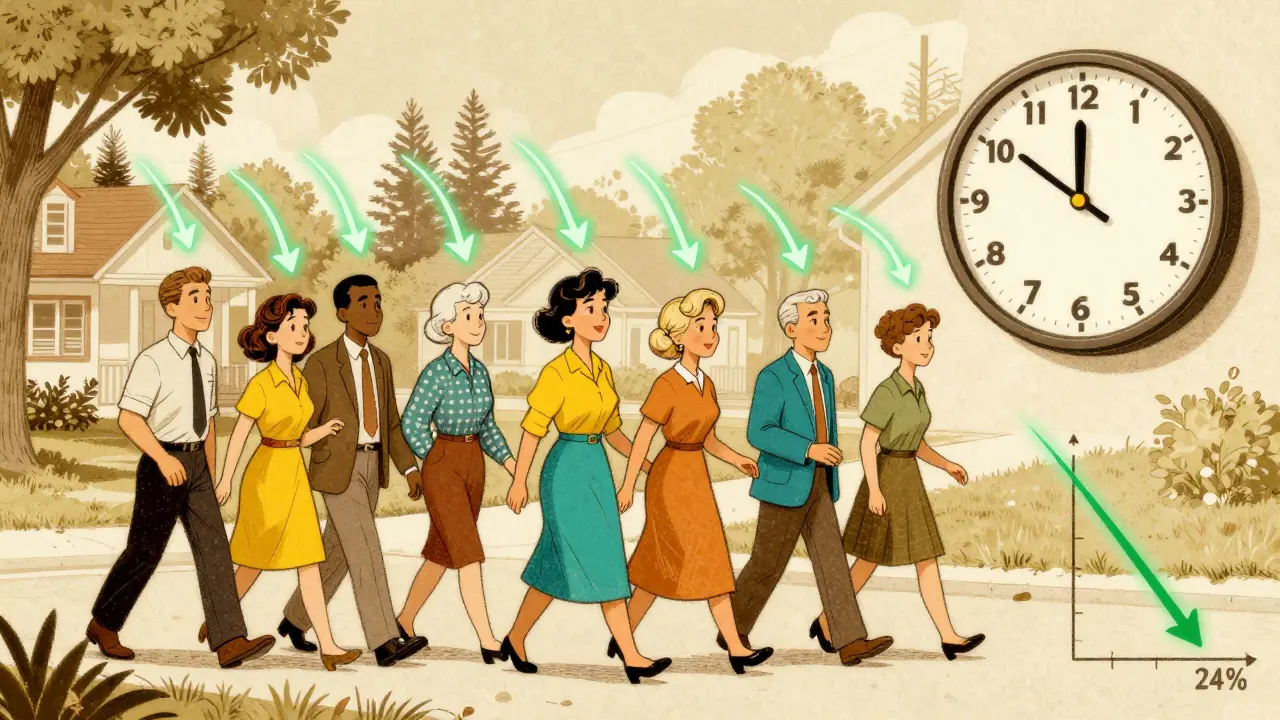
And don’t underestimate the power of breaking up sitting time. If you sit for eight hours a day, try standing up and walking for three minutes every 30 minutes. That small habit cuts post-meal glucose by 24%, insulin by 20%, and triglycerides by 25%. You don’t need a workout to get benefits-you just need to move more often.
Strength Training: The Secret Weapon Most People Skip
Aerobic exercise gets all the attention, but resistance training is just as important-maybe even more so. Lifting weights or doing bodyweight exercises like squats, push-ups, and lunges improves muscle mass, which acts like a glucose sponge. More muscle means your body can store more sugar, keeping blood sugar stable.
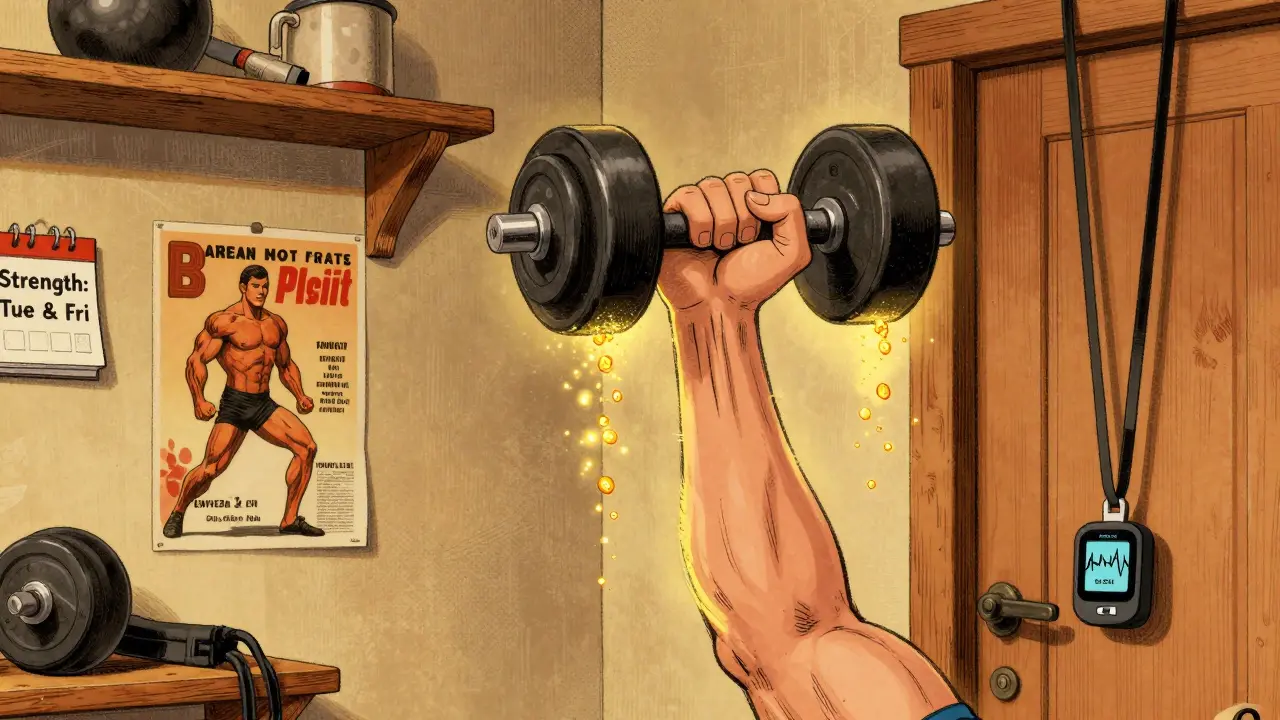
The guidelines recommend two to three strength sessions per week, targeting all major muscle groups. Each session should include two to four sets of eight to 15 repetitions, using a weight that challenges you by the last rep. You don’t need fancy equipment. Resistance bands, dumbbells, or even your own body weight work perfectly.
And here’s the kicker: high-intensity resistance training (using 70-80% of your max lift) improves insulin sensitivity 37% more than low-to-moderate intensity. That doesn’t mean you have to go all-out. Just make sure each set feels hard enough that you couldn’t do more than 15 reps with good form.
HIIT: Faster Results, But Not for Everyone
High-intensity interval training (HIIT) is trending for a reason. It works fast. A 20-minute HIIT session-think 30 seconds of sprinting or jumping jacks followed by 60 seconds of walking, repeated five times-can give you the same blood sugar benefits as 40 minutes of steady walking. Studies show HIIT reduces HbA1c by 0.8% more per minute of exercise than moderate continuous training.
But it’s not for everyone. HIIT carries a 22% higher risk of injury, especially if you’re older or have joint problems. It can also cause temporary spikes in blood sugar after exercise, especially in people with type 1 diabetes. About 35% of type 1 users see their glucose rise after a hard session due to stress hormones like adrenaline.
If you’re healthy, under 65, and have no heart or eye complications, HIIT can be a great time-saver. If you’re unsure, start with moderate walking or cycling. Save HIIT for later, once you’ve built a solid foundation.
When to Exercise-and When to Skip It
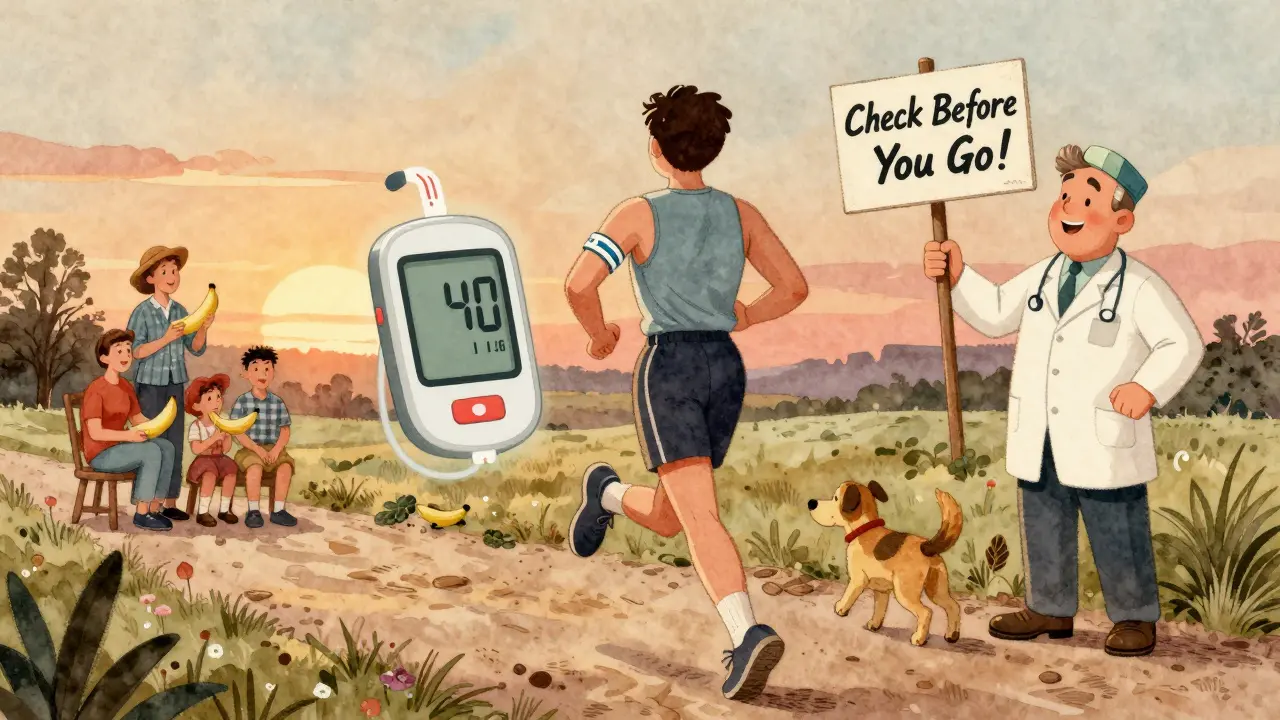
Not every day is a good day to work out. Blood sugar levels matter. If your glucose is below 100 mg/dL before exercise, eat 15-30 grams of fast-acting carbs-like fruit, juice, or glucose tablets. If it’s above 250 mg/dL and you have ketones in your urine or blood, don’t exercise. That’s a warning sign your body is running on fat for fuel, and exercise could make things worse.
For those on insulin or insulin-releasing medications, check your blood sugar 15-30 minutes before starting. If you’re using an insulin pump, consider lowering your basal rate by 50% one hour before exercise and keeping it low during the session. That simple step can prevent dangerous lows.
During long workouts (over an hour), eat 15 grams of carbs every 30 minutes. A banana, a handful of grapes, or a sports drink works. Keep glucose tabs or gels in your pocket. You never know when your body will need a quick boost.
Combining Moves for Maximum Impact
The best results come from mixing aerobic and resistance training. A 2023 meta-analysis of 23 studies found that people who did both lost more belly fat, improved insulin sensitivity more, and dropped their HbA1c by 0.56% more than those who did only one type.
Here’s a simple weekly plan that works for most people with type 2 diabetes:
- Monday: 30-minute brisk walk
- Tuesday: Full-body strength training (squats, push-ups, rows, planks)
- Wednesday: Rest or light stretching
- Thursday: 30-minute bike ride or swim
- Friday: Strength training (different exercises-lunges, shoulder presses, deadlifts)
- Saturday: 45-minute hike or dance class
- Sunday: Rest
That’s 150 minutes of aerobic activity and two strength sessions. No fancy gear. No gym membership required. Just movement, consistently.
Medication Adjustments: What You Need to Know
If you take insulin or sulfonylureas, exercise changes how your body responds to medication. Too much insulin during activity? You risk low blood sugar. Too little? You might spike after exercise.
General guidelines for insulin users:
- Low-intensity exercise (like walking): Reduce meal insulin by 10-20%
- Moderate-intensity (brisk walking, cycling): Reduce by 20-40%
- High-intensity (HIIT, running): Reduce by 30-60%
These are starting points. Everyone reacts differently. Use a continuous glucose monitor (CGM) to track trends. If your glucose drops below 70 mg/dL during exercise, stop and eat 15 grams of carbs. Wait 15 minutes. Check again. Repeat if needed.
Some people find it easier to skip their pre-meal insulin if they plan to exercise soon after eating. Talk to your doctor about adjusting doses safely.
Barriers and Real-Life Solutions
Only about 40% of people with diabetes meet the 150-minute weekly target. Why? Time, fatigue, fear of low blood sugar, and lack of support. But these aren’t insurmountable.
If you’re short on time, break exercise into 10-minute chunks. Three walks a day add up. If you’re worried about lows, carry snacks and wear a medical ID. If you’re lonely, join a walking group or find a buddy. Social support cuts dropout rates in half.
And if money’s tight? Walking is free. Bodyweight exercises need no equipment. YouTube has free strength routines for all levels. You don’t need a gym to get healthy.
What’s Next? The Future of Exercise and Diabetes
Technology is changing the game. Continuous glucose monitors now sync with apps that tell you when to move, when to rest, and how much to eat before a workout. Within five years, AI-powered tools will give personalized exercise plans based on your real-time glucose, heart rate, and sleep data.
Researchers are even exploring genetic markers to predict who responds best to HIIT versus steady walking. But right now, the best tool you have is simple: move every day. Consistently. Safely. And with purpose.
Frequently Asked Questions
Can exercise reverse type 2 diabetes?
Yes, for many people. Losing just 5-10% of body weight through exercise and diet can put type 2 diabetes into remission. Studies show that people who combine regular physical activity with modest weight loss can normalize blood sugar without medication. It’s not a cure, but it can eliminate the need for pills or insulin in many cases.
Is it safe to exercise with type 1 diabetes?
Absolutely-but it requires planning. Type 1 diabetes doesn’t mean you can’t be active. In fact, athletes with type 1 compete at elite levels. The key is monitoring glucose closely, adjusting insulin, and carrying fast-acting carbs. Many use CGMs that alert them to drops or spikes during workouts. Talk to your care team about a personalized plan.
What’s the best time of day to exercise for blood sugar control?
After meals-especially dinner-is often the most effective. Post-meal walks cut glucose spikes better than morning workouts. But the best time is the one you’ll stick with. Consistency beats timing. If you can only exercise at night, do it. Just avoid intense workouts right before bed if they cause your glucose to rise and stay high overnight.
Can I exercise if I have diabetic neuropathy?
Yes, but avoid high-impact activities like running or jumping if you have foot numbness. Choose low-impact options: swimming, cycling, seated resistance bands, or rowing machines. Always wear properly fitted shoes and check your feet daily for sores or blisters. Consult your doctor before starting any new routine.
Do I need a glucose monitor to exercise safely?
Not always, but it helps a lot. If you’ve had low blood sugar before, don’t know your symptoms, or take insulin, a CGM is strongly recommended. It shows real-time trends so you can adjust on the fly. Even a basic fingerstick meter used before and after exercise gives you valuable feedback. The goal is awareness-not perfection.




9 Comments
Harry Henderson
January 26, 2026 at 12:13
Stop scrolling and start moving. 150 minutes a week? That’s 20 minutes a day. You can do that while watching TV or waiting for your coffee to brew. I dropped 1.2% off my HbA1c in 3 months just by walking after dinner. No magic pills. No gym membership. Just my damn feet and a pair of sneakers. If you’re too tired, you’re already losing.
suhail ahmed
January 27, 2026 at 09:32
Bro, this is the real deal. I’m from Mumbai, sat for 10 hours a day coding, HbA1c at 8.9. Started doing 10-minute walks after every meal-no fancy gear, just my slippers and a phone playing Bollywood beats. In 6 weeks, I was at 7.1. Now I do squats while brushing my teeth. Movement isn’t punishment-it’s medicine with zero side effects. And hey, if you’re thinking ‘I don’t have time,’ you’re just not prioritizing your future self. Trust me, your pancreas will thank you.
Anjula Jyala
January 28, 2026 at 20:55
Most people think exercise is about burning calories. Wrong. It’s about insulin receptor density. Muscle contraction upregulates GLUT4 translocation independent of insulin signaling. That’s why even low-intensity activity like standing every 30 minutes reduces postprandial glucose by 24%. If you’re not tracking glucose trends with a CGM you’re flying blind. And if you’re doing HIIT without adjusting basal rates you’re asking for DKA. Stop guessing. Start data-driven.
Kirstin Santiago
January 29, 2026 at 02:54
I love how this breaks it down without making you feel guilty. I’m 58, had type 2 for 12 years, and I used to think I needed to run 5K to make a difference. Then I started doing chair squats while watching the news. Two minutes every hour. Now I can climb stairs without puffing. It’s not about being perfect. It’s about being present. Even a 5-minute stretch counts. You don’t have to be a fitness influencer to be healthy.
Kathy McDaniel
January 30, 2026 at 13:52
i just started walking after dinner and my sugar is actually lower the next morning?? like i didnt even try?? i think i might be doing this right??
Patrick Merrell
February 1, 2026 at 05:56
People treat diabetes like it’s a lifestyle choice. It’s not. It’s a metabolic condition. But yes, movement is non-negotiable. I’ve seen too many folks blame their meds while sitting on their couch scrolling TikTok. If you’re not moving, you’re not managing. You don’t need a coach. You don’t need a program. You need to stand up. Now. Not tomorrow. Now.
Conor Flannelly
February 1, 2026 at 08:53
There’s something poetic about how the body remembers movement. It’s not just physiology-it’s memory. Every step, every squat, every stretch is a whisper to your cells: ‘I’m still here. I still care.’ I’ve watched my father go from insulin-dependent to remission not because he followed a plan, but because he started walking with his grandson every evening. The science is real. But the soul behind it? That’s what keeps people going. Don’t just exercise. Reconnect.
Conor Murphy
February 1, 2026 at 14:25
I used to think strength training was for guys who lift 200lbs. Then I started doing wall push-ups and seated leg lifts. Two months later, I could carry groceries without my knees screaming. I didn’t know muscle mass was a glucose sponge until I read this. Now I do 10 minutes of bodyweight stuff every morning. It’s not about looking good. It’s about feeling like your body still works for you. And yeah, I cry sometimes when I realize how long I wasted being scared to move.
Desaundrea Morton-Pusey
February 3, 2026 at 01:48
Ugh. Another ‘move more’ post from the diabetes industrial complex. You know what’s really killing us? Processed carbs, Big Pharma, and insulin pricing. Exercise won’t fix a broken system. I’ve got a job that requires 12-hour shifts and zero breaks. You want me to walk? Go tell that to the single mom working two jobs and sleeping 4 hours a night. This article is tone-deaf. And it’s not helping.