
How to Prepare for Allergy Testing for Antibiotic Reactions
Many people believe they’re allergic to antibiotics-especially penicillin-because they had a rash or stomach upset as a kid. But here’s the truth: over 90% of people who think they’re allergic to penicillin aren’t. That’s not a guess. It’s backed by data from the CDC and major medical societies. The problem? Most never get tested. And that leaves them stuck on costlier, less effective antibiotics, with higher risks of side effects and antibiotic resistance.
If you’ve been told you’re allergic to penicillin or another antibiotic, and you’re wondering whether that’s still true, allergy testing can give you real answers. It’s safe, straightforward, and could change how you’re treated the next time you get sick. But preparation matters. Skip a step, and you might get a false result. Here’s exactly what you need to do before your test.
Stop Taking Antihistamines-Exactly When
The biggest mistake people make? Continuing their allergy meds before the test. Antihistamines block the very reactions the test is trying to detect. If you take them, the test won’t work. It’s not about being "a little careful." It’s about stopping them completely and on time.
First-generation antihistamines like diphenhydramine (Benadryl) and hydroxyzine must be stopped at least 72 hours before your appointment. That’s three full days. No exceptions. Even one dose can throw off results.
Second-generation antihistamines-like loratadine (Claritin), cetirizine (Zyrtec), fexofenadine (Allegra), and levocetirizine (Xyzal)-are trickier. They last longer. You need to stop these for a full 7 days. That means if your test is on a Thursday, you need to quit taking them by the previous Friday.
Some medications you might not even think of are also antihistamines. Tricyclic antidepressants like doxepin can interfere. If you’re on one, you’ll need to stop it 14 days before testing. Don’t assume your doctor knows. Bring your full medication list. Include supplements. Even melatonin can sometimes have antihistamine effects.
Keep Other Medications-But Tell Your Doctor
You don’t need to stop everything. Blood pressure meds, diabetes drugs, thyroid pills, and most heart medications can stay. But there are exceptions.
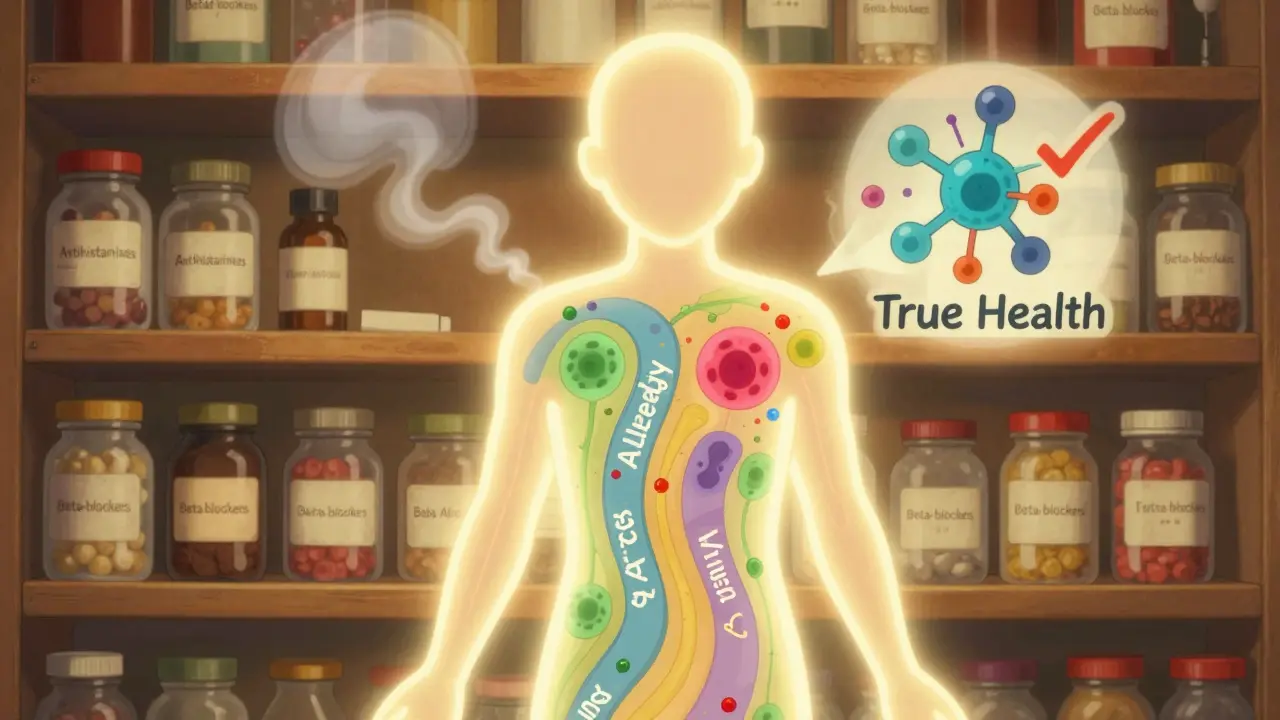
Beta-blockers (like metoprolol or atenolol) are a red flag. They don’t interfere with the test directly, but they can hide early warning signs of anaphylaxis-like a racing heart or trembling. That means if you’re on a beta-blocker, your test will need extra monitoring. Your allergist may ask you to hold the dose temporarily. Never do this without their approval.
ACE inhibitors (like lisinopril or enalapril) also raise the risk. If you have a reaction during testing, these drugs make it harder to treat. Tell your doctor if you take them. They’ll adjust your plan accordingly.
Bottom line: Don’t stop anything unless told. But do list every pill, patch, or injection you’re on. Even over-the-counter stuff.
What Happens During the Test
Testing isn’t one thing. It’s a step-by-step process, and each step builds on the last.
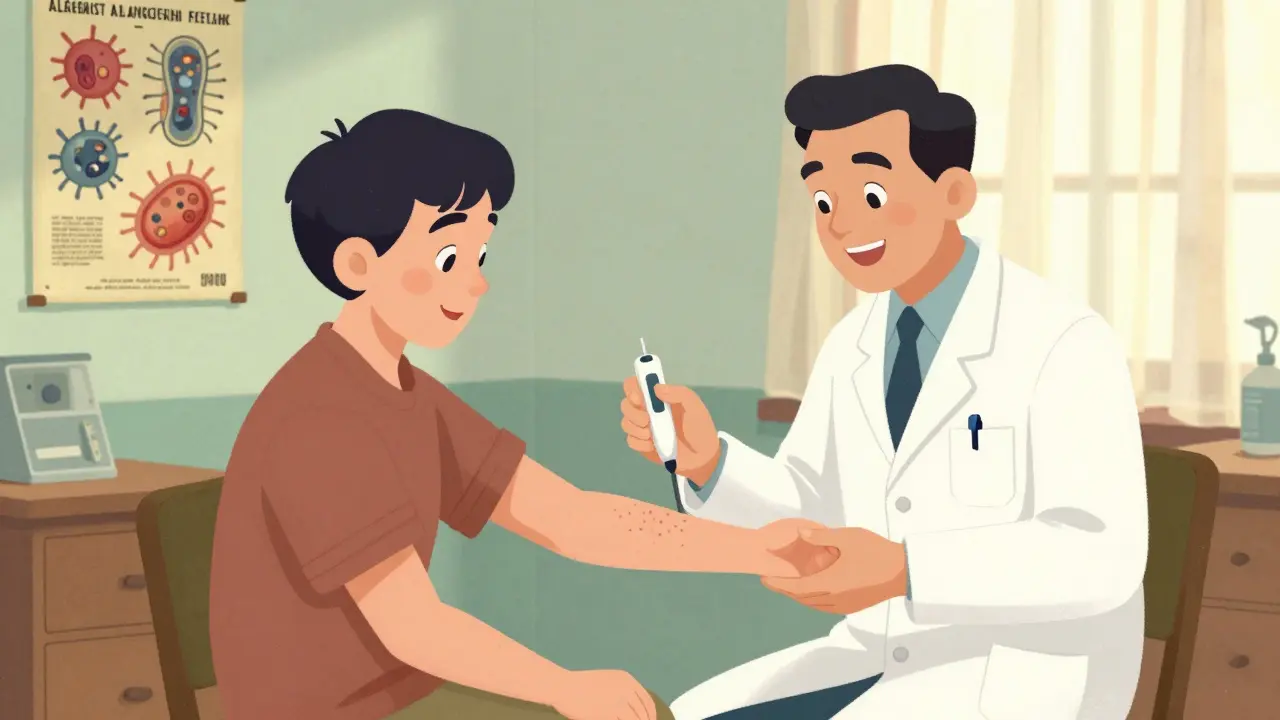
First, the skin prick test. A tiny drop of penicillin reagent is placed on your forearm or back. A small plastic device gently pokes the skin-no needle, no blood. It feels like a light scratch. You’ll wait 15 minutes. If there’s no reaction, you move on.
Next, the intradermal test. If the first test is negative, a tiny amount of the same reagent is injected just under the skin with a thin needle. This creates a small bump, like a mosquito bite. You’ll watch for redness, swelling, or itching bigger than 3mm. That’s a positive sign. No reaction? You’re cleared for the next step.
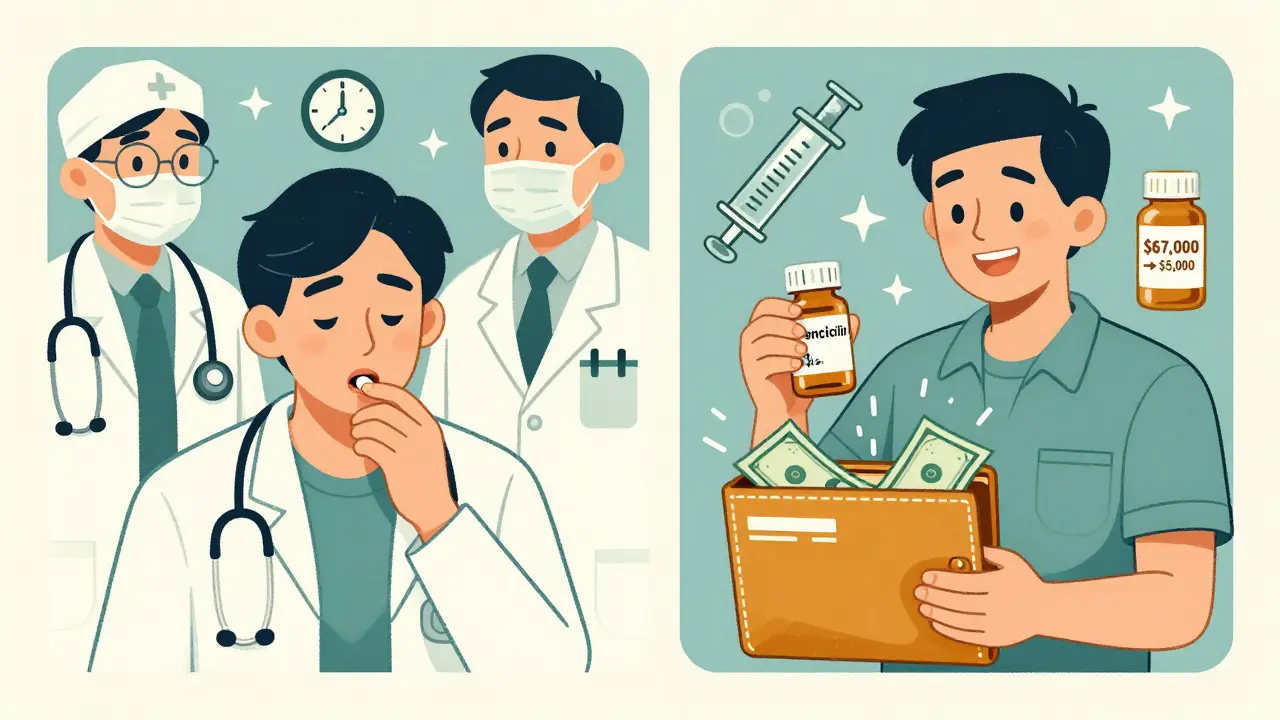
Finally, the oral challenge. This is where most people get nervous. But it’s simple. You swallow a small dose of the antibiotic-often amoxicillin or penicillin V. It’s a pill, not an injection. You’re watched for 30 minutes. Then you take the full dose, and you’re monitored for another hour. About 10% of people get mild symptoms like a rash or stomach upset. Less than 1 in 1,600 have a serious reaction. And if one happens? The team has epinephrine, oxygen, and other tools ready. It’s routine for them.
What a Positive or Negative Result Means
A negative test means you’re not allergic. Not "maybe." Not "probably." Ninety-five to ninety-eight percent accurate at ruling out life-threatening reactions. That’s better than most medical tests.
A positive skin test means you likely are allergic. But here’s the twist: even if you had a bad reaction years ago, your allergy might be gone. Half of people who had anaphylaxis to penicillin lose the allergy within five years. Eighty percent lose it within ten. That’s why retesting matters-even if you’ve been told you’re allergic your whole life.
Some reactions aren’t allergies at all. A rash that shows up days later? It might be a viral infection. A stomachache? Could be the illness itself. Your allergist will look at your whole history-not just the test. They’ll explain what the results really mean.
What Happens After the Test
If you’re cleared: great. You can now safely take penicillin or related antibiotics. That’s huge. Instead of being stuck with expensive, broad-spectrum drugs, you can get the right one-cheaper, more effective, and with fewer side effects.
One patient in Austin, after testing negative, switched from daptomycin ($1,850 per dose) to penicillin ($12 per dose) for a bone infection. Her annual antibiotic cost dropped from over $67,000 to under $5,000. That’s not rare. It’s common.
If you’re still allergic: you’ll get a clear plan. Maybe you avoid certain drugs. Maybe you have a backup. Either way, you’ll know exactly what to do next time you’re prescribed antibiotics.
Some people get a delayed reaction-itchy skin or a rash 4 to 8 hours after testing. That’s normal. It doesn’t mean you’re allergic. Just use over-the-counter hydrocortisone cream. It helps.
Why This Matters More Than You Think
Every year, 10% of Americans say they’re allergic to penicillin. But only 1% actually are. That gap isn’t harmless. People with unconfirmed allergies get broader-spectrum antibiotics 69% more often. Those drugs are more expensive. They kill good bacteria. They cause C. diff infections. They fuel antibiotic resistance.
Testing saves money. It saves lives. A study found that for every dollar spent on testing, the system saves $5.70 in avoided costs. Hospitals that use formal de-labeling programs cut hospital stays by 1.7 days on average. That’s faster recovery. Fewer complications. Less strain on the system.
And here’s the kicker: 85% of U.S. counties don’t have an allergist. That’s why testing is still underused. But that’s changing. Telemedicine pilots now let low-risk patients do oral challenges at home-with video supervision. The goal? Make testing as common as a flu shot.
What to Bring to Your Appointment
- Your full medication list (including supplements)
- Names and doses of any antibiotics you reacted to
- Details of your reaction (rash? swelling? trouble breathing? when did it happen?)
- Proof you stopped antihistamines (if you’re unsure, tell them anyway)
- Someone to drive you home, especially if you’re getting an oral challenge
You don’t need to be nervous. The test is routine. The team has done hundreds. The risk is tiny. The payoff? Huge.
Can I take antihistamines the night before the test?
No. Even one dose of diphenhydramine (Benadryl) or cetirizine (Zyrtec) within 72 hours (or 7 days for second-gen) can block the test’s ability to detect a reaction. You must stop them completely. No exceptions.
Is the skin test painful?
Not really. The skin prick feels like a light scratch. The intradermal test is a tiny needle injection that causes a small bump, similar to a mosquito bite. Most people say it’s less uncomfortable than they expected.
Can I eat or drink before the test?
Yes. Eat normally. Drink water. But avoid alcohol for 24 hours before. If you’re having an oral challenge, you’ll be asked to fast for 2 hours before the dose-your clinic will tell you exactly when.
Do blood tests work for antibiotic allergies?
No. Blood tests for penicillin allergy are not reliable and should not be used. Only skin testing and oral challenges are accurate. If someone offers a blood test, ask them to explain why they’re not using the gold-standard method.
What if I had a reaction as a child but never got tested?
You should still get tested. Over 50% of people who had a reaction as a child lose their allergy within five years. By age 30, most are no longer allergic. Testing can free you from unnecessary restrictions and save you money on future treatments.
Antibiotic allergy testing isn’t just about avoiding a rash. It’s about getting the right treatment, faster, cheaper, and safer. If you’ve been told you’re allergic, don’t assume it’s forever. Ask about testing. Your next prescription-and your future health-could depend on it.





15 Comments
Sabrina Sanches
March 16, 2026 at 01:23
I got tested last year after thinking I was allergic to penicillin since I was 7. Turned out I wasn't. Now I take amoxicillin like it's candy and my UTIs are gone. Also saved $20k in antibiotics over two years. Seriously, if you think you're allergic, just get tested. It's not scary. Just a scratch and a pill. Life changing.
Adam M
March 17, 2026 at 02:33
Stop taking antihistamines. Period.
Dylan Patrick
March 18, 2026 at 21:44
This is the kind of info that should be on every doctor's waiting room wall. So many people are stuck on expensive, dangerous antibiotics because they never got tested. I wish my mom knew this 15 years ago. She's been on vancomycin for everything since she was 12. What a waste.
Leah Dobbin
March 19, 2026 at 12:47
I'm just shocked that this isn't mandatory. Like, how is it acceptable that 90% of people who think they're allergic aren't? We're literally fueling antibiotic resistance because we're too lazy to do a 30-minute test. The medical system is broken.
Sally Lloyd
March 20, 2026 at 03:57
I wonder how many of these 'allergy tests' are just placebo-driven. I mean, what if the skin prick itself causes a false positive because of the pressure? And what about the oral challenge? Isn't that just exposing someone to a drug they've been told is deadly? I'm not convinced this isn't a profit-driven racket.
Scott Smith
March 21, 2026 at 04:00
I'm an ER nurse. I've seen patients with C. diff from unnecessary broad-spectrum antibiotics because they 'were allergic' to penicillin. The real tragedy? They were kids when they had a rash from a virus. Now they're 45 and getting IV drugs for a sinus infection. This post is spot on. Get tested. It's not a luxury. It's a lifeline.
Emma Deasy
March 23, 2026 at 01:17
I cannot BELIEVE that people are still being misinformed about this. The data is overwhelming. The CDC has published peer-reviewed studies. Major medical societies have issued joint guidelines. And yet, here we are-people still taking Zyrtec the night before a test. This isn't just ignorance. It's negligence. And it's costing lives. I'm so frustrated.
tamilan Nadar
March 23, 2026 at 10:44
In India, we don't even have access to this testing in most places. My cousin in Delhi was told she's allergic to amoxicillin after a rash at age 5. Now she's 28 and takes azithromycin for every cold. It's expensive. It's bad for her gut. And she doesn't even know she could be cleared. We need telemedicine solutions. Now.
Rosemary Chude-Sokei
March 24, 2026 at 05:12
I appreciate the thoroughness of this guide. It's rare to see such clear, evidence-based information presented without sensationalism. The breakdown of antihistamine timelines is particularly helpful. I've shared this with my entire family. My sister has been on doxepin for depression for 12 years-she had no idea it could interfere. Thank you for the clarity.
Noluthando Devour Mamabolo
March 26, 2026 at 04:15
As someone who works in clinical immunology, I can confirm: skin prick + intradermal + oral challenge is the gold standard. Blood IgE tests are garbage for antibiotic allergies. They have <40% sensitivity. Don't let your allergist offer a blood test unless they're trying to save time (and money). This protocol works. It's safe. It's validated. Trust the process.
Aaron Leib
March 26, 2026 at 14:31
If you're reading this and you're scared-don't be. The team has done this hundreds of times. They've got epinephrine on standby. The risk is lower than getting a flu shot. The payoff? You can take the right drug next time you're sick. That's worth 15 minutes of discomfort.
Kathy Leslie
March 26, 2026 at 20:50
I had no idea melatonin could interfere. I take it every night. I called my allergist right after reading this. They said to stop it 14 days out. I didn't even know it had antihistamine properties. Mind blown.
Amisha Patel
March 27, 2026 at 04:01
I'm from a small town in rural India. We don't have allergists. My mom was told she's allergic to penicillin after a rash at 6. She's 62 now. I want to get her tested but we can't afford to fly to the city. Is there any way to do this remotely? I'd pay out of pocket if I could.
rakesh sabharwal
March 28, 2026 at 03:45
This is typical American medical overreach. You don't need a test. You know what you're allergic to. Why risk it? Why trust a doctor who's never even seen you? I've been avoiding penicillin since I was 10. I'm fine. Why should I change? The system wants to sell you tests. Don't fall for it.
Elsa Rodriguez
March 29, 2026 at 23:55
I had a reaction at 8. I thought I was doomed. I've had three anaphylactic episodes since then. I thought I was doomed. I cried for three days after my test. I was negative. I'm not allergic. I just… I don't know who I am anymore. I've spent 20 years avoiding hospitals. Now I can go in without fear. I don't know what to say. Thank you.