
Large Print and Accessible Prescription Labels for Low Vision: A Complete Guide
Why Small Print on Pill Bottles Is a Safety Hazard
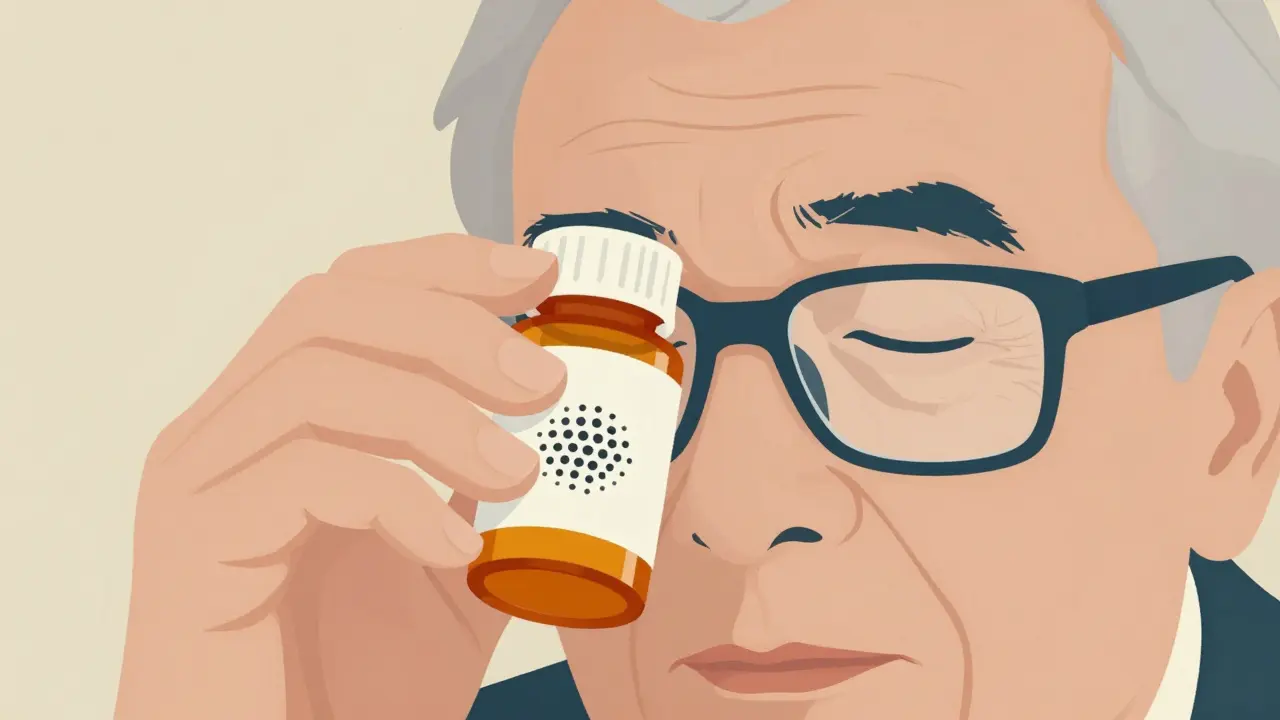
Imagine trying to read the instructions on a bottle of medicine when the text looks like tiny ants marching across the page. For millions of people with low vision, this isn't just an annoyance; it is a serious safety risk. You might be surprised to learn that medication errors are one of the leading causes of hospital visits among older adults, and unreadable labels play a huge part in this problem. When you cannot clearly see the dosage or the time of day you need to take a pill, the chances of making a mistake skyrocket.
This is where accessible prescription labels come in. These are not just larger stickers slapped onto a bottle. They are specifically designed tools that help people with visual impairments manage their health safely and independently. Whether you are dealing with macular degeneration, glaucoma, or just age-related vision loss, having the right information in front of you can make the difference between staying healthy and ending up in the emergency room.
The Law Behind the Labels
You might wonder if pharmacies are required to offer these labels or if it is just a nice-to-have feature. It is actually the law. Back in 2012, the United States government passed the FDA Safety and Innovation Act (Public Law 112-144). This legislation formally mandated accessibility requirements for prescription drug container labels. It established a legal foundation that says pharmacies must make reasonable accommodations for patients who cannot read standard labels.
Before this act, many pharmacies operated on a "one size fits all" model. The standard label was designed for someone with 20/20 vision. The Access Board Working Group stepped in to create a framework for implementation. Their final report provided the best practices that pharmacies like CVS and Walgreens now follow. If a pharmacy refuses to provide an accessible label when you ask, they might be violating federal guidelines designed to protect you.
Types of Accessible Labels Available
There is no single solution that works for everyone because vision loss varies greatly from person to person. Here are the main types of accessible labels you can request at your local pharmacy.
Large Print Labels
This is the most common request. The American Foundation for the Blind (AFB) recommends a minimum font size of 18 points for these labels. Standard pharmacy labels often use 8 to 10-point font, which is impossible to read for many. With an 18-point label, the text is significantly larger and easier to distinguish. However, because standard bottles have limited surface area, pharmacies often use a "duplicate label" approach. This means you get a second, larger sticker to place on the bottle or keep in a safe place.
Braille Labels
For individuals who are blind rather than just low vision, Braille is the gold standard. These labels provide tactile information that can be read by touch. However, there is a catch: only about 10% of visually impaired individuals read Braille according to the American Printing House for the Blind. If you do not read Braille, this option won't help you. It requires specialized printing equipment, so not every independent pharmacy has it on hand, though major chains usually do.
Audible and Digital Solutions
Technology has opened up new doors. One popular system is ScripTalk. This system uses radio frequency identification (RFID) technology. You get a small device that you tap against the bottle, and it speaks the medication name, dosage, and instructions out loud. It is like having a pharmacist in your pocket. Another modern solution involves QR codes. Some systems, like UK HealthCare's ScriptView, print a QR code on the label. You scan it with your smartphone, and it links to audio information or a digital version of the label.
Technical Standards for Readability
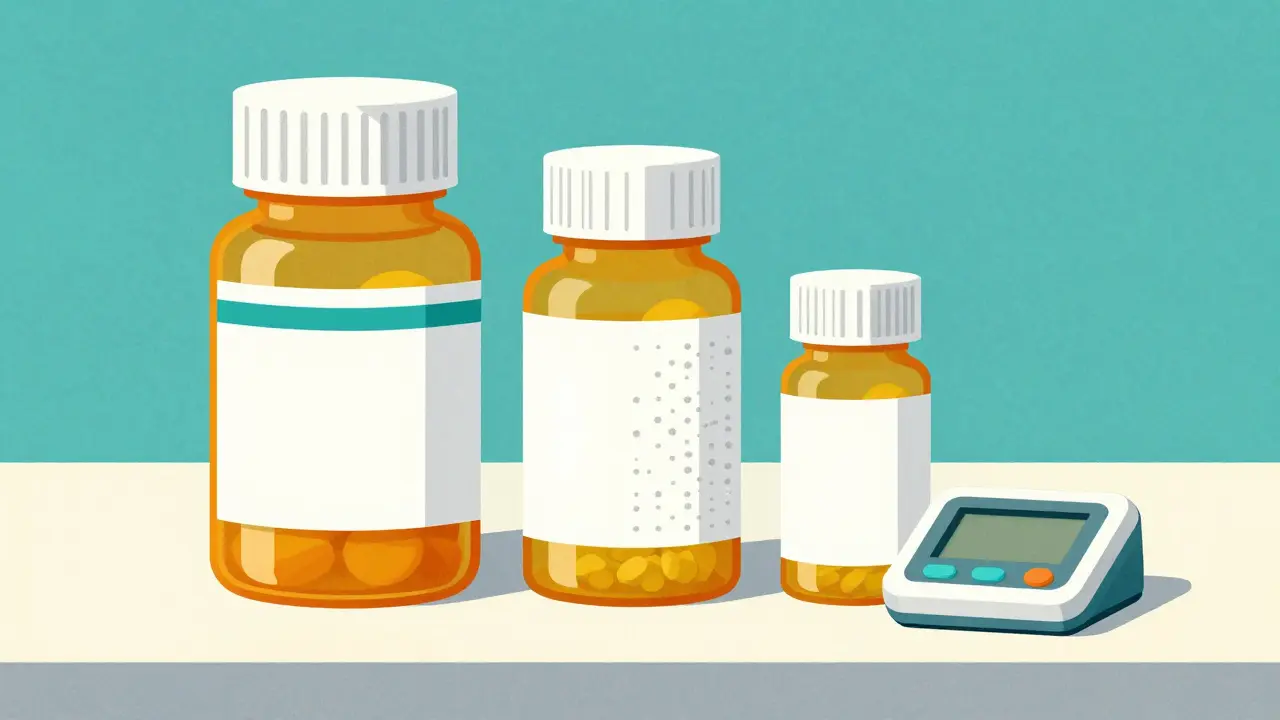
Just making the text bigger isn't enough. The way the text is presented matters just as much. Research from the National Center for Biotechnology Information shows that specific design choices can reduce reading time significantly. For older adults and those with low vision, optimal labels use sans serif fonts like Arial or Verdana. These fonts do not have the little decorative feet (serifs) at the ends of letters, which can blur together for someone with vision loss.
Contrast is another critical factor. The Access Board Working Group specifies high contrast, meaning saturated black text on a white background. Glare is the enemy here, so the media should be non-glare and durable. Some experts even suggest using lowercase lettering with uppercase numbers for instructions, as this layout is easier to parse quickly. If you are designing your own label system at home, consider using yellow highlighting for emphasis, as this color often stands out well for low vision readers.
How to Request Accessible Labels at Your Pharmacy
Many people assume they have to ask for these labels every time they pick up a prescription. That isn't true. Once you set up a profile, the pharmacy should remember your preference. Here is a step-by-step process to get started:
- Identify Your Needs: Before you walk in, know what works best for you. Do you need large print? Do you need audio? Do you need Braille?
- Speak to the Pharmacist: Don't just talk to the technician at the counter. Ask to speak with the pharmacist or the manager. They have the authority to update your profile settings.
- Make it a Profile Setting: Ensure the request is saved in your patient profile. This way, every future prescription automatically gets the correct label.
- Check the Bottle: When you pick up your meds, check the label immediately. If it is the wrong size, ask them to fix it right then and there.
- Ask About Technology: If you are interested in audible labels like ScripTalk, ask if your pharmacy offers them and if there are any costs involved.
According to the California State Board of Pharmacy, pharmacies should maintain a minimum inventory of 18-point font label stock. If they tell you they don't have it, they might be out of compliance or simply unprepared. Large chains like CVS and Walgreens are generally better equipped, with 98% and 95% of their locations offering at least one accessible option respectively.
Real-World Impact and Success Stories
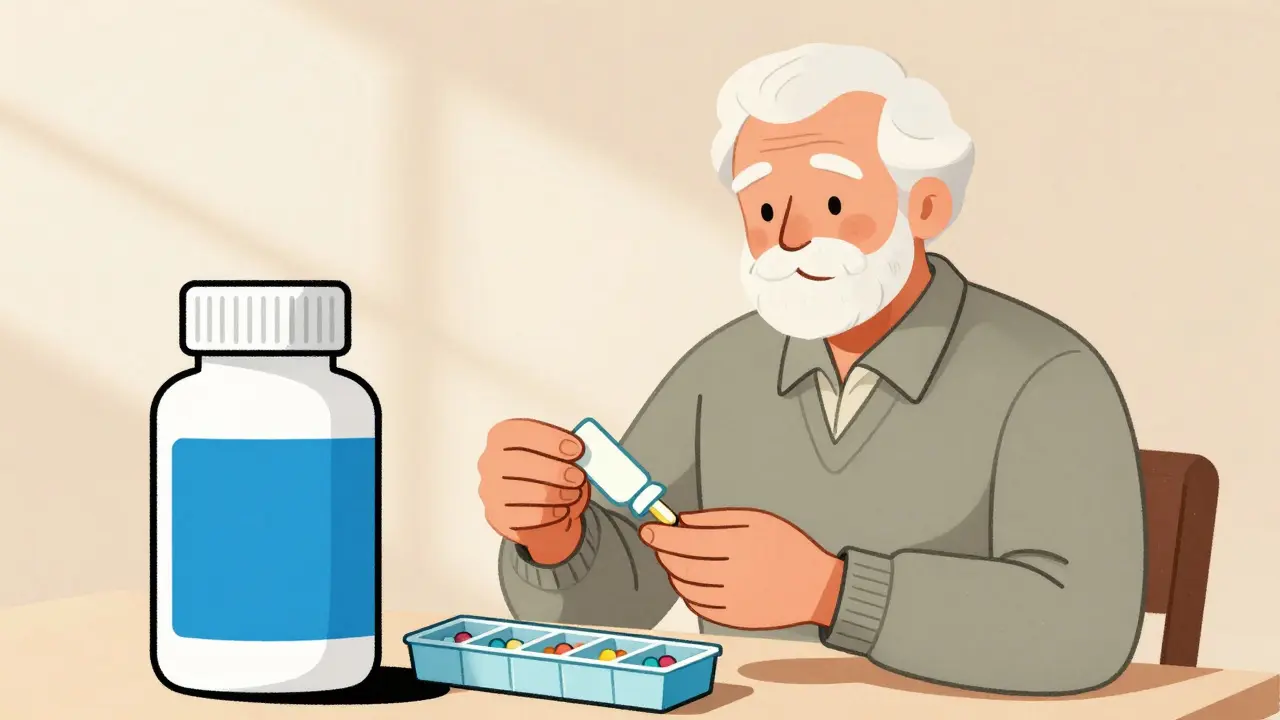
Why does all this effort matter? Look at the data. A study from the University of Kentucky found a 38% reduction in medication-related emergency department visits among visually impaired patients using accessible labels. That is a massive improvement in quality of life and safety.
User feedback tells a similar story. On community forums, users have shared how switching to large print labels stopped them from taking the wrong pills. One user noted they had been taking the wrong medication twice a week before getting 18-point Arial labels. It was literally life-changing for them. Another success story from UK HealthCare documented a 78-year-old diabetic patient who reduced hypoglycemic episodes by 75% after switching to labels with QR code audio support. Being able to read your instructions independently reduces anxiety and gives you back control over your health.
Future Trends in Pharmacy Accessibility
The industry is moving fast. CVS Health recently announced a $15 million investment to expand their ScripTalk service to all 9,900 US pharmacy locations. This shows that the big players are taking this seriously. The FDA's 2023 draft guidance even proposes expanding requirements to include electronic prescriptions and patient portals, with mandatory implementation expected by 2026.
We are also seeing AI-powered label readers entering the market. Apps like Be My Eyes connect visually impaired users with sighted volunteers via smartphone to read prescription labels in real-time. Currently, this serves hundreds of thousands of users. As these technologies become cheaper and more integrated, the barrier to accessing your medication information will continue to drop.
Are large print prescription labels free?
In most cases, yes. Major pharmacy chains like CVS, Walgreens, and Walmart typically provide large print labels at no extra cost as part of their compliance with the FDA Safety and Innovation Act. However, some specialized audio devices or specific Braille printing services at independent pharmacies might incur a small fee. It is always best to ask your pharmacist upfront about any potential costs.
What font size is considered large print for medication?
The American Foundation for the Blind recommends a minimum of 18-point font size for large print labels. Standard pharmacy labels are usually between 8 and 10 points. The 18-point size ensures that the text is legible for most people with moderate visual impairment without needing magnification tools.
Can I get Braille labels at any pharmacy?
Not necessarily. While major chains often have the equipment, independent pharmacies might not. Braille labels require specialized embossing printers. It is best to call ahead and confirm that your specific pharmacy location has the capability to print Braille before you go.
What if my pharmacy refuses to give me an accessible label?
If a pharmacy refuses, they may be violating the Americans with Disabilities Act (ADA) and FDA guidelines. You can ask to speak to the store manager or the corporate compliance department. If the issue is not resolved, you can file a complaint with the Department of Justice or your state's Board of Pharmacy.
Do audible labels work with all medications?
Audible labels like ScripTalk generally work for all prescription medications. The system reads the data encoded in the RFID tag or QR code on the bottle. However, you need the compatible device or smartphone app to access the audio. Some older systems might require a specific reader device provided by the pharmacy.
Next Steps for Better Medication Management
If you or a loved one struggles to read medication bottles, take action today. Start by auditing your current medications. Can you read the dosage clearly without squinting? If not, call your pharmacy. Ask specifically for "large print labels" or "accessible labeling." Do not settle for a standard label if it puts your safety at risk. You have a right to understand what you are putting into your body. By advocating for these tools, you are not just helping yourself; you are pushing the industry to become more inclusive for the 12 million Americans living with vision impairment.




8 Comments
Pat Fur
March 26, 2026 at 08:56
It is really important that we think about safety when it comes to medicine. My grandmother had trouble reading her bottles before we switched to large print. The peace of mind she gained was worth every moment spent asking the pharmacist. We need to keep pushing for these standards to become the norm everywhere. Accessibility should not be an afterthought in healthcare design. It changes the daily routine for so many families out there.
peter vencken
March 26, 2026 at 17:56
pharmacies should just do this by default instead of making people ask for it every time. i know a guy who got confused and took the wrong dose because the text was too small. its a basic safety thing that costs them nothing to fix. maybe the big chains need more pressure to make sure every store has the stock. dont let them tell you its not available if the law says otherwise.
Chris Crosson
March 28, 2026 at 08:44
Exactly right about the default setting issue. People should not have to fight for basic accommodations every single time they pick up a script. The technology exists and the regulations are already in place for a reason. Management needs to enforce these policies at the local level more strictly. It is frustrating when staff claim they do not have the labels when they actually do.
Linda Foster
March 30, 2026 at 00:43
The legal framework surrounding these accommodations is quite robust and should be respected by all providers. It is essential that patients understand their rights under the FDA Safety and Innovation Act. Compliance is not optional for pharmacies operating within the United States jurisdiction. Proper documentation of requests ensures that the pharmacy remains liable for adherence. We must maintain a standard of care that protects vulnerable populations effectively.
Rama Rish
March 31, 2026 at 11:08
Everyone deserves to read thier own medicine labels safely without help.
Kevin Siewe
March 31, 2026 at 22:14
I agree that knowing the law helps people advocate for themselves better. It can feel intimidating to speak up but the rules are on your side. I have seen many people hesitate to ask for changes because they worry about bothering the staff. Remember that the staff is there to serve the patient needs primarily. Keeping a record of your profile settings is a very good idea for future visits.
Darlene Gomez
April 2, 2026 at 09:44
My mother struggled for years before we finally got her the right labels at the pharmacy. She used to guess the dosage because the print was so tiny on the standard bottles. It was terrifying to think she could be taking the wrong amount of medication daily. We finally went in and spoke directly to the pharmacist about the large print option. They updated her profile and now every bottle comes with the bigger text. It made such a huge difference in her confidence and independence around the house. She does not have to ask us to read the instructions anymore when she is alone. I think more people need to know that this is a legal right they have. The FDA act really changed things for families dealing with vision loss issues. I have told all my friends about this because it is such a simple fix. Technology like the audio labels is also amazing for those who cannot see the text at all. My uncle uses the ScripTalk system and he loves having the info spoken to him. It feels like the pharmacy industry is finally catching up to what patients need. We should not have to wait for emergencies to happen before we fix these safety hazards. Small changes in labeling can prevent so many trips to the emergency room. It is about dignity and safety for everyone who takes prescription drugs. I hope more independent pharmacies start keeping the stock in inventory regularly. The big chains are doing better but there is still room for improvement everywhere. We need to keep checking our bottles to make sure the labels are correct each time. Advocacy starts with asking for what you need without feeling ashamed.
Jacob Hessler
April 3, 2026 at 10:49
good story but some stores just dont care about the rules anyway. you have to be tough when you walk in there or they ignore you. its america so we should have the best systems but sometimes they fail. dont take no for an answer when your health is on the line. keep pushing them until they give you what you are owed.