Blood Pressure Meds: What Works, What to Watch For, and How to Stay Safe
When your doctor says you need blood pressure meds, medications used to lower elevated blood pressure and reduce risk of heart attack or stroke. Also known as antihypertensive drugs, they’re among the most commonly prescribed pills in the world—not because they’re perfect, but because high blood pressure is silent, dangerous, and often needs daily management. You might be on one, or maybe you’re just starting to think about it. Either way, you’re not alone. Millions take these drugs every day, and most do it safely—but mistakes happen when people don’t know what they’re taking, why, or how to spot trouble.
Not all blood pressure meds, medications used to lower elevated blood pressure and reduce risk of heart attack or stroke. Also known as antihypertensive drugs, they’re among the most commonly prescribed pills in the world—not because they’re perfect, but because high blood pressure is silent, dangerous, and often needs daily management. are the same. Some, like lisinopril, an ACE inhibitor used to treat high blood pressure and heart failure, work by relaxing blood vessels. Others, like atenolol, a beta blocker that slows heart rate and lowers blood pressure, reduce how hard your heart pumps. Then there are diuretics, calcium channel blockers, and more. Each has different side effects, costs, and interactions. You might need just one, or a combo. What works for your neighbor might not work for you—and that’s okay. The key is knowing what’s in your bottle and why your doctor picked it.
Many people switch to generic blood pressure meds to save money—lisinopril and atenolol are two of the cheapest, most reliable options. But buying online? That’s where things get risky. Fake pills, wrong doses, or expired meds can be deadly. You need to know how to spot a real pharmacy, what to check before you click buy, and how to compare prices without sacrificing safety. And if you’re feeling dizzy, tired, or have swelling in your ankles? That might not be normal. It could be your body reacting to the med, or maybe it’s interacting with something else you’re taking—like a supplement or another prescription.
This collection of posts doesn’t just list drugs. It shows you how to compare them, how to avoid common mistakes, and how to spot red flags before they become emergencies. You’ll find real comparisons between brand-name and generic versions, stories about what happens when people skip checks, and how patient advocacy has changed access to these life-saving pills. Whether you’re just starting out, switching meds, or worried about side effects, what’s here is meant to help you take control—not just follow orders.
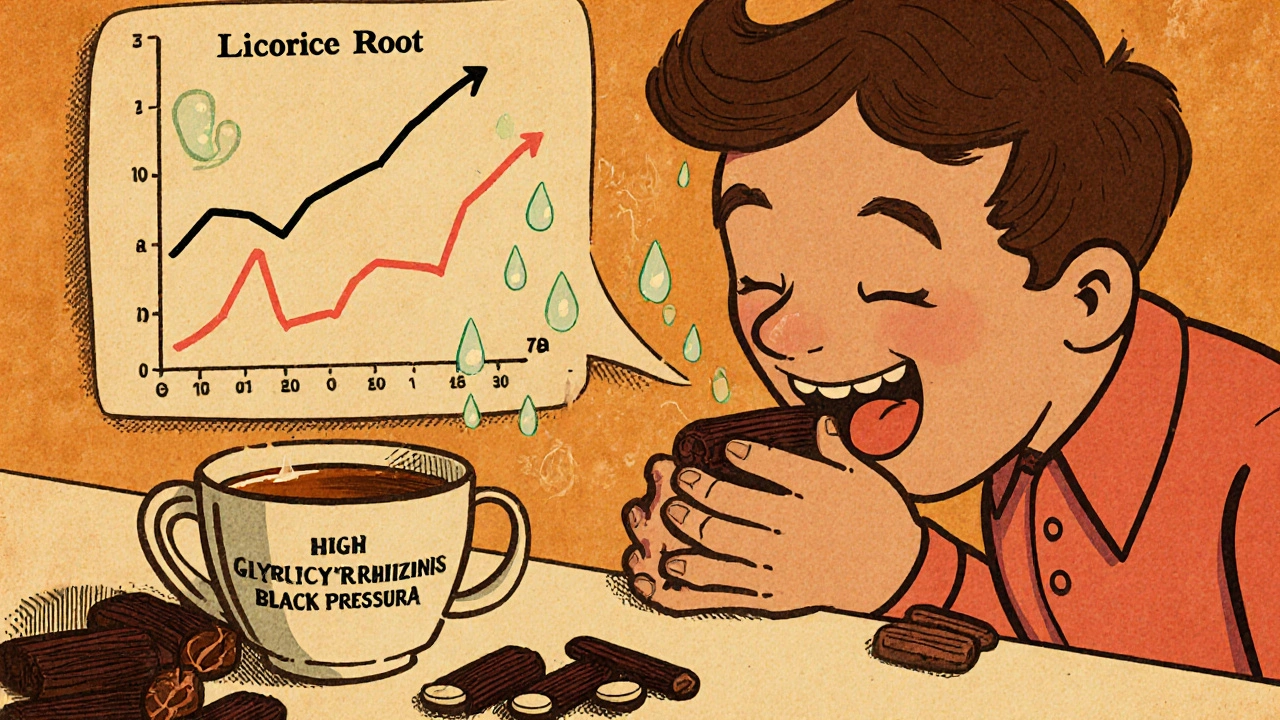
Licorice and Blood Pressure Medication Interactions: What You Need to Know
Licorice contains glycyrrhizin, which can raise blood pressure and interfere with medications like diuretics and ACE inhibitors. Even small daily amounts can cause dangerous drops in potassium and make treatments less effective.
Read More