Medication Tracking: How to Stay on Top of Your Pills, Doses, and Interactions
When you’re taking multiple medications, medication tracking, the practice of recording when, how, and why you take your drugs to avoid errors and improve outcomes. Also known as drug adherence monitoring, it’s not just for seniors or complex conditions—it’s for anyone who’s ever forgotten a pill, confused two similar-looking bottles, or wondered if that new headache came from their blood pressure med or the leftover antibiotics. It’s not about being organized for the sake of it. It’s about staying alive. One missed dose of warfarin can spike your INR. Taking Bactrim with it? That’s a recipe for internal bleeding. A wrong switch from brand to generic levothyroxine? Your heart starts racing. These aren’t hypotheticals. They’re real stories from people who didn’t track their meds—and paid for it.
Medication tracking isn’t just writing things down. It’s understanding drug interactions, how one medicine changes the effect of another, sometimes dangerously. For example, licorice can wreck your blood pressure meds. Expired insulin? It won’t just fail—it might kill you. And medication errors, mistakes in dosing, timing, or drug choice that lead to harm. Also known as prescription missteps, they’re the third leading cause of death in the U.S. Most aren’t from doctors. They’re from patients mixing pills, skipping doses because they felt fine, or not knowing their generic was switched without warning. You don’t need an app or a fancy pillbox. You need a system that works for your life. That could mean keeping a notebook by your coffee maker. Or setting alarms labeled with the drug’s purpose, not just its name. Or asking your pharmacist to print out a simple chart with colors for morning, afternoon, and night.
What you’ll find below isn’t theory. It’s what real people and real pharmacists are doing right now. You’ll see how Indian generic manufacturers impact what’s in your bottle, why Medicare Part D formularies change your out-of-pocket costs, and how to fight insurance when they deny your generic. You’ll learn how to read your medication guide like a detective, spot when your dose needs adjusting after a generic switch, and why some drugs—like epinephrine or nitroglycerin—should never be used past their date. There’s advice on storing inhalers in heat, what to do when antibiotics expire, and how to avoid deadly interactions between common meds and even natural supplements. This isn’t about being perfect. It’s about being smart. And you’re about to get the tools to do exactly that.
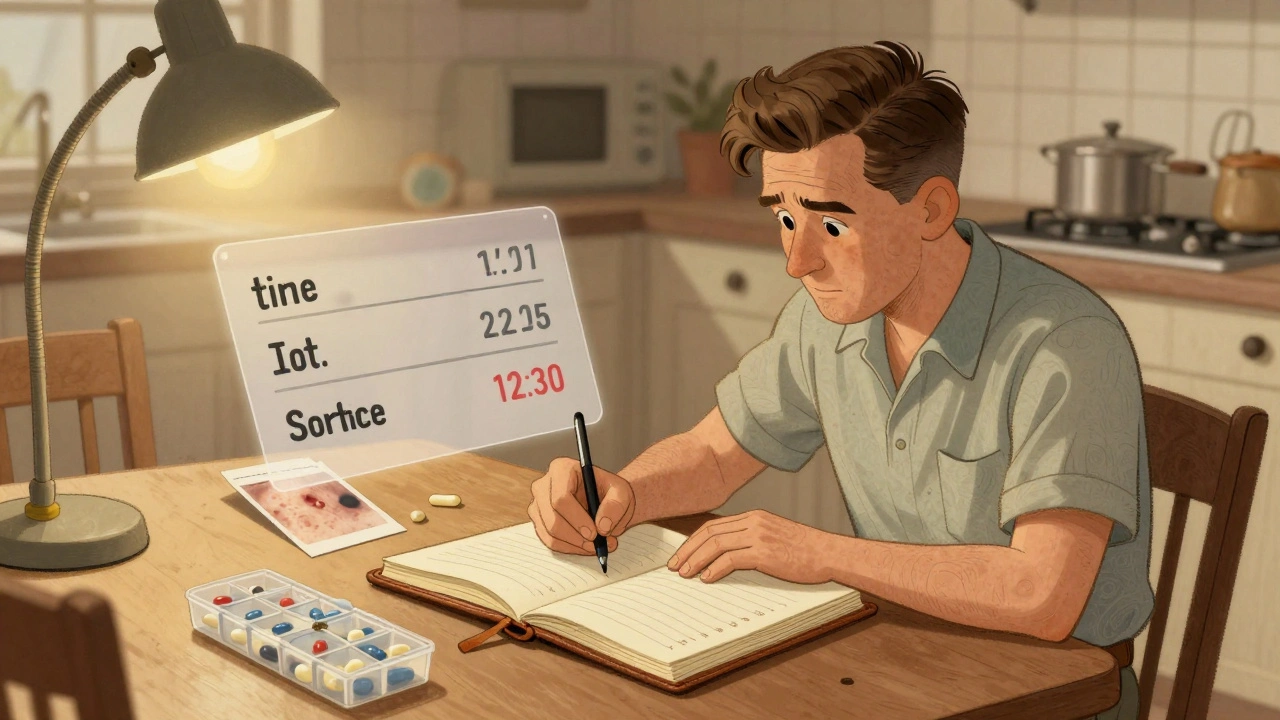
How to Keep a Symptom Diary for Suspected Drug Reactions
Learn how to track medication side effects with a symptom diary to help doctors identify drug reactions faster. Includes what to record, best tools, and red flags to watch for.
Read More