Overdose Warnings: What You Need to Know About Dangerous Drug Reactions
When you take a medication, you’re trusting it to help—not hurt. But overdose warnings, alerts that signal potentially fatal reactions to medications, often due to dosage errors, drug interactions, or individual sensitivity. Also known as drug toxicity alerts, these warnings aren’t just fine print—they’re life-or-death signals you need to understand. Many people think overdose only happens with illegal drugs or accidental swallowing of pills. But the truth? Most dangerous overdoses come from prescription meds taken exactly as directed—until they’re combined with something else, or taken too long, or stored wrong.
Take QT prolongation, a heart rhythm disturbance triggered by certain drugs that can lead to sudden cardiac death. It doesn’t feel like anything until it’s too late. Medications like antibiotics, antipsychotics, and even some heart drugs can cause it, especially if you’re low on potassium or taking more than one at a time. Or consider narrow therapeutic index, drugs where the difference between a helpful dose and a toxic one is tiny—like warfarin, levothyroxine, or phenytoin. Switching from brand to generic? Even a 5% change in absorption can send your INR soaring or trigger seizures. These aren’t edge cases. They’re routine risks that show up in your pharmacy’s warning label—if you know where to look.
And it’s not just about what you take. It’s about what you eat, what you skip, and how you store your meds. Licorice can wreck your blood pressure pills. Expired insulin loses power and won’t control your sugar. Antibiotics kept in a hot bathroom? They might still look fine—but they’re useless, and worse, they can breed resistant bacteria. Your symptom diary isn’t just for your doctor—it’s your early warning system. If you notice sudden joint pain after starting a diabetes drug, or your heart races after a new antibiotic, write it down. That’s how you catch an overdose before it hits.
What you’ll find below isn’t theory. It’s real cases: how Bactrim spikes INR levels, why gabapentin replaced risky RLS drugs, how insulin and epinephrine can turn deadly after expiration, and why some people need dose changes even when switching to generics. These aren’t rare accidents. They’re preventable. And if you’ve ever wondered why your doctor asked about every supplement you take, or why your pharmacist gave you a 10-minute lecture on your pill bottle—now you know. This collection gives you the tools to spot danger before it’s too late.
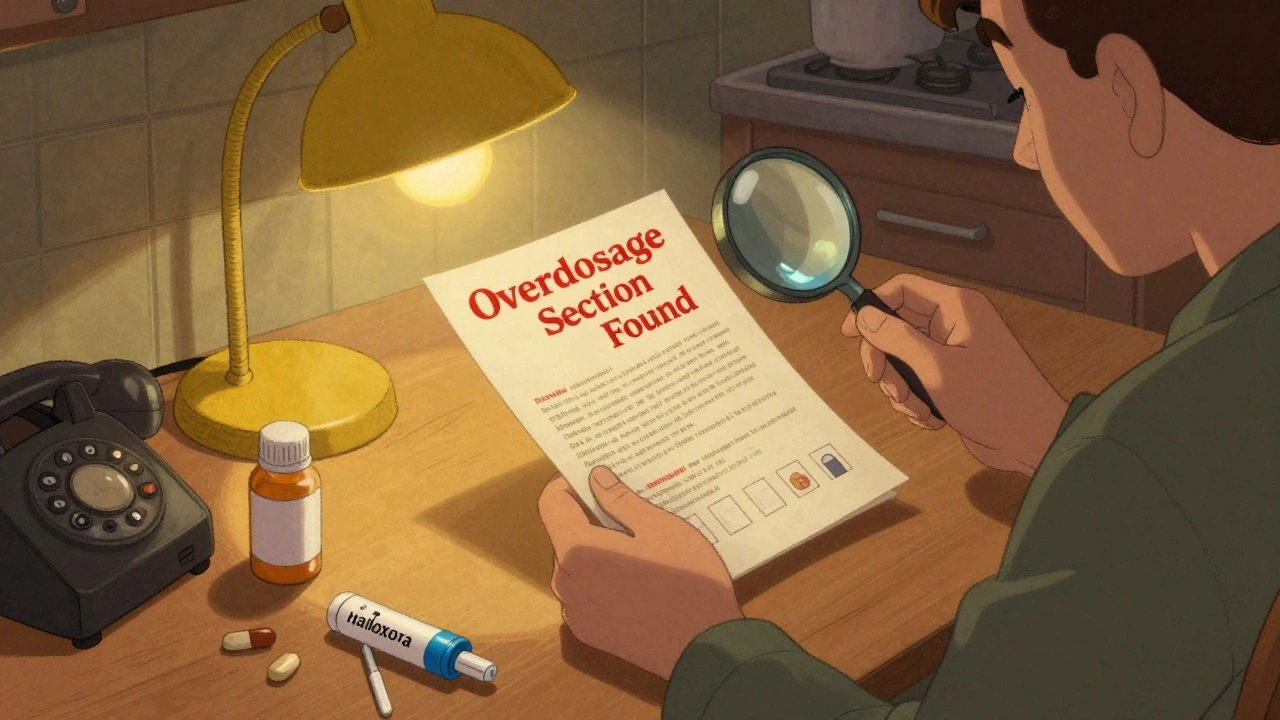
How to Read Medication Guides for Overdose Warnings and Antidotes
Learn how to read medication guides to spot overdose warnings and locate antidotes like naloxone. This guide shows you exactly where to look, what to do, and why it could save a life.
Read MoreLatest Post
-
-
Valacyclovir Overdose: Symptoms and What to Do 2 June 2023
-
-
-