Warfarin Antibiotic Interaction: What You Need to Know
When you take warfarin, a blood thinner used to prevent dangerous clots in people with atrial fibrillation, artificial heart valves, or a history of deep vein thrombosis. It works by slowing down how fast your blood clots, and even small changes in how your body processes it can lead to serious bleeding or clotting. Many people don’t realize that common antibiotics, medications used to treat bacterial infections like pneumonia, urinary tract infections, or sinusitis can dramatically change how warfarin works. This isn’t just a theoretical risk—it’s a leading cause of hospital visits for people on blood thinners.
Some antibiotics, like trimethoprim-sulfamethoxazole (Bactrim), ciprofloxacin (Cipro), and metronidazole (Flagyl), interfere with how your liver breaks down warfarin. That means warfarin builds up in your system, making your blood too thin. Others, like rifampin, do the opposite—they speed up warfarin breakdown, making it less effective and putting you at risk for clots. Your doctor won’t always catch this unless you tell them exactly what you’re taking. Even over-the-counter antibiotics or herbal supplements like garlic or ginseng can play a part.
The real danger? You won’t feel anything until it’s too late. No pain, no warning. But your INR levels, a blood test that measures how long it takes your blood to clot will tell the truth. A normal INR for someone on warfarin is usually between 2 and 3. If it jumps to 5 or higher, you’re at serious risk of internal bleeding. If it drops below 1.5, clots can form without warning. That’s why doctors check your INR before and after starting any new antibiotic. If you’re on warfarin and your doctor prescribes an antibiotic, ask: "Will this change my INR?" and "Do I need a blood test this week?"
Switching from one antibiotic to another might seem like a small change, but for warfarin users, it’s like swapping one key for another in a lock you can’t see. One might fit perfectly. Another could jam it. That’s why your pharmacy and doctor need to know every medication you take—prescription, over-the-counter, or supplement. Don’t assume your antibiotic is "safe" just because it’s common. The most dangerous ones aren’t the rare ones—they’re the ones you think you know.
What you’ll find in the posts below are real stories and facts from people who’ve been through this. From how a simple course of amoxicillin sent someone to the ER, to why some antibiotics are safer than others, to what questions to ask your pharmacist before you pick up that prescription. This isn’t theory. It’s what happens when two common meds collide—and how to keep it from happening to you.
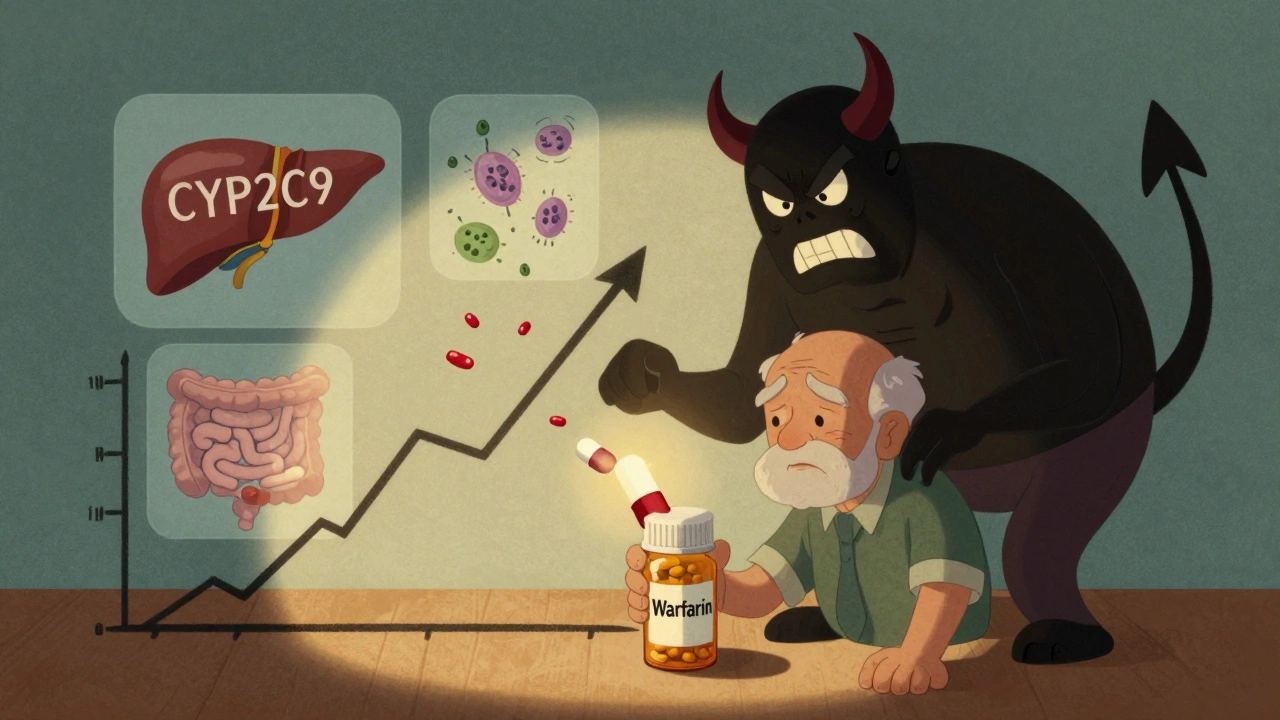
Trimethoprim-Sulfamethoxazole and Warfarin: How This Antibiotic Can Raise Your INR and Increase Bleeding Risk
Trimethoprim-sulfamethoxazole (Bactrim) can dangerously raise INR levels in people taking warfarin, increasing bleeding risk. Learn how this interaction works, who’s most at risk, and what to do if your INR spikes.
Read MoreLatest Post
-

-

-

-

Hormone Therapy Combinations: Generic Choices and Considerations 17 January 2026
-