
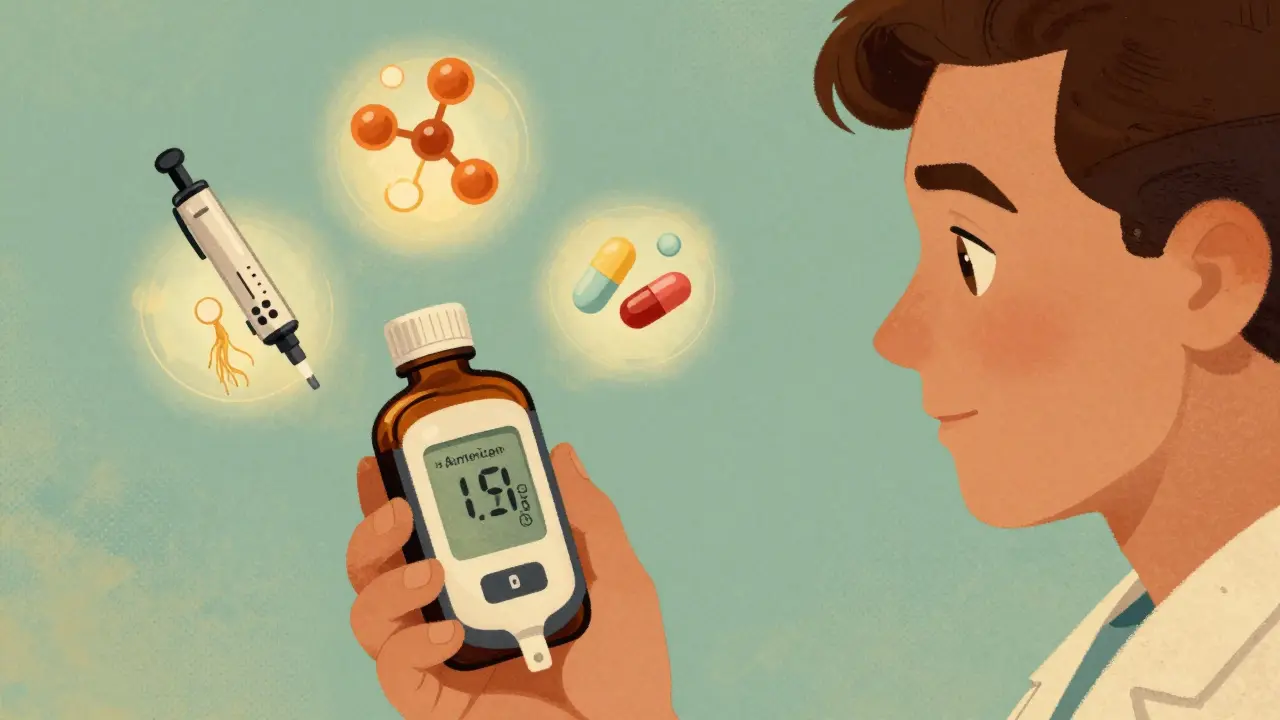
Ginseng and Diabetes Medications: What You Need to Know About Blood Sugar Risks and Monitoring
Ginseng & Diabetes Medication Risk Checker
This tool helps you understand the potential risk of hypoglycemia (dangerously low blood sugar) when taking ginseng with your diabetes medications. Based on information from the article, it assesses your specific risk level based on your medications and ginseng use.
Important: This tool is for informational purposes only. Do not make changes to your medications based solely on this tool. Always consult your doctor before adding supplements to your treatment plan.
When you're managing type 2 diabetes, every supplement you take matters. Even something as natural as ginseng can change how your medications work-and not always in a good way. If you're thinking about adding ginseng to your routine, you need to understand what it does to your blood sugar, how it interacts with your diabetes drugs, and what you should be watching for.
What Ginseng Actually Does to Blood Sugar
Ginseng isn't just a trendy herbal tea. It contains active compounds called ginsenosides that have been shown in multiple studies to lower blood glucose levels. Both Asian ginseng (Panax ginseng) and American ginseng (Panax quinquefolius) have demonstrated this effect in people with type 2 diabetes. One 12-week study found that taking 3 grams of American ginseng daily reduced fasting blood sugar by 0.71 mmol/L compared to a placebo. That’s a real, measurable drop.How does it work? Ginsenosides help your pancreas release insulin more effectively, improve how your body moves glucose into cells, and reduce insulin resistance. They also fight oxidative stress, which plays a role in diabetes complications. These aren’t minor effects. They’re the kind of changes that can shift your daily blood sugar control.
But here’s the catch: the effect is modest. Major medical groups like the American Academy of Family Physicians say the evidence is limited. Most studies involved fewer than 100 people and lasted only a few weeks. So while ginseng shows promise, it’s not a replacement for your prescribed meds. Think of it as a possible helper-not a cure.
The Real Danger: Too Much of a Good Thing
The biggest risk isn’t that ginseng doesn’t work. It’s that it works too well-especially when you’re already on diabetes medication.Insulin, metformin, sulfonylureas, and other antihyperglycemic drugs are designed to lower blood sugar. Ginseng does the same thing. Put them together, and you risk hypoglycemia-dangerously low blood sugar. Symptoms include dizziness, sweating, shaking, confusion, and in severe cases, loss of consciousness.
Multiple trusted sources, including the Merck Manual, WebMD, and the Cleveland Clinic, warn about this interaction. The Merck Manual explicitly states that ginseng can potentiate the effects of diabetes medications. WebMD says it may lower blood sugar too much. The Cleveland Clinic tells diabetic patients to monitor their blood sugar closely if they take ginseng. These aren’t vague warnings. They’re clinical red flags.
And it’s not just about oral meds. If you’re on insulin, the risk is even higher. There’s no buffer. No delayed action. Ginseng and insulin can team up to drop your glucose fast-sometimes without warning.
Not All Ginseng Is the Same
Don’t assume all ginseng products are equal. Siberian ginseng (Eleutherococcus senticosus) is not the same as Asian or American ginseng. It’s a different plant entirely and can have unpredictable effects-sometimes raising blood sugar instead of lowering it.Even among true Panax ginseng products, quality varies wildly. Supplements aren’t regulated like drugs. One bottle might contain 200 mg of standardized extract. Another might have 50 mg-or none at all. Some products are contaminated. Others are mislabeled. A 2023 review found that up to 40% of herbal supplements don’t contain what’s listed on the label.
Also watch out for liquid forms. Some ginseng syrups or tinctures add sugar or alcohol to improve taste. That’s a double problem: sugar spikes your blood glucose, while alcohol can mask hypoglycemia symptoms. Always check the ingredient list.

How to Monitor Your Blood Sugar Safely
If you and your doctor decide to try ginseng, monitoring isn’t optional. It’s essential.Start by testing your blood sugar more often-especially before meals and at bedtime. Keep a log. Note the time, the reading, what you ate, your medication dose, and whether you took ginseng that day. Look for patterns. If your numbers start dropping consistently, especially without changes in diet or activity, ginseng might be the cause.
Medical News Today recommends reporting any unusual results to your doctor right away. Your provider may need to adjust your insulin or oral medication dose. Don’t wait until you feel sick. Hypoglycemia can sneak up fast.
Many people take ginseng for energy or stress relief. If you start feeling unusually tired, shaky, or foggy after starting the supplement, check your glucose. It could be low blood sugar, not just fatigue.
Dosing: What Does the Research Say?
Most clinical trials used doses between 100 mg and 3,000 mg daily. The most common effective doses were:- 100-200 mg of standardized extract (containing 4-7% ginsenosides)
- 1-3 grams of dried root, taken as tea or chewed
Some studies used 3 grams of American ginseng daily for 12 weeks and saw clear glucose-lowering results. But again, this isn’t a one-size-fits-all dose. Your body weight, liver function, and other medications all affect how you respond.
Cost-wise, a one-month supply at 200 mg per day runs about $15-$20. That’s affordable-but only if you know what you’re getting. Buy from reputable brands that provide third-party testing results. Look for certifications like USP, NSF, or ConsumerLab.

Other Medications Ginseng Can Interact With
Diabetes doesn’t exist in a vacuum. Most people with type 2 diabetes also take medications for high blood pressure, cholesterol, or heart issues. Ginseng doesn’t just play nice with diabetes drugs-it can mess with others too.The Merck Manual lists several risky combinations:
- Anticoagulants (like warfarin) and NSAIDs (like ibuprofen): Ginseng may increase bleeding risk
- Corticosteroids: May reduce ginseng’s effectiveness
- Digoxin: Ginseng can raise blood levels, increasing toxicity risk
- Estrogen therapy: Possible interaction affecting hormone balance
- MAOIs (antidepressants): Risk of high blood pressure
- Imatinib and raltegravir: Ginseng may raise drug levels, leading to liver damage
If you’re on more than two medications, talk to your pharmacist. They can run a drug interaction check. Don’t rely on Google. A professional review is your best safety net.
When to Avoid Ginseng Altogether
There are situations where the risks outweigh any possible benefit:- You have unstable blood sugar control (frequent highs and lows)
- You’ve had severe hypoglycemia in the past
- You’re pregnant or breastfeeding
- You have an autoimmune disease (ginseng may stimulate immune activity)
- You’re scheduled for surgery (ginseng can affect blood sugar and bleeding during procedures)
If any of these apply to you, skip ginseng. There’s no need to risk complications.
The Bottom Line: Talk to Your Doctor First
Ginseng isn’t dangerous by itself. But when combined with diabetes medications, it becomes a hidden variable in your treatment plan. It can help lower blood sugar-but it can also push it too low. It’s not a miracle cure. It’s a tool. And like any tool, it needs proper handling.The best approach? Don’t start or stop any supplement without talking to your doctor. Bring your ginseng bottle to your next appointment. Show them the label. Ask: “Could this affect my meds or my blood sugar?”
If your doctor agrees it’s okay, monitor closely. Keep your glucose log. Watch for symptoms. Adjust meds only under medical supervision. And never assume “natural” means “safe.”
For many people with type 2 diabetes, ginseng might offer a small, helpful boost. But only if you treat it with the same caution as your prescription drugs.
Can ginseng replace my diabetes medication?
No. Ginseng has a modest effect on blood sugar and is not a substitute for insulin or oral diabetes medications. It may help as a supplement, but stopping your prescribed drugs can lead to dangerous high blood sugar levels and long-term complications.
How long does it take for ginseng to affect blood sugar?
Effects can show up within a few days to a couple of weeks. In clinical studies, blood sugar changes were noticeable after 4-8 weeks of daily use. But individual responses vary. Some people see changes sooner, especially if they’re sensitive to herbal supplements.
Is American ginseng better than Asian ginseng for diabetes?
Research suggests American ginseng (Panax quinquefolius) may have a stronger blood sugar-lowering effect than Asian ginseng. One study showed American ginseng reduced fasting glucose more consistently. However, both types contain active ginsenosides and can interact with diabetes medications. Stick to one type and monitor closely.
Can I take ginseng if I’m on metformin?
Yes, but with caution. Both metformin and ginseng lower blood sugar. Taking them together increases the risk of hypoglycemia. Monitor your glucose more often, especially when starting ginseng. Your doctor may need to reduce your metformin dose if your blood sugar drops too low.
What should I do if I feel dizzy or shaky after taking ginseng?
Check your blood sugar immediately. If it’s below 70 mg/dL, treat it with 15 grams of fast-acting sugar (like glucose tablets or juice). Then call your doctor. Do not take ginseng again until you’ve talked to your provider. These symptoms could mean your blood sugar is dangerously low.
Are there any long-term studies on ginseng and diabetes?
Not many. Most studies last 4 to 12 weeks. There’s no solid data on how ginseng affects diabetes over years. That’s why experts say more large-scale, long-term research is needed. Until then, treat ginseng as a short-term supplement under medical supervision.


12 Comments
pragya mishra
January 19, 2026 at 11:27
Why are doctors even letting people take this stuff? I saw a guy at my clinic take ginseng with metformin and ended up in the ER with a blood sugar of 38. No joke. They should ban it outright. Natural doesn't mean safe, and people need to stop treating supplements like candy.
Manoj Kumar Billigunta
January 20, 2026 at 14:14
I’ve been taking American ginseng for three months now, along with metformin. I started at 1 gram a day, checked my glucose 4x a day, and kept a log. My fasting numbers dropped about 15 points, no crashes. My endo was surprised but okay with it as long as I stayed vigilant. The key is consistency and communication. Don’t guess. Track.
Andy Thompson
January 22, 2026 at 03:15
HAHAHA this is so obviously a Big Pharma cover-up. Ginseng has been used for 5,000 years in China and now some FDA puppet tells us it’s dangerous? They’re scared because herbal medicine doesn’t make them billions. They’ll ban turmeric next. Wake up, sheeple! 🤡
sagar sanadi
January 23, 2026 at 10:11
Oh wow, so ginseng lowers blood sugar? Shocking. Next you’ll tell me water hydrates you. I bet the ‘studies’ were funded by the same people who sell insulin. I’ve been taking ginseng for years and my sugar’s never been better. Coincidence? Nah. Conspiracy.
kumar kc
January 23, 2026 at 18:45
If you’re taking supplements without your doctor’s approval, you’re not managing diabetes-you’re gambling with your life.
Thomas Varner
January 24, 2026 at 00:28
Okay, so… ginseng? Yeah, I tried it. I was skeptical. But I followed the advice here-started low, tracked everything, talked to my doc. It worked. Not magic. Just… a tool. Like a better pair of shoes for walking. Doesn’t replace the need to walk, but helps. And yeah, I checked my sugar like a maniac for the first two weeks. Worth it.
Art Gar
January 25, 2026 at 19:58
While the pharmacological mechanisms underlying ginsenoside-mediated hypoglycemic activity are theoretically plausible, the clinical evidence remains methodologically heterogeneous and statistically underpowered. The absence of longitudinal, double-blind, placebo-controlled trials with adequate sample sizes precludes definitive clinical recommendations. Furthermore, the unregulated nature of the nutraceutical supply chain introduces unacceptable variability in bioactive compound concentration and purity.
Edith Brederode
January 27, 2026 at 13:39
This is so helpful! 💙 I’ve been thinking about trying ginseng for energy, but I’m on metformin and was terrified. Now I know exactly what to ask my doctor and how to monitor. Thank you for the clear, practical advice. I’m printing this out 😊
clifford hoang
January 27, 2026 at 22:01
Let’s be real. The FDA doesn’t care about you. They care about patent dates. Ginseng’s been studied since the Tang Dynasty, but the only reason we’re hearing this ‘warning’ now is because Big Pharma realized they can’t patent a root. They’re trying to scare you into staying on their $500/month pills. Look at the timeline: as soon as ginseng started trending, the ‘risks’ popped up. Coincidence? Or corporate sabotage? 🤔
Shane McGriff
January 29, 2026 at 14:25
I’ve got a friend with type 2 who’s been on insulin for 12 years. He started ginseng after reading this kind of post. He didn’t tell his doctor. Two weeks later, he passed out at work. Got hospitalized. Now he’s on a strict no-supplement rule. Don’t be that guy. Talk to your care team. It’s not weakness-it’s wisdom.
Jacob Cathro
January 30, 2026 at 14:43
bro why are u so extra? just say ‘ginseng + meds = bad’ and be done. i read 10 paragraphs just to hear ‘monitor your sugar’ like i didn’t already know that. also who even takes ginseng? it tastes like dirt and burnt socks.
Paul Barnes
January 30, 2026 at 18:34
While the author’s analysis is generally accurate, the assertion that American ginseng demonstrates a ‘stronger’ hypoglycemic effect than Asian ginseng is not universally supported by meta-analyses. A 2021 Cochrane review found no statistically significant difference in efficacy between the two species when standardized for ginsenoside content. The perceived superiority may stem from sampling bias in smaller trials.