
Post-Menopausal Women and Medication Changes: Safety Considerations
Why Medication Safety Changes After Menopause
After menopause, your body doesn’t just stop having periods-it starts processing medications differently. Hormone levels drop, liver function shifts, and kidney filtration slows down. These changes mean drugs you’ve taken for years might now build up in your system or not work the same way. For many women, this is the first time they realize a medication that was fine at 50 is now causing dizziness, fatigue, or stomach pain at 65.
On average, post-menopausal women take 4 to 5 prescription drugs every day. Add in supplements, over-the-counter painkillers, and vitamins, and that number jumps even higher. The problem isn’t just the quantity-it’s the mix. Taking five medications from five different doctors, each focused on one condition, creates a dangerous puzzle. One drug might raise blood pressure, another might thin your blood, and a third might interfere with how your body breaks down the first two. This is called polypharmacy, and it’s the leading cause of hospital visits in women over 65.
What Happens to Your Body When You Take Medications After Menopause
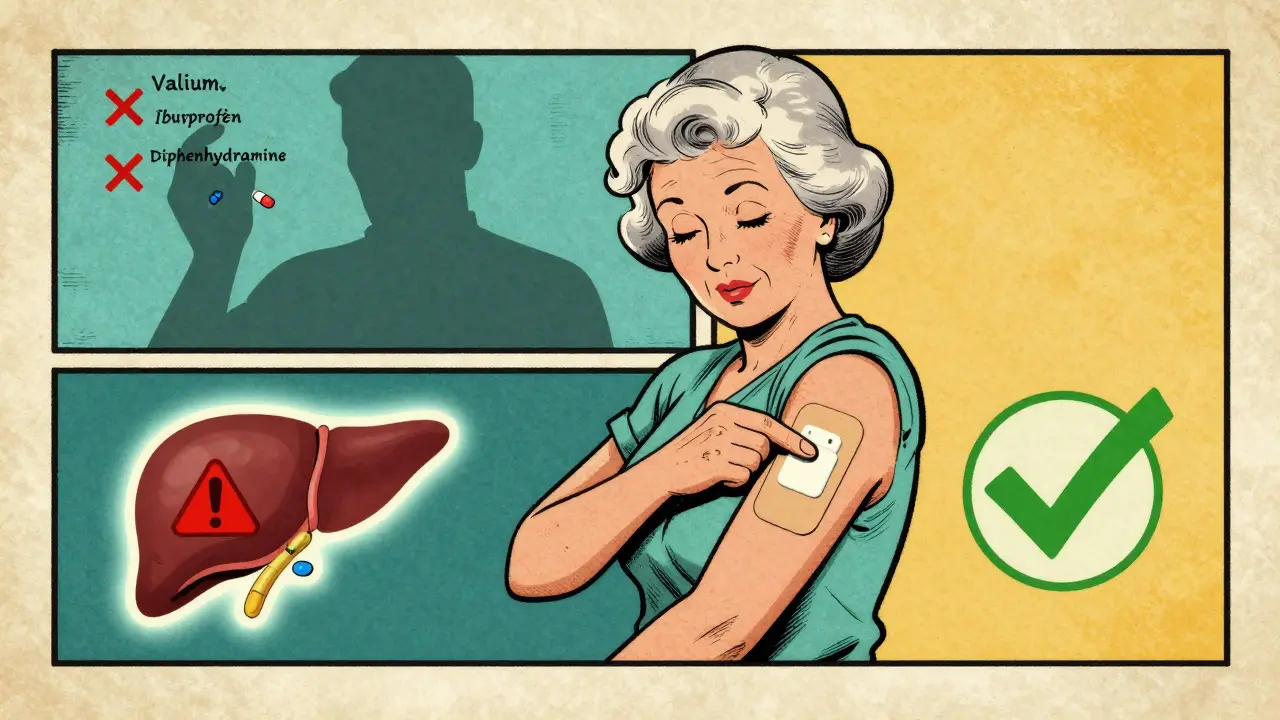
Your liver doesn’t metabolize drugs the same way after estrogen drops. Oral estrogen, for example, passes through the liver first, triggering changes that increase clotting risk. That’s why women on oral hormone therapy have a 30-50% higher chance of blood clots than those using patches or gels. Transdermal estrogen-applied through the skin-bypasses the liver and cuts that risk dramatically. This isn’t a minor detail. It’s a life-or-death difference.
Also, fat distribution changes after menopause. Women gain more belly fat and lose muscle. Many drugs dissolve in fat, so your body holds onto them longer. A statin that once worked fine might now cause muscle pain because it’s lingering in your system. The same goes for sleep aids, antidepressants, and even blood pressure pills.
And your kidneys? They filter about 20% slower after 60. That means drugs like antibiotics, diuretics, and painkillers stick around longer. A standard dose of ibuprofen might seem harmless-but for a woman with reduced kidney function, it can trigger internal bleeding or kidney failure.
When Hormone Therapy Is Risky-And When It’s Not
Hormone therapy (HT) is one of the most misunderstood treatments for menopause. It’s not a one-size-fits-all solution. The Endocrine Society says estrogen therapy should never be used if you’ve had breast cancer, a blood clot, a stroke, or liver disease. Even if you had these conditions 15 years ago, the risk doesn’t disappear.
Here’s what the data shows:
- Oral estrogen + progestin increases breast cancer risk by 24% after 5+ years (Women’s Health Initiative, 2002).
- Estrogen alone (for women without a uterus) shows no increased risk-and may even lower it slightly.
- Transdermal estrogen reduces venous clot risk by 2.3 times compared to pills.
The best window for starting hormone therapy? Within 10 years of menopause and before age 60. After that, the benefits fade, and risks rise. Dr. JoAnn Manson’s research at Harvard found that 50 mcg/day of transdermal 17-beta-estradiol offers the clearest safety profile for women entering menopause early.
But here’s the catch: many women stop HT because they’re scared of cancer. That’s understandable-but often unnecessary. If you’re healthy, have no history of hormone-sensitive cancers, and are under 60, the risks are far lower than you think. Talk to your doctor about your personal risk using tools like the IBIS Breast Cancer Risk Tool.
Common Medications That Become Dangerous After 60
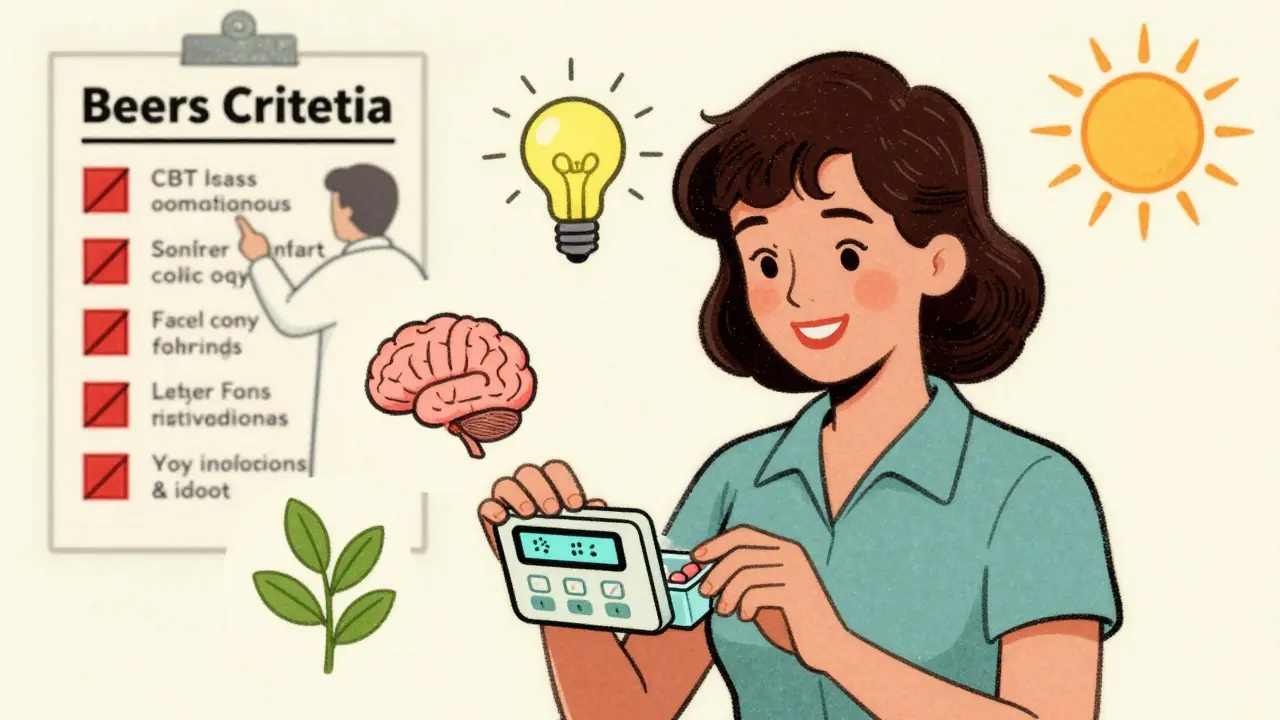
The Beers Criteria (updated in 2019) lists 30 drugs that should be avoided or used with extreme caution in older adults. Many of these are still prescribed regularly:
- Long-acting benzodiazepines (like Valium or Xanax): Increase hip fracture risk by 50%. They cause dizziness, falls, and confusion.
- NSAIDs (ibuprofen, naproxen): Raise bleeding risk in the stomach and kidneys. A 72-year-old woman in a WHO case study bled internally after taking diclofenac daily for arthritis.
- Anticholinergics (Diphenhydramine, oxybutynin): Linked to dementia. Found in many sleep aids and bladder pills.
- Long-term PPIs (omeprazole, pantoprazole): Used for heartburn, but increase risk of bone fractures and kidney disease after 3+ years.
These aren’t rare cases. The Agency for Healthcare Research and Quality found that 35% of hospitalizations in women over 65 are due to adverse drug events. Many of these are preventable.
How to Avoid Medication Mistakes
Here’s what actually works:
- Keep a real-time medication list: Write down every pill, patch, cream, and supplement-including dosage, why you take it, and who prescribed it. Update it every time something changes.
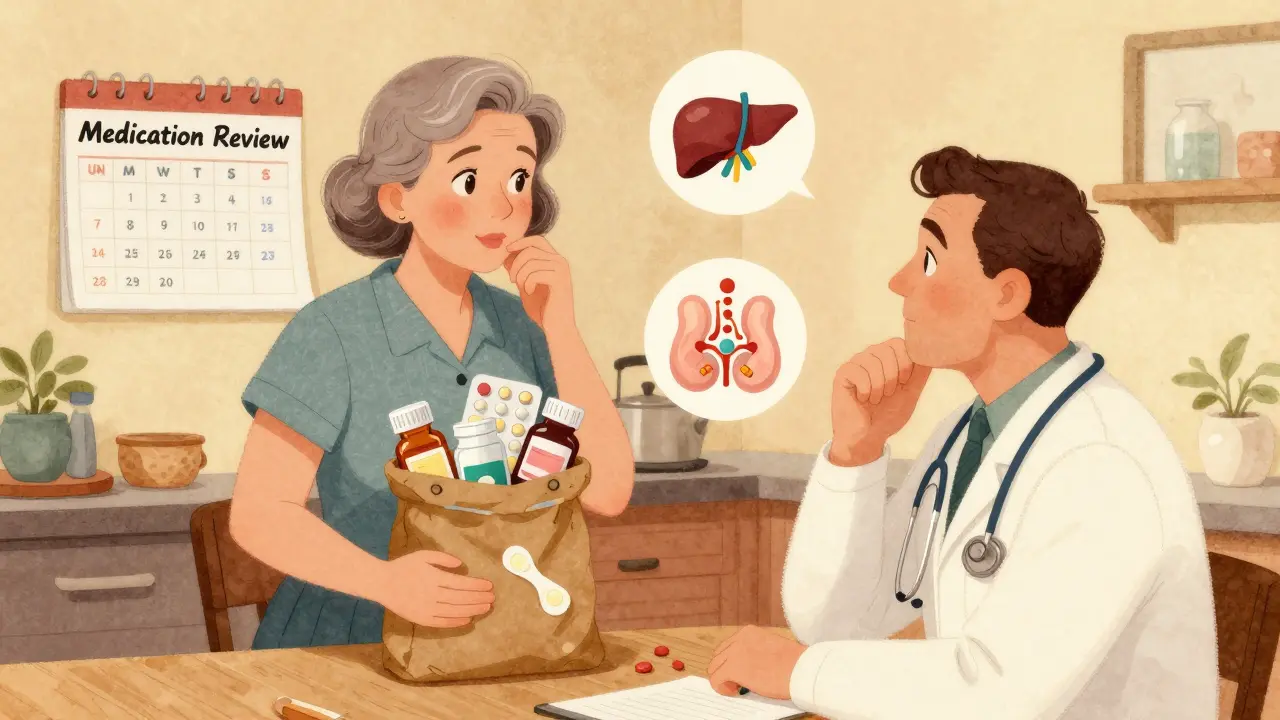
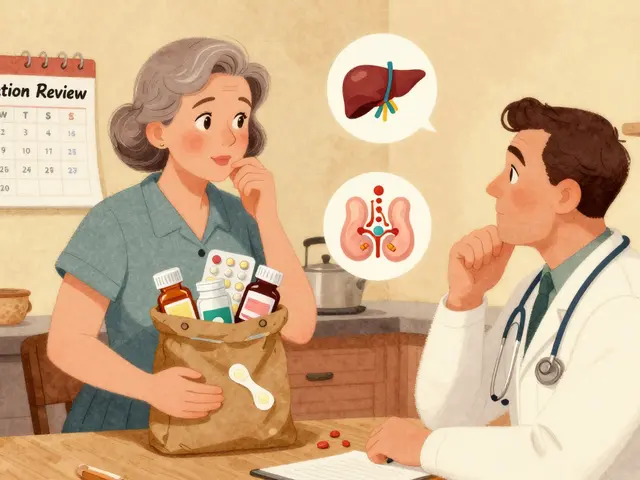
- Do a brown bag review: Every year, bring all your medications (including the ones in your medicine cabinet) to one appointment. Ask your doctor: "Which of these are still necessary?"
- Use a pill organizer: One study in JAMA Internal Medicine found pill organizers cut medication errors by 81%. Choose one with alarms or a timer if you forget doses.
- Ask about deprescribing: This means safely stopping drugs that no longer help. For example, if you’re on a statin for cholesterol but have no heart disease, ask if you can stop. Don’t just quit cold turkey-taper slowly under supervision.
Many women don’t know they can ask for this. Your doctor won’t always bring it up. You have to lead the conversation.
Non-Hormonal Alternatives That Actually Work
If you’re avoiding hormone therapy, you’re not out of options. Studies show:
- SSRIs (like escitalopram or venlafaxine): Reduce hot flashes by 50-60%. But they can cause sexual side effects in 30-40% of users.
- Neurokinin-3 inhibitors (like fezolinetant): A new FDA-approved drug (2023) that targets brain pathways for hot flashes. No hormones. No blood clot risk.
- Acupuncture and cognitive behavioral therapy: Both show moderate relief for hot flashes and sleep issues, with no side effects.
- Plant-based options (soy isoflavones, black cohosh): Some women find relief, but evidence is mixed. Avoid if you have a history of estrogen-sensitive cancers.
There’s no magic bullet, but there are safer paths than assuming HT is your only choice.
When to Call Your Doctor
Don’t wait for a crisis. If you notice any of these, schedule a medication review:
- Unexplained bruising, dizziness, or confusion
- Stomach pain, dark stools, or vomiting blood
- Swelling in your legs or sudden shortness of breath
- Memory lapses that are new or worsening
- Any new symptom after starting, stopping, or changing a medication
And if you’ve been hospitalized-even for something minor-ask for a full medication review within 30 days. That’s when most errors happen.
What You Need to Remember
Menopause isn’t just a biological event-it’s a turning point in how your body handles medicine. What was safe at 50 might be risky at 65. The goal isn’t to stop all medications. It’s to take only what you truly need, in the safest form, at the lowest dose.
Don’t assume your doctor knows everything on your list. Don’t let fear of cancer keep you from asking about transdermal options. And don’t ignore symptoms just because "it’s just aging." Your body is still speaking. Listen.
Is hormone therapy safe for post-menopausal women?
Hormone therapy can be safe-but only under specific conditions. It’s generally safest for women under 60 who are within 10 years of menopause and have no history of breast cancer, blood clots, stroke, or liver disease. Transdermal estrogen (patches or gels) is safer than pills because it avoids liver metabolism and lowers clot risk. Estrogen alone (without progestin) is safer for women who’ve had a hysterectomy. Always weigh symptoms against risks with your doctor using tools like the IBIS risk calculator.
Why do medications affect post-menopausal women differently?
After menopause, estrogen levels drop, which changes how your liver processes drugs and how your kidneys filter them. Fat distribution shifts, so some medications stick around longer. Your body also becomes more sensitive to side effects like dizziness, stomach bleeding, and muscle pain. These changes mean a dose that was fine at 50 might now be too high at 65.
What are the most dangerous medications for women over 65?
According to the Beers Criteria, the most dangerous include long-acting benzodiazepines (like Valium), NSAIDs (ibuprofen, naproxen), anticholinergics (Diphenhydramine), and long-term proton pump inhibitors (omeprazole). These increase risks of falls, internal bleeding, dementia, and kidney damage. Many are still prescribed routinely, but alternatives exist.
Can I stop taking my statin after menopause?
Maybe. Statins are often prescribed for cholesterol, but if you have no history of heart disease or stroke, the benefit may be small after 65. The American Heart Association says statins should be based on overall cardiovascular risk-not just cholesterol numbers. Ask your doctor to run a Framingham Risk Score or use the ASCVD calculator to see if the statin is still helping you.
How can I reduce my medication burden safely?
Start with a "brown bag" review: bring all your meds to one appointment. Ask your doctor: "Which ones are still necessary?" Then ask about deprescribing-gradually stopping drugs that no longer help. Tapering is key: benzodiazepines need 8-12 weeks, antidepressants 4-8 weeks. Never quit cold turkey. Use a pill organizer, update your list monthly, and track side effects. Most medication errors are preventable with simple habits.


13 Comments
trudale hampton
March 21, 2026 at 02:48
I've been on a few meds since my 50s and didn't realize how much my body changed until I started feeling foggy all the time. This post nailed it. Simple stuff like switching from ibuprofen to acetaminophen made a huge difference. No more stomach issues. Life's too short to feel like a zombie.
Solomon Kindie
March 21, 2026 at 16:31
So basically menopause turns your body into a drug magnet that sucks everything in and never lets go lol. I mean who even designed this system anyway. Evolution mustve been drunk when it came to this part. Also why do we still let doctors prescribe benzos like candy. Its like giving a toddler a chainsaw
Natali Shevchenko
March 22, 2026 at 03:29
I remember when I first started noticing that my sleep meds weren't working the same way anymore. I thought I was just getting older, but it was my liver slowing down. I switched to a transdermal patch for my blood pressure and my dizziness disappeared. It's wild how much of this is about delivery method, not just dosage. I wish more doctors talked about this. I ended up doing half the research myself. The body doesn't stop changing after 50-it just gets more interesting. And honestly, more dangerous if you're not paying attention.
Nishan Basnet
March 23, 2026 at 12:21
As someone who's watched my mother navigate this phase, I can say this is one of the most thoughtful breakdowns I've read. The brown bag review tip? Pure gold. My mom started doing it last year and ended up stopping three unnecessary pills. One was a daily aspirin she'd been on since 2005. No one ever questioned it. She's now walking without a cane. Small changes, massive impact.
shannon kozee
March 24, 2026 at 18:46
Deprescribing is underrated. Ask your doctor. It's not a failure-it's wisdom.
Shaun Wakashige
March 25, 2026 at 22:43
lol so now i have to keep a spreadsheet of my pills? 🤡
Desiree LaPointe
March 26, 2026 at 02:11
Oh honey, you think this is bad? Wait until you're on 11 different medications and your doctor says 'oh, that rash? Probably the new supplement.' Meanwhile, your kidney function is dropping faster than your ex's text replies. I'm 62. I've been through it. And no, black cohosh won't fix your hot flashes if you're still drinking wine. Just saying.
Thomas Jensen
March 27, 2026 at 02:16
They don't want you to know this but the pharmaceutical companies profit off women over 65 taking 5+ pills a day. They fund the studies, they lobby the FDA, they make doctors think it's normal. I know because I used to work in pharma sales. That statin you're on? Probably not helping you. But it's making someone rich. Wake up.
matthew runcie
March 27, 2026 at 16:23
I switched to transdermal estrogen after reading this. No more clots. No more panic. Just peace. Also, stopped the PPIs. My stomach's happier. Sometimes the fix is just stopping something.
Paul Cuccurullo
March 28, 2026 at 21:11
It is with profound solemnity that I address the silent epidemic of polypharmacy among post-menopausal women. The body, in its quiet dignity, has adapted to a new equilibrium-one that demands not only medical attention, but moral courage. We must not allow inertia to dictate our health. The time for deprescribing is not tomorrow. It is now.
Nicole James
March 28, 2026 at 23:09
I've been saying this for years: the FDA is a puppet of Big Pharma, and they're poisoning women over 65 with unnecessary prescriptions-especially anticholinergics! Did you know that 87% of dementia cases are linked to OTC sleep aids? It's in the hidden footnotes of the 2019 Beers Criteria! But no one wants to talk about it because it's 'too controversial.' Well, I'm not afraid to speak truth to power!
Chris Dwyer
March 31, 2026 at 00:01
You got this. Seriously. Changing meds isn't scary-it's empowering. I started with one pill off, then another. Now I feel like my old self again. Talk to your doc, bring your list, and don't let anyone make you feel silly for asking. You're not overreacting-you're taking charge.
Jackie Tucker
March 31, 2026 at 05:47
Ah yes, the classic 'I read a blog post and now I'm a geriatric pharmacist' routine. Let me guess-you're also doing cold plunges and taking nootropics? How very… avant-garde. Meanwhile, real doctors are still trying to keep people alive without turning them into cocktail waitresses at a pharmacology convention.