Sodium and Hypertension: Practical Ways to Lower Your Salt Intake
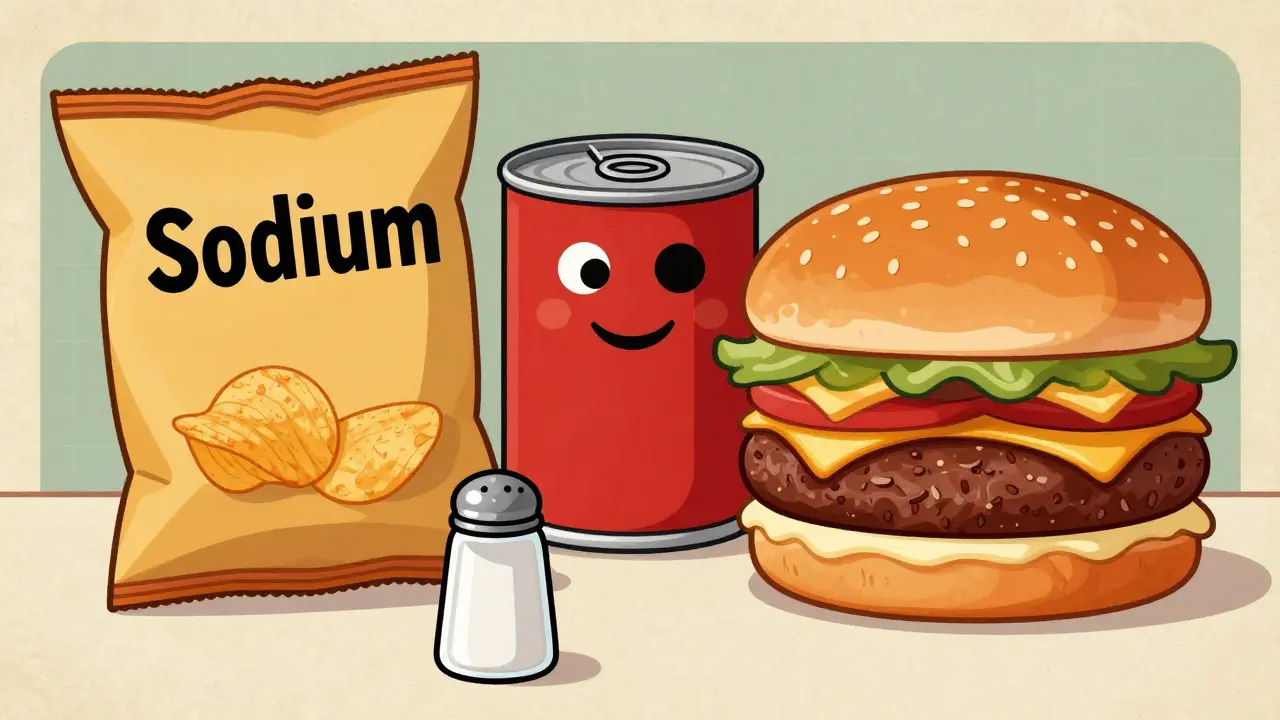
Most of us think of the salt shaker on the table when we talk about sodium. But here is the real kicker: about 70% to 75% of the salt we eat is already hidden in processed foods and restaurant meals before we even touch the shaker. This hidden sodium is a primary driver of Hypertension is a chronic medical condition where the force of the blood against the artery walls is consistently too high, which forces your heart to work harder than it should. If you've been told to "cut back on salt," it can feel like a vague and frustrating command. The good news is that even a small, consistent reduction in sodium can lead to a measurable drop in blood pressure, often within a single week.
The Quick Take: Sodium Reduction Essentials
- The Target: Aim for under 2,300 mg of sodium daily, though 1,500 mg is the gold standard for those with high blood pressure.
- The Quick Win: Swapping a single fast-food meal for a home-cooked version can save you up to 2,000 mg of sodium.
- The Secret: Use citrus, vinegar, and fresh herbs to replace salt without losing flavor.
- The Timeline: Your taste buds take about 2 to 4 weeks to adjust to lower salt levels.
How Sodium Actually Raises Your Blood Pressure
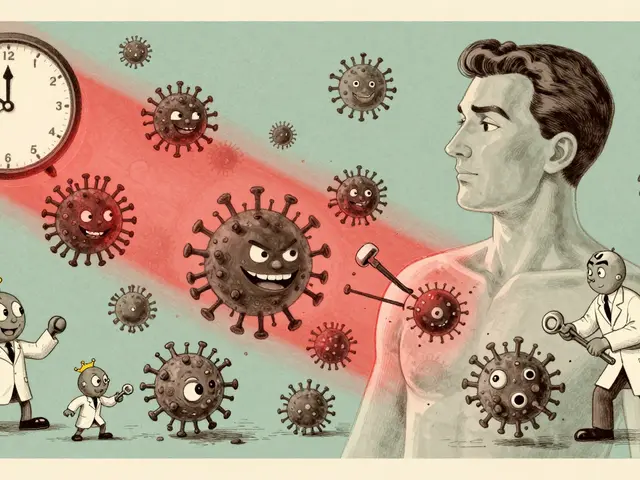
It all comes down to water. Your body needs a specific balance of sodium and water to function. When you eat too much sodium, your body holds onto extra water to dilute the concentration in your bloodstream. This increases the total volume of blood flowing through your vessels, which naturally cranks up the pressure. It's like turning a garden hose on full blast-the pressure inside the pipe rises significantly.
Over time, this isn't just about volume. High salt intake can lead to Endothelial Dysfunction, where the lining of your blood vessels loses its ability to relax and dilate. This is caused by a decrease in nitric oxide, a molecule that helps your arteries stay flexible. When your arteries stiffen, your systemic peripheral resistance increases, meaning your heart has to push even harder to move blood through your body.
Interestingly, not everyone reacts to salt the same way. Research from 2024 suggests that about 50% of people with hypertension are "salt-sensitive," meaning their blood pressure spikes significantly more after a salty meal compared to those who are salt-resistant. Regardless of where you fall on that spectrum, reducing sodium typically lowers the risk of stroke and heart disease across the board.
The Numbers: How Much Salt is Too Much?
There is some debate among health organizations, but the goal is generally to move away from the massive amounts found in the standard Western diet. The World Health Organization (WHO) recommends staying under 2,000 mg of sodium (about 5 grams of salt) per day. However, the American Heart Association (AHA) pushes for an ideal limit of 1,500 mg for people who already struggle with hypertension.
| Guideline / Metric | Daily Limit (Sodium) | Estimated BP Impact |
|---|---|---|
| WHO Recommendation | < 2,000 mg | General Reduction |
| AHA Ideal Limit | 1,500 mg | Optimal Cardiovascular Health |
| Average Reduction (1.75g Na) | -1,750 mg | 4.2/2.1 mmHg drop |
| Hypertensive Reduction | -1,750 mg | 5.4/2.8 mmHg drop |
Practical Strategies to Lower Sodium Without Losing Flavor
If you just stop adding salt to your food, you're only tackling a small part of the problem. The real battle is won in the grocery store and the restaurant. Here is how to actually make the transition without making your food taste like cardboard.
Master the Nutrition Label
Stop looking at the calories first and start looking at the "Sodium" line. The FDA now requires bolded percentages based on a 2,300 mg daily limit. If a serving has 20% or more of your daily value, it's considered a high-sodium food. Always check the serving size; often, a single bag of chips or a can of soup contains two or three servings, meaning you're eating double or triple the sodium listed.
The "Slow Fade" Approach
Your taste buds are adaptable. If you drop your salt intake overnight, you'll likely hate everything you eat. Instead, try the "slow fade": reduce the amount of salt you add to your cooking by about 10% every month. Within a few months, your palate will reset. Many people find that after 3 weeks, foods they used to love suddenly taste overwhelmingly salty.
Smart Swaps and Seasoning
Salt is a flavor enhancer, but it isn't the only way to make food taste great. Use acids and aromatics to trick your brain into not missing the salt:
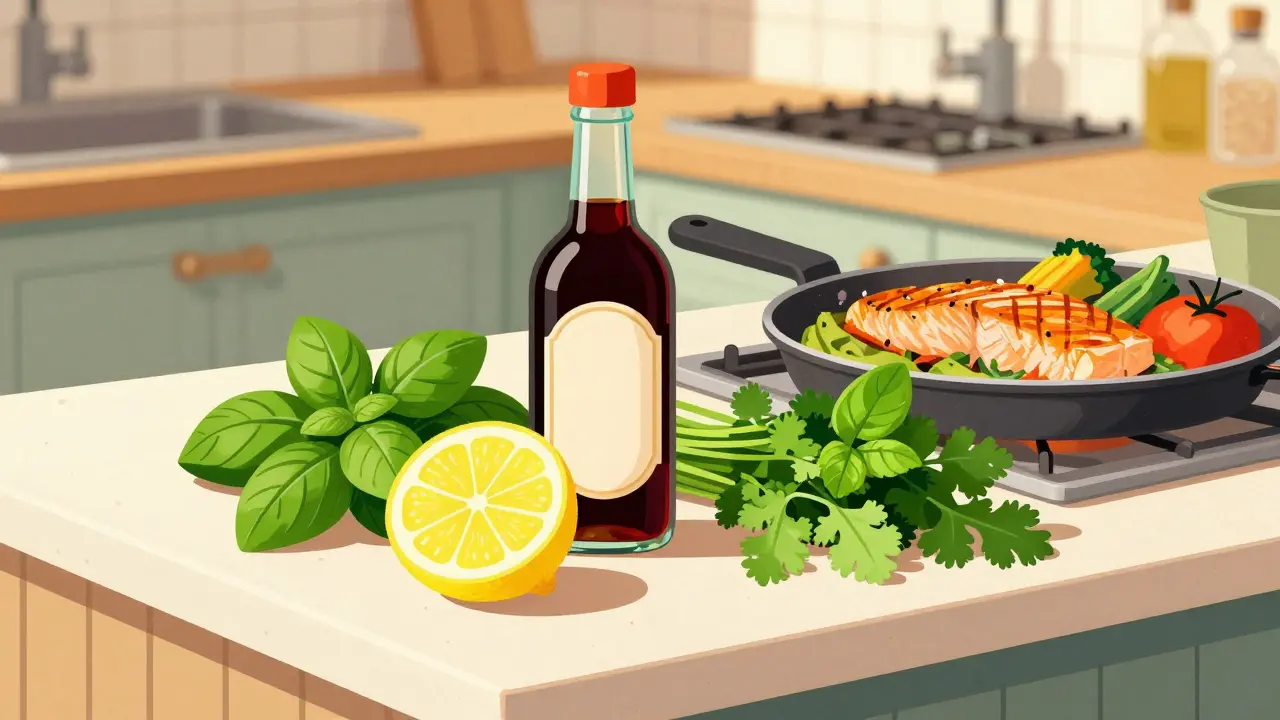
- Citrus: Squeeze fresh lemon or lime over fish, chicken, or vegetables. The acidity mimics the "brightness" of salt.
- Vinegars: Use balsamic or apple cider vinegar in salad dressings and marinades.
- Fresh Herbs: Cilantro, parsley, and basil add depth that salt cannot provide.
- Potassium Alternatives: Consider salt substitutes like Mrs. Dash. Increasing potassium while lowering sodium (a 1:1 ratio) has been shown to be more effective at lowering blood pressure than sodium reduction alone.
Navigating Restaurants and Processed Foods
Dining out is where most people blow their daily sodium budget in a single sitting. A typical fast-food meal can easily pack 2,500 mg of sodium-more than your entire day's allowance. You don't have to stop eating out, but you do have to be strategic.
First, ask for sauces and dressings on the side. This simple move can save you 300 to 500 mg of sodium per meal because you control the amount you actually use. Second, choose grilled options over fried. Fried foods are often breaded with heavy salt mixes. Third, beware of "healthy" options. A side salad with processed cheese and croutons can actually contain more sodium (up to 1,200 mg) than a burger.
For those at home, the DASH eating plan (Dietary Approaches to Stop Hypertension) is a proven framework. It emphasizes fruits, vegetables, lean proteins, and whole grains. When combined with sodium restriction, this plan can reduce systolic blood pressure by 8 to 14 mmHg.
Common Pitfalls and How to Overcome Them
One of the biggest hurdles is the cost and time. Fresh produce is often more expensive and takes longer to prepare than a frozen meal. To beat this, try batch-cooking on the weekends. Prepping low-sodium grains and roasted vegetables on Sunday can save you hours of cooking during the week and keep you from reaching for a high-sodium convenience meal.
It is also important to mention that very low sodium (under 1,500 mg) isn't always a win for everyone. People with advanced kidney disease or heart failure may experience adverse neurohormonal responses if their salt intake is too low. This is why you should always coordinate your dietary changes with your doctor, especially if you are taking diuretics or blood pressure medication.
How quickly can I see a drop in blood pressure after reducing salt?
Some people see results very quickly. Studies have shown that just one week of a low-sodium diet can lead to an average reduction of 8 mmHg in systolic blood pressure for middle-aged and elderly adults. However, the most sustainable changes happen over several weeks as your body and taste buds adjust.
Is there a difference between salt and sodium?
Yes. Salt (sodium chloride) is a compound consisting of sodium and chloride. Sodium is the specific mineral that affects blood pressure. To convert milligrams of sodium to grams of salt, remember that 2,300 mg of sodium is roughly equal to one teaspoon of table salt.
Why do some people feel worse when they reduce salt?
A small percentage of people experience "inverse salt sensitivity," where their blood pressure may actually increase or they feel dizzy when sodium is too low. This is rare but can occur in people with specific physiological variations or certain medical conditions. Always consult a professional if you feel unwell during a diet change.
Do I need to avoid all salt entirely?
No. Your body needs a small amount of sodium to function. The goal is not zero sodium, but rather an optimal range. For most, staying between 1,500 mg and 2,300 mg is the sweet spot for cardiovascular health.
Can potassium actually help lower the effects of sodium?
Yes, potassium helps the body excrete excess sodium through urine and eases tension in blood vessel walls. Increasing your intake of potassium-rich foods (like spinach, bananas, and sweet potatoes) while lowering sodium can lead to a significantly greater drop in blood pressure than lowering sodium alone.
Next Steps for Your Sodium Journey
If you're ready to start, don't try to change everything today. Start by picking one "sodium trigger" this week-maybe it's the morning bagel with salted butter or the afternoon chips-and swap it for a low-sodium alternative. Once that feels normal, move to the next one. Keep a simple log of how you feel and, if possible, track your blood pressure at home to see the direct correlation between your diet and your numbers. Over time, these small shifts add up to a much healthier heart.