
Side Effect Log: Track, Understand, and Manage Medication Reactions
When you start a new medication, your body doesn’t always react the way the label says it will. A side effect log, a personal record of physical or emotional changes after taking a drug. Also known as a medication reaction journal, it’s not just paperwork—it’s your early warning system for hidden dangers. Many people ignore mild symptoms like dizziness, nausea, or mood swings, thinking they’ll pass. But those small signs can be the first clue to something serious—like a dangerous drug interaction, a worsening condition, or an allergic response that’s slowly building.
A side effect log, a personal record of physical or emotional changes after taking a drug. Also known as a medication reaction journal, it’s not just paperwork—it’s your early warning system for hidden dangers. Many people ignore mild symptoms like dizziness, nausea, or mood swings, thinking they’ll pass. But those small signs can be the first clue to something serious—like a dangerous drug interaction, a worsening condition, or an allergic response that’s slowly building.
Think of it like checking your car’s dashboard. You don’t wait for the engine to fail before looking at the warning lights. The same goes for your body. When you record symptoms—when they started, how bad they are, what you were taking, and even what you ate that day—you give your doctor real data, not just "I feel weird." This is especially critical for drugs like warfarin, a blood thinner where tiny changes can cause dangerous bleeding, or levothyroxine, a thyroid hormone where even small dose shifts can throw your whole metabolism off. Both are known to need close monitoring after switching generics, and a detailed log makes it easier to spot the problem before it becomes an emergency.
It’s not just about big reactions. Some side effects creep in slowly—joint pain from diabetes meds, fatigue from blood pressure drugs, or anxiety from antibiotics. These are often dismissed as "just aging" or "stress." But if you’re tracking them, you can connect the dots. Did the joint pain start after switching to Januvia? Did your sleep crash after adding a new generic? A side effect log turns guesswork into evidence. And when insurance denies your generic or your doctor suggests a switch, that log becomes your strongest argument.
It also helps you avoid unnecessary fear. Not every reaction means you’re allergic to the whole drug family. A log helps you and your doctor tell the difference between a one-off reaction and a true cross-reactivity risk. That way, you don’t miss out on effective treatments just because you had a bad experience with one pill.
What you’ll find below are real stories and practical guides on how side effects show up—whether it’s from expired antibiotics, herb interactions like licorice messing with your blood pressure meds, or how immunosuppressants after a transplant can cause silent damage. You’ll learn how to read medication guides the right way, how to spot misleading risk numbers, and why some drugs need you to be their detective. These aren’t theory pieces—they’re tools for people who take meds daily and want to stay safe without being scared.
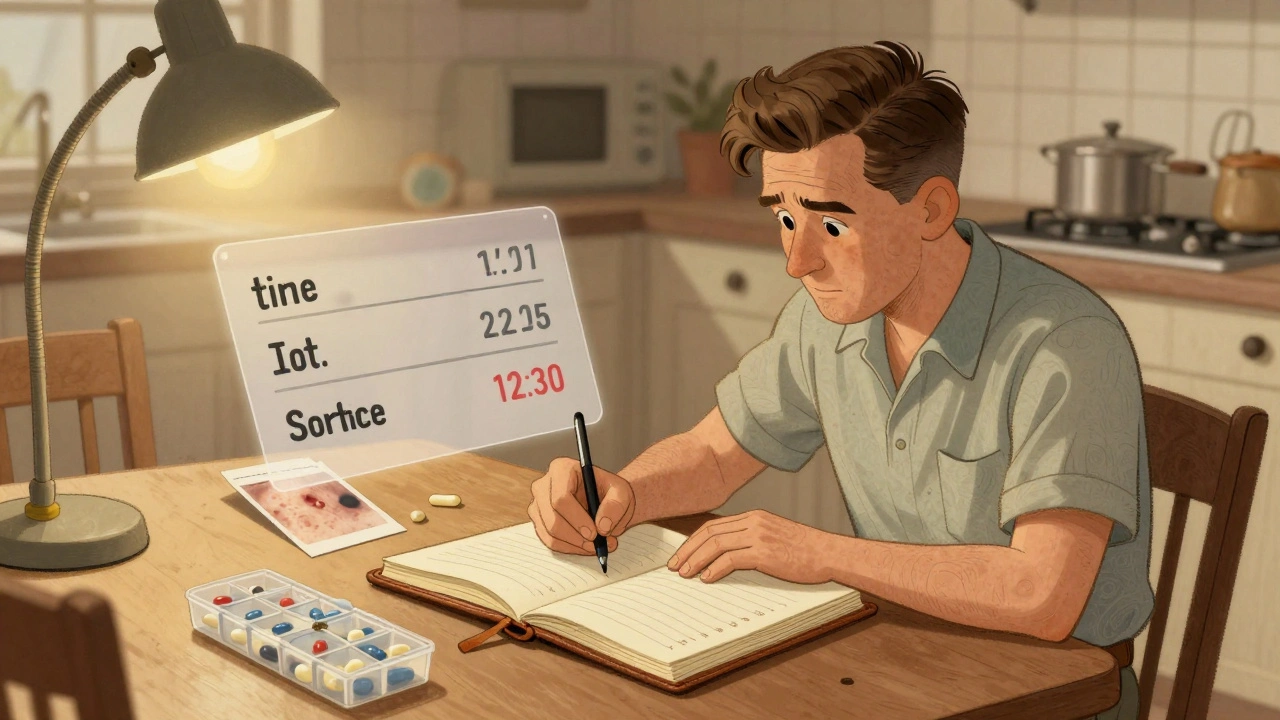
How to Keep a Symptom Diary for Suspected Drug Reactions
Learn how to track medication side effects with a symptom diary to help doctors identify drug reactions faster. Includes what to record, best tools, and red flags to watch for.
Read MoreLatest Post
-

Top 5 Augmentin Alternatives for Bacterial Infections in 2024 22 October 2024
-
Buy Cheap Generic Lisinopril Online - 2025 Guide 14 October 2025
-

-
-

Buy Online Cheap Generic Celexa - Safe Tips & Price Guide 28 September 2025