Pharmaceutical Exports: How Global Drug Trade Shapes Prices, Access, and Safety
When you pick up a prescription, chances are it didn’t start in your local pharmacy. Pharmaceutical exports, the international movement of finished drugs and active ingredients between countries. Also known as global drug trade, it’s the hidden engine behind every pill, injection, and inhaler you use. The U.S. imports over 80% of its active pharmaceutical ingredients, mostly from India and China. Meanwhile, countries like Germany and Switzerland export high-value branded drugs, while India ships out the bulk of generic medicines worldwide. This isn’t just about money—it’s about who gets treated, how safely, and at what cost.
Drug manufacturing, the process of producing medications under strict quality controls. Also known as pharmaceutical production, it’s the foundation of every export. But standards vary wildly. A pill made in a facility inspected by the FDA meets different rules than one made for export only. That’s why some countries ban imports from certain manufacturers—even if the drug is chemically identical. The same goes for generic drug trade, the bulk export of unbranded medications that work just like name-brand drugs. Also known as generic pharmaceuticals, this sector keeps millions alive in low-income countries. But if quality control slips, you get fake insulin, weak antibiotics, or pills with no active ingredient at all.
International pharmaceutical regulations, the rules that govern how drugs move across borders. Also known as global drug standards, they’re why some countries can’t access life-saving medicines. The WHO, FDA, and EMA all have different testing and labeling rules. A drug approved in the EU might be blocked in the U.S. because of a different excipient. Meanwhile, price controls in Canada and the UK force manufacturers to export more to the U.S., where they can charge more. That’s why the same drug costs ten times more here than abroad.
What you’ll find in these articles isn’t just theory. It’s real-world stories: how a generic blood thinner made in India affects INR levels in a U.S. patient, why expired antibiotics from overseas shipments are fueling resistance, how Medicare formularies block certain generics because of import rules, and how patient advocacy changed access to HIV drugs like zidovudine. These aren’t abstract trade issues—they’re about whether your medication works, whether it’s safe, and whether you can afford it.
From environmental testing in manufacturing plants to dose changes after switching generics, every post here ties back to one truth: pharmaceutical exports don’t just move pills—they move risk, cost, and control. What you’re about to read shows how those pills got to your shelf, who made them, and what you should ask before you take them.
Indian Generic Manufacturers: The World's Pharmacy and Exports
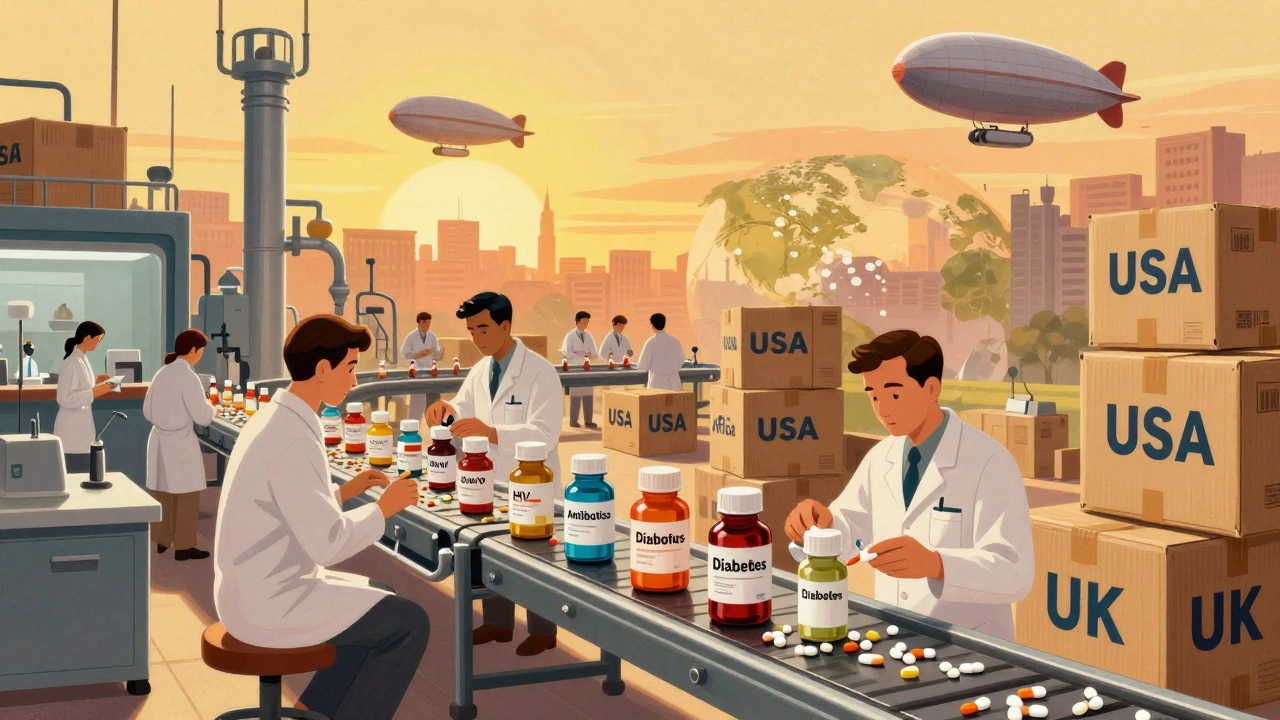
India produces 20% of the world's generic medicines and over 60% of its vaccines. Learn how low-cost, high-quality manufacturing made it the global pharmacy - and what's next for its billion-dollar industry.
Read More